
About Jose Roy
Lived 1904 – 1986 (aged 81). Jose Roy was a Filipino politician and economist.
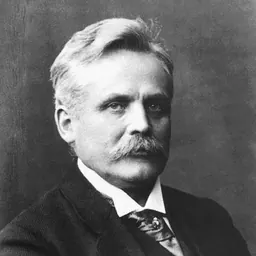
Jose de Jesus Roy Sr. (July 19, 1904 – March 14, 1986) was a Filipino lawyer, economist, and politician who served for 25 consecutive years as a congressman and senator in the Congress of the Philippines. Known as the "poor man's economist", he drafted, authored and sponsored laws to improve the lot of the peasantry. As a member of Congress, he took particular pride in the sponsorship of almost all laws on land reform. He is also considered to be the "Father of the Philippine Banking System" because of his authorship and involvement in almost all the major finance and tariff measures since the beginning of the Third Philippine Republic in 1946.
Early life Roy was born and raised in Moncada, Tarlac. His family were tenant farmers and he attended public schools. As a young boy, his first ambition was to become a writer and one of the topics he wrote on for a school paper was crop-sharing. Seeing and much affected by the oppression surrounding the farmers around him, he thought crop-sharing would be the best remedy for the life of disparity that existed between the wealthy landlords and the poverty-stricken tenant farmers.
Roy worked his way through college and graduated from the University of the Philippines with a Bachelor of Laws degree in 1930. He was the lone Liberal Party candidate to win in Central Luzon.
Over the next 16 years, Roy was elected to four consecutive terms as congressman of Tarlac's 1st District. He was instrumental in the drafting and passage of important finance and socio-economic measures which he authored and sponsored on the floor of the House of Representatives from 1946 to 1961, among which are; the Central Bank Act, Rehabilitation Finance Corporation Act (R.A.85), the Development Bank Act (R.A.2081, the General Banking Act (R.A.337), the Rural Banks Act (R.A.720), Philippine Veterans Bank Act (R.A.3518), the Philippines Deposit Insurance Corporation Act (R.A.3591); the Industrialization Act (R.A.901); Ramie Incentive Act, Agricultural Tenancy Act, 70-30 Rice Share Tenancy Act, Land Tenure Act, the Land Reform Code (R.A.3844), the Anti-Graft and Corrupt Practices Act (RA3019), Savings and Loan Association Act (R.A.3799), the Congressional 5-Year Development Plan, Tax Exemption to Basic Industries, Laurel-Langley Agreement, the Tariff and Customs Code of 1957, an Act providing the creation, organization and operation of an internal audit service for all departments, bureaus and offices of the National government otherwise known as the Internal Audit Act (R.A.3456) are among some of the measures he had authored and sponsored. He was a member of the Philippine Council of Leaders, the Development Council, the Council of State and Security Council.
In the general election of 1961, Roy was elected as senator for the Fifth Congress. He was one of only two Nacionalista Party senatorial candidates who was elected. In the November 14, 1967 Senate election, Roy garnered the highest number of votes in his re-election bid for senator receiving over 51 percent of the votes and more than half a million votes over his nearest pursuer. He was the lone incumbent to defend his seat. The Nacionalista Party won seven of the eight possible senate seats. As senator, Roy was elected as the Majority Floor Leader and later that year President Pro-tempore of the Sixth Congress in 1966 and President Pro-tempore of the Seventh Congress. He was a member of the Commission on Appointments and chaired the Committee on Ways and Means, Committee on Rules and Foreign Relations Committee His efforts failed, however, and the Seventh Congress was eventually abolished when Marcos declared martial law in 1972. a university in Angeles, Pampanga.
Outside of public service, Roy remained a stalwart of the Philippine Bar. He was one of the moving spirits of the Integrated Bar of the Philippines and was elected president of the Philippine Lawyers Association in 1968 while managing Jose J. Roy and Associates Law Offices.
Personal life Jose de Jesus Roy Sr. was married to Consolacion Ruiz Domingo (Dec. 26, 1910 - Aug. 5, 1992) and had three children, Jose Domingo Roy Jr., Vilma Domingo Roy-Duavit and Ronald Domingo Roy.
Death Jose Roy died on March 14, 1986. He is buried beside wife Consolacion Ruiz Domingo at Loyola Memorial Park.
Gallery
Don’t just read it —
keep it.
Full-length biographies made to live with: read them, listen on the way to work, watch them tonight.
- E-book
- Audio
- Video
Instant download · yours to keep · every purchase keeps this site free
Important facts
People in Jose Roy's life
Named in this biography and alive at the same time


Related people
Same field, nearest in time






Contemporaries
People whose lives overlapped Jose Roy's



Frequently asked questions
Who was Jose Roy?
Filipino politician (1904-1986)
When was Jose Roy born?
Jose Roy was born on 19 July 1904 in Moncada.
When did Jose Roy die?
Jose Roy died on 14 March 1986 in Insular Government of the Philippine Islands.
What was Jose Roy's occupation?
Jose Roy was a politician and economist.
What nationality was Jose Roy?
Jose Roy was Filipino.
Sources & further reading
Cite this page
APA: Biography.guide. (2026). Jose Roy. https://biography.guide/jose-roy/
MLA: "Jose Roy." Biography.guide, https://biography.guide/jose-roy/.
Chicago: "Jose Roy." Biography.guide. https://biography.guide/jose-roy/.
Data last updated: 2026-09-20 · Spot an error? Report a correction.
Page generated 2026-09-27 05:17 UTC