
About José Ramos Tinhorão
Lived 1928 – 2021 (aged 93). José Ramos Tinhorão was a Brazilian journalist, music critic and music publicist.
José Ramos Tinhorão (7 February 1928 – 3 August 2021) was a Brazilian journalist, essayist, music critic, music historian and author of many books on Brazilian popular music. He was a lifelong detractor of the Bossa Nova movement, which he saw as pasteurized Jazz music assembled in the tropics.
Early life
Born in Santos, in the state of São Paulo, Tinhorão was the eldest son of a family of Iberian immigrants (his father was Portuguese and his mother, the daughter of a Spaniard). His father worked as a waiter, sold lottery tickets and had a laundry shop. After all, he was invited by a friend to work at Urca's casino, in Rio de Janeiro, where his family moved in 1937, when the boy was nine years old.
Career
Tinhorão got a bachelor's degree in law at the University of Brazil and in journalism at the National Faculty of Philosophy.
In 1951, while still an undergraduate student, he began working as a freelancer at Revista da Semana, a now-defunct Brazilian weekly magazine in Rio de Janeiro, where he signed his texts as J. Ramos. In 1952, he was taken by Armando Nogueira, his college friend, to work as a copy editor at the Diário Carioca, one of the most popular newspapers in Rio at the time.
It was there that José Ramos earned his nickname "Tinhorão" ("Caladium"), which refers to the name of a toxic ornamental plant
Tinhorão stayed at the Diário Carioca until the end of 1958, when he went to Jornal do Brasil invited by fellow journalist Janio de Freitas to write for the Sunday supplement. Two years later, in the context of the creation of Caderno B, JB'''s cultural supplement, Tinhorão begins his activities as a researcher of popular music, commissioned by Reynaldo Jardim, creator of Caderno B, who asked Tinhorão to write a series of articles on the history of samba.
Music critic and researcher
In the 1960s, he would start paving his reputation as a grumpy and relentless music critic. A fierce opponent of Bossa Nova, he therefore faced several enmities against his staunch opinions. His harsh style is illustrated by a 1963 article for Senhor magazine: "Daughter of apartment adventures with the American music, who is undeniably her mother, Bossa Nova suffers from the same affliction as do many children from Copacabana, the neighborhood where she was born: she doesn't know who the father is."
In his standpoint, Bossa Nova represented, in urban popular music, the "sonic equivalent of the illusions of Brazilian socioeconomic 'updating' to the standards of the modern capitalism of the technological age". In the name of modernity, Brazil would reject popular forms and genres, with Bossa Nova representing a deaf class conflict, at the level of mass culture, which would result in the middle class being set apart from the working classes.
With a Marxist background and labeled as a radical nationalist, Tinhorão introduced sociological analysis in his music reviews.
Faithful to historical materialism and dialectical materialism, he understood history as the chronicle of men in the world – and of their relations with nature and with each other in society. Since in a class society each social class projects its ideology on culture and cultural production expresses the ideology of the class that engendered it, then every culture in a class society is class culture.
Always based on the methodological approach proposed by Marx, he wrote for various media outlets in the 60s, in addition to JB itself: Tribuna da Imprensa, Jornal dos Sports, Agora, Jornal Rural, Singra, Revista Guaíra, Última Hora, Veja, Senhor, Diário Carioca, Jornal do Brasil, Cadernos de Estudos Brasileiros and O Globo. He collaborated with O Pasquim until 1989. In the 1990s, he definitively abandoned journalism and began to dedicate himself fully to historical research and book production. He obtained a master's degree in social history from the University of São Paulo in 1999. From his MD thesis, the book A imprensa carnavalesca no Brasil: um panorama da linguagem cômica (The Carnival Press in Brazil: an overview of the comic language) was born, published in 2000.
Tinhorão also worked for several television networks (TV Rio, TV Excelsior, TV Globo).
He remained as a journalist at Jornal do Brasil until 1963 and then collaborated as a critic between 1974 and 1982.
Controversies and discoveries
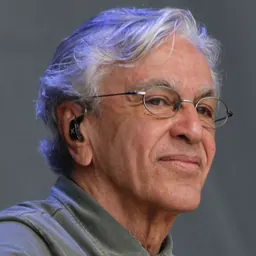
During his career, he became involved in numerous disputes with Brazilian musicians such as Tom Jobim, Chico Buarque, Caetano Veloso, Belchior and Paulinho da Viola, among others.
Tinhorão considered Jobim "not a creator, but an arranger". He wrote that Jobim's melody to the song Águas de Março would have been plain plagiarism of a macumba theme collected in 1933 by João Paulo Batista de Carvalho – which translates as "it's stick, it's stone, it's small pebble / Bahia rolls over everything". That was only one of several claims of plagiarism against Jobim and others made by Tinhorão.
Talking about João Gilberto, he said: "He is a good malandro. He gave samba an original syncopated beat, in which he could place any jazz harmony he wished (nothing but a boring tap drip rhythm). He took advantage of all the folklore around his persona and was acclaimed as a genius. Poor guy, have you seen his voice? He can't even articulate right anymore. And the air conditioning is to blame. I really admire that smartass!"
Tinhorão attacked the Brazilian movement Tropicália and recognized its delusions of grandeur to newspaper Folha de São Paulo in 2014: "The same Gilberto Gil who now advocates nationalism in Brazilian art wore long negligees with a Rhodia print fifty years ago", he said.
To him, Brazilian movement Jovem Guarda was "simplified rock for suckers" and sertanejo music was "neither urban nor country music". He praised Brazilian rap, though, arguing it was a present-day recovery of the classic emboladas (improvised Brazilian songs sung by a duo in public venues like squares and downtown streets, accompanied by pandeiros and guitars).
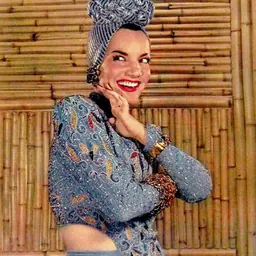
He didn't spare even Portuguese-born Brazilian star Carmen Miranda, stating: "Carmen Miranda was a victim of Hollywood show business. She left for America beautiful and full of energy and returned inside a coffin, disfigured by tranquilizers".
In his book Domingos Caldas Barbosa, the poet of the viola, modinha and lundu, he defends another controversial thesis – that the Portuguese genre fado was born in Brazil, not on the wharf of Lisbon, and values the influence of slaves in the Iberian culture, conversely to common Portuguese academic beliefs. According to Tinhorão, "fado arrived in Portugal at the end of the 18th century as the black dance of Brazil. It had a singing intermezzo. There are documents that show female fado singers in São Paulo as early as 1740, when people not even talked about it in Lisbon. Fado only became popular in Portugal because of Caldas Barbosa."
Death
José Ramos Tinhorão died on 3 August 2021, in the city of São Paulo, aged 93. He had been hospitalized with pneumonia two months earlier and was weakened by a stroke he had suffered in 2018. He was buried in the Protestant's Cemetery, in the Higienópolis neighborhood of the city.
Works A Província e o Naturalismo (1966)Música Popular: um tema em debate (1966) O samba agora vai: a farsa da música popular brasileira no exterior (1969) Música Popular: cinema e teatro (1972) Música Popular: os índios, negros e mestiços (1972) Pequena História da Música Popular: da modinha à canção de protesto (1975) Os sons que vêm da rua Os sons dos negros no Brasil: cantos, danças, folguedos: origens (1988) Os negros em Portugal: uma presença silenciosa (1988) Música Popular no Romance Brasileiro (1992): Séculos XVIII e XIX – Vol. 1 Século XX – Vol. 2 Século XX – Vol. 3Fado: dança do Brasil, cantar de Lisboa, o fim de um mito (1994)História social da música popular brasileira (1990)As origens da canção urbana (1997)As festas no Brasil colonial (1999) A Imprensa Carnavalesca no Brasil – Um panorama da linguagem cômica (2000) Música popular: o ensaio é no jornal (2001)Cultura Popular – Temas e Questões (2001);Domingos Caldas Barbosa, o poeta da viola, da modinha e do lundu: 1740–1800 (2004)O rasga: uma dança negro-portuguesa (2007)A Música Popular que Surge na Era da Revolução (2009) Música popular: do gramofone ao rádio e TV (2014)Festa de Negro em Devoção de Branco (2012)Pequena História da Música Popular (2012) Música e Cultura Popular: Vários Escritos sobre um Tema em Comum (2017) Primeiras Lições de Samba e outras mais'' (2018)
Don’t just read it —
keep it.
Full-length biographies made to live with: read them, listen on the way to work, watch them tonight.
- E-book
- Audio
- Video
Instant download · yours to keep · every purchase keeps this site free
Important facts
People in José Ramos Tinhorão's life
Named in this biography and alive at the same time


Related people
Same field, nearest in time



Contemporaries
People whose lives overlapped José Ramos Tinhorão's


Frequently asked questions
Who was José Ramos Tinhorão?
Brazilian journalist
When was José Ramos Tinhorão born?
José Ramos Tinhorão was born on 7 February 1928 in Santos.
When did José Ramos Tinhorão die?
José Ramos Tinhorão died on 3 August 2021 in São Paulo.
What was José Ramos Tinhorão's occupation?
José Ramos Tinhorão was a journalist, music critic and music publicist.
What nationality was José Ramos Tinhorão?
José Ramos Tinhorão was Brazilian.
Sources & further reading
· Wikipedia: José Ramos Tinhorão
· DBpedia: José Ramos Tinhorão
Cite this page
APA: Biography.guide. (2026). José Ramos Tinhorão. https://biography.guide/jose-ramos-tinhorao/
MLA: "José Ramos Tinhorão." Biography.guide, https://biography.guide/jose-ramos-tinhorao/.
Chicago: "José Ramos Tinhorão." Biography.guide. https://biography.guide/jose-ramos-tinhorao/.
Data last updated: 2026-09-22 · Spot an error? Report a correction.
Page generated 2026-09-27 05:31 UTC