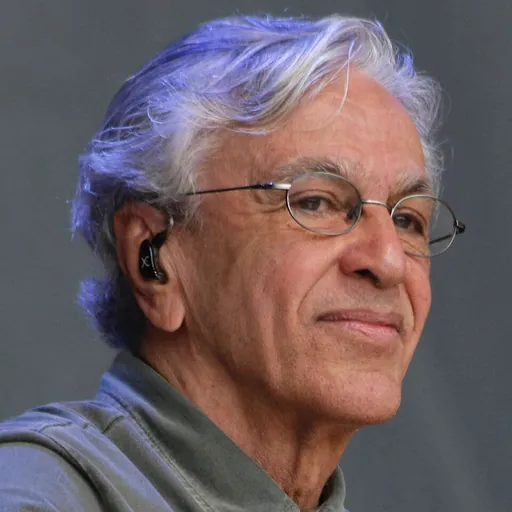
Caetano Veloso
Brazilian composer, singer, guitarist, writer, and political activist
About Caetano Veloso
Born 1942. Caetano Veloso is a Brazilian writer, politician, singer, guitarist, jazz guitarist and singer-songwriter.
Caetano Emanuel Viana Teles Veloso (; born 7 August 1942) is a Brazilian singer-songwriter, musician, writer, and political activist. In the late 1960s, he helped develop Tropicália, a Brazilian musical movement that combined Brazilian popular music with rock and roll and avant-garde influences. Along with Gilberto Gil, Gal Costa, Tom Zé, and Os Mutantes, he participated in the 1968 collaborative album Tropicália: ou Panis et Circencis, which became a musical manifesto of the movement.
Veloso's anti-authoritarian political stance brought him into conflict with the Brazilian military dictatorship, which censored and banned some of his songs. He and Gil were arrested and eventually released on condition that they leave Brazil. They lived in exile in London before Veloso returned to Brazil in 1972. His subsequent work combined international musical styles with Brazilian folkloric traditions, and his popularity expanded outside Brazil during the 1980s.
Veloso has continued to record and perform internationally. He has received nine Latin Grammy Awards and two Grammy Awards, and in 2012 was named the Latin Recording Academy Person of the Year.
Biography
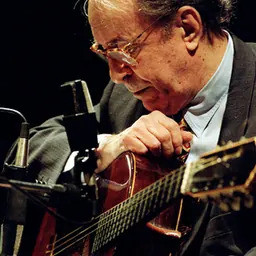
Veloso was born in Santo Amaro da Purificação, Bahia, Brazil, the fifth of seven children of José Teles Veloso (1901–1983) and Claudionor Viana Teles Veloso (1907–2012). His childhood was influenced greatly by artistic endeavors: he was interested in both literature and filmmaking as a child, but focused mainly on music. The musical style of bossa nova and João Gilberto, one of its most prominent exponents, were major influences on Veloso's music as he grew up. Veloso was 17 years old when he first heard Gilberto, whom he describes as his "supreme master". He recognizes Gilberto's contribution to Brazilian music as new—"illuminating" the tradition of Brazilian music and paving the way for future innovation.
In 1965, Veloso moved again to Rio de Janeiro, with his sister Maria Bethânia, also a musician. Shortly after the move, Veloso won a lyrics contest for his composition "Um Dia" and was signed to Philips Records. Even though Tropicalismo was controversial among traditional critics, it introduced to Música popular brasileira new elements for making music with an eclectic style.
Veloso studied philosophy at the Universidade Federal da Bahia, Veloso's anti-authoritarian political stance earned him the enmity of Brazil's military dictatorship which ruled until 1985; his songs were frequently censored and some banned.
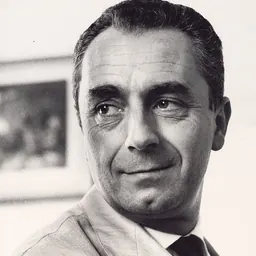
Imprisonment and exile In October 1968, Caetano Veloso and Gilberto Gil performed at Sucata club in Rio de Janeiro, with Hélio Oiticica's poem-flag displayed on stage. The journalist of RecordTV propagated a story that Caetano and Gil had sung the Brazilian National Anthem in subversive parody. The two musicians were arrested without trial 27 December 1968—shortly after the military state had passed on 13 December Institutional Act Number Five, which suspended habeas corpus. The federal police detained the two and flew them to an unknown destination. Finally, Veloso and Gil lived out their exile in London, England. When Caetano was asked about his experience there he says, "London felt dark, and I felt far away from myself." Nevertheless, the two improved their music there and were asked to make a musical production with the producer Ralph Mace. One song, "Haiti", attracted people's attention during the time, especially because it included powerful statements about sociopolitical issues present in Haiti and also in Brazil. Issues addressed in the song included ethnicity, poverty, homelessness, and capital corruption in the AIDS pandemic. By 2004, he was one of the most respected and prolific international pop stars, with more than 50 recordings available including songs in film soundtracks of Michelangelo Antonioni's Eros, Pedro Almodóvar's Hable con ella, and Frida, for which he performed at the 75th Academy Awards but did not win. In 2002 Veloso published an account of his early years and the Tropicalismo movement, Tropical Truth: A Story of Music and Revolution in Brazil.
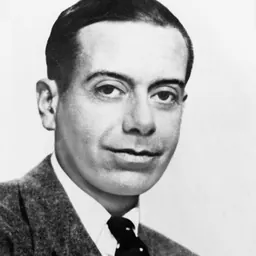
His first all-English CD was A Foreign Sound (2004), which covers Nirvana's "Come as You Are" and compositions from the Great American Songbook such as "Carioca" (music by Vincent Youmans and lyrics by Edward Eliscu and Gus Kahn), "Always" (music and lyrics by Irving Berlin), "Manhattan" (music by Richard Rodgers and lyrics by Lorenz Hart), "Love for Sale" (music and lyrics by Cole Porter), and "Something Good" (music and lyrics by Richard Rodgers). Six of the seven songs on his third eponymous album, released in 1971, were also in English.
Veloso has contributed songs to two AIDS benefit compilation albums produced by the Red Hot Organization: Red Hot + Rio (1996) and Onda Sonora: Red Hot + Lisbon (1998).
In 2011, he again contributed two songs to the Red Hot Organization's most recent compilation album, Red Hot + Rio 2. The two tracks include a remix of "Terra" by Prefuse 73 ("3 Mellotrons in a Quiet Room Version") and "Dreamworld: Marco de Canaveses", in collaboration with David Byrne.
His September 2006 album, Cê, was released by Nonesuch Records in the United States. It won two Latin Grammy Awards, one for best singer-songwriter and one for Best Portuguese Song, "Não Me Arrependo".
With a total of nine Latin Grammy Awards and two Grammy Awards, Veloso has received more than any other Brazilian performer. On 14 November, 2012, Veloso was also honored as the Latin Recording Academy Person of the Year. and "a pop musician/poet/filmmaker/political activist whose stature in the pantheon of international pop musicians is on par with that of Bob Dylan, Bob Marley, and Lennon/McCartney".
In January 2016, Caetano Veloso was a featured artist at the convention of the Modern Language Association (MLA), in Austin, Texas. Before a SRO crowd, he was interviewed on stage by two luminaries in the field of poetry and poetics, Marjorie Perloff (emerita Stanford) and Roland Greene (Stanford, President of MLA at the time).
In May 2018, Veloso performed at the Grand Final of the 2018 Eurovision Song Contest in the Portuguese capital, Lisbon, alongside 2017 winner Salvador Sobral. His live album Ofertório (Ao Vivo) (recorded with his sons Moreno, Zeca and Tom) was ranked as the 25th best Brazilian album of 2018 by the Brazilian edition of Rolling Stone magazine.
In 2018, Veloso participated in Stefano Bollani album Que Bom with two songs: "La nebbia a Napoli" and "Michelangelo Antonioni".
In 2023, Rolling Stone ranked Veloso at number 108 on its list of the 200 Greatest Singers of All Time.
Personal life Veloso married fellow Baiana and actress Andrea Gadelha (or Dedé) on 21 November 1967, in a ceremony that reflected the style of the counterculture era. Their son Moreno was born on 22 November 1972. On 7 January 1979, their daughter Júlia was born 3 months premature; she died 11 days later. Veloso separated from Dedé Veloso in 1983. In 1986 Veloso married Rio native Paula Lavigne, with whom he had two more sons, Zeca Lavigne Veloso, born 7 March 1992, and Tom Lavigne Veloso, born on 25 January 1997, in Salvador. Paula confirmed to Playboy magazine in 1998 that, "[Paula] was 13 years old when she lost her virginity to the musician, who was 40 years old at the time." Caetano has since been accused of pedophilia, as having sex with Paula would be considered statutory rape. This marriage lasted twenty years. After their separation in 2004, the two still worked together. In 2016, the couple reunited. Veloso's 1989 CD Estrangeiro includes songs ("Esse Amor", which means "This Love", and "Branquinha") inspired by and dedicated to, respectively, his ex-wife Dedé and his wife at the time, Paula Lavigne.
Veloso is one of the few public atheist celebrities in Brazil. He was brought up in a religious Catholic family but left the faith early on. In an interview Veloso stated that he did not like to "lie to his own intelligence" by believing in God. Despite this, two of Veloso's sons have become members of the neo-Pentecostal Universal Church of the Kingdom of God, with Veloso attending his children's baptism, stating that "what is good for them is good for me."
In 2022 Veloso talked about his bisexuality in a show commemorating his 80th birthday.
Musical style
Veloso's home, Bahia, has had a decisive role in his music. He praises Bahia for its importance in Brazil's colonial period—when the Portuguese first came—as well as for Bahia's contribution to Brazilian music. He has cited among his musical influences Amália Rodrigues, Cole Porter, the Rolling Stones 1969 tour, and above all, João Gilberto.
Veloso says that he is unable to make a comparison between his musical style in the 1960s, at the height of Tropicália, and his current work. He does note, however, that he has been able to accomplish music of a higher quality later in his career; that he is "better at everything."
Discography
Studio albums 1967: Domingo 1968: Caetano Veloso 1968: Tropicália: ou Panis et Circenses 1968: Veloso, Gil e Bethânia 1969: Caetano Veloso 1971: Caetano Veloso 1972: Transa 1972: Araçá Azul 1975: Qualquer Coisa 1975: Jóia 1977: Caetano... muitos carnavais... 1977: Bicho 1978: Muito 1979: Cinema Transcendental 1981: Outras Palavras 1981: Brasil (João Gilberto album featuring Caetano Veloso, Gilberto Gil and Maria Bethânia) 1982: Cores, Nomes 1983: Uns 1984: Velô 1985: Caetanear 1986: Caetano Veloso 1987: Caetano 1989: Estrangeiro 1991: Circuladô 1993: Tropicália 2 (with Gilberto Gil) 1994: Fina Estampa 1998: Livro 2000: Noites do Norte 2002: Eu Não Peço Desculpa (with Jorge Mautner) 2004: A Foreign Sound 2005: Onqotô 2006: Cê 2008: Caetano Veloso e Roberto Carlos – e a Música de Tom Jobim 2009: Zii e Zie 2012: Abraçaço 2021: Meu Coco
Live albums 1968: Ao Vivo (with Os Mutantes) 1972: Barra 69 ao Vivo na Bahia (with Gilberto Gil) 1972: Caetano e Chico – juntos e ao vivo (with Chico Buarque) 1974: Temporada de Verão – Ao Vivo na Bahia (with Gal Costa and Gilberto Gil) 1976: Doces Bárbaros (with Gal Costa, Gilberto Gil, and Maria Bethânia) 1977: Bicho Baile Show (with Banda Black Rio) 1978: Maria Bethânia e Caetano Veloso ao Vivo (with Maria Bethânia) 1986: Totalmente Demais 1992: Circuladô Vivo 1994: Fina Estampa ao Vivo 1999: Prenda Minha 1999: Omaggio a Federico e Giulietta 2001: Noites do Norte ao Vivo 2002: Live in Bahia 2007: Cê ao Vivo 2008: "Roberto Carlos e Caetano Veloso e a Música de Tom Jobim" 2011: MTV ao Vivo – Caetano – Zii e Zie 2011: Caetano e Maria Gadú Multishow ao Vivo (with Maria Gadú) 2012: Live at Carnegie Hall (recorded in 2004 with David Byrne) 2013: Abraçaço ao Vivo 2016: Dois Amigos (Caetano Veloso and Gilberto Gil) 2018: Ofertorio 2020: Caetano Veloso & Ivan Sacerdote 2025: Caetano e Bethânia Ao Vivo (with Maria Bethânia)
Soundtracks 1995: O Quatrilho 1996: Tieta of Agreste 1999: Orfeu 2002: Talk to Her (Hable con ella) (song "Cucurrucucú paloma", live) 2002: Frida 2004: Meu Tio Matou um Cara 2004: Eros 2006: Nacho Libre 2007: Ó Paí, Ó 2008: Romance 2016: Moonlight ("Cucurrucucú paloma")
Compilations 1996: Red Hot + Rio, AIDS-Benefit Album produced by the Red Hot Organization, contributor on track "É Preciso Perdoar" 1998: Onda Sonora: Red Hot + Lisbon, AIDS-Benefit Album produced by the Red Hot Organization, contributor on track "Dreamworld: Marco de Canaveses" 2002: Todo Caetano (box set)
Awards and honors
Don’t just read it —
keep it.
Full-length biographies made to live with: read them, listen on the way to work, watch them tonight.
- E-book
- Audio
- Video
Instant download · yours to keep · every purchase keeps this site free
Important facts
Family & relationships
People in Caetano Veloso's life
Named in this biography and alive at the same time




Related people
Same field, nearest in time


Contemporaries
People whose lives overlapped Caetano Veloso's



Frequently asked questions
Who is Caetano Veloso?
Brazilian composer, singer, guitarist, writer, and political activist
When was Caetano Veloso born?
Caetano Veloso was born on 7 August 1942 in Santo Amaro.
What is Caetano Veloso's occupation?
Caetano Veloso is a writer, politician, singer, guitarist, jazz guitarist and singer-songwriter.
What nationality is Caetano Veloso?
Caetano Veloso is Brazilian.
Sources & further reading
Cite this page
APA: Biography.guide. (2026). Caetano Veloso. https://biography.guide/caetano-veloso/
MLA: "Caetano Veloso." Biography.guide, https://biography.guide/caetano-veloso/.
Chicago: "Caetano Veloso." Biography.guide. https://biography.guide/caetano-veloso/.
Data last updated: 2026-09-21 · Spot an error? Report a correction.
Portrait: Wikimedia Commons · author & licence
Page generated 2026-09-27 05:00 UTC