
About José María Narváez
Lived 1768 – 1848 (aged 79–80). José María Narváez was a Spanish explorer and navigator.
José María Narváez (1768 – August 4, 1840) was a Spanish naval officer, explorer, and navigator notable for his work in the Gulf Islands and Lower Mainland of present-day British Columbia. In 1791, as commander of the schooner Santa Saturnina, he led the first European exploration of the Strait of Georgia, including a landing on present-day British Columbia's Sunshine Coast. He also entered Burrard Inlet, the site of present-day Vancouver, British Columbia.
Early career Narváez was born in Cádiz, Spain in 1768. His parents were Juan Antonio Gachupin Narvaez and Vrsula Gervete. He was married on Oct 23rd, 1796 to Maria Leonarda Alexa Maldonado. He was admitted to the Royal (Naval) Academy for midshipmen in 1782. Within the year, he was at sea and engaged in naval combat.
In 1784 Narváez was sent to New Spain, where his first station was at Havana. For three years he served aboard supply ships working the ports of Veracruz, New Orleans, Mantanzas, Campeche, Roatán, and Trujillo. In November 1787, he was promoted to segundo piloto havilitado (qualified second pilot—piloto in Spanish being equivalent to master in English) and reassigned to San Blas, at the time the main Spanish naval base on the west coast of Mexico. He arrived in early 1788. Within the month, he sailed north as a pilot to Gonzalo López de Haro, commander of the San Carlos (el Filipino).
1788 voyage to Alaska Responding to Russian activity in Alaska, the Spanish government began sending ships to investigate and assert sovereignty. The effort was based almost entirely out of the port of San Blas. In March 1788, two ships were sent north on reconnaissance, Princesa Real, under Esteban José Martínez, and the San Carlos (el Filipino), under Haro. Narváez sailed aboard the San Carlos (el Filipino) as Haro's pilot. The ships arrived at Prince William Sound in May. Evidence of Russian fur trading activity was discovered soon after.
In June Haro sailed the San Carlos (el Filipino) west to Kodiak Island. The Spanish traded with natives, who came to the ship in twelve canoes. The natives had slips of paper with Russian writing, apparently vouchers for payment, which Haro acquired by trade. He wanted the indisputable evidence of Russian commercial activity in the region.
On June 30, 1788, Haro sent Narváez in a longboat to investigate a Russian post at Three Saints Bay, Kodiak Island. Narváez found the post, becoming the first Spaniard to make contact with a large contingent of Russians in Alaska. The Russian commander, Evstrat Delarov, accompanied Narváez to the San Carlos (el Filipino). The Spanish gave Delarov a barrel of wine and other gifts. After returning Delarov to his outpost, Narvaez was given in turn a Russian map of the Alaskan coast, which included the locations of seven Russian posts, noting they contained nearly 500 men. Delarov also told Narváez that the Russians intended to occupy the port of Nootka Sound, on the west coast of Vancouver Island. After Narváez's return to the San Carlos (el Filipino), Haro and crew sailed east to rejoin Martínez at Sitkinak Island.
On June 21, Martínez dispatched Narváez in the captured Northwest America, renamed Santa Gertrudis la Magna (and later Santa Saturnina), to explore three inlets south of Nootka Sound — Clayoquot Sound, Barkley Sound, and the Strait of Juan de Fuca. Narváez sailed more than 25 leagues (about ) into the Strait of Juan de Fuca. By this time only a few non-natives had entered the Strait, and none as far as Narváez. By early July he was back at Nootka Sound. His report to Martínez recommended Port Renfrew as a good anchorage. Eliza arrived at Nootka on April 4, 1790, and found no ships present. The Nuu-chah-nulth natives, alienated by the events of the previous summer, had moved to a more secure location. After reoccupying Fort San Miguel and other buildings, Eliza dispatched two exploration expeditions.
Fidalgo explored northward to Alaska on the San Carlos, while Quimper, with López de Haro and Juan Carrasco as pilots, explored the Strait of Juan de Fuca with the Princesa Real. Both ships were unable to return to Nootka and instead sailed to San Blas. Eliza would not learn of their discoveries until the following year. After these ships had left Caamaño and Narváez arrived on the Aranzazu. He would remain under Eliza's command for the next two years, participating in various voyages of exploration.
The expedition first stopped at Clayoquot Sound, staying for about two weeks. Narváez and Carrasco spent a week exploring the inner channels, and another week collaborating on a chart of the sound, which they called Puerto Clayucuat. While Narváez was busy with this work, Eliza made friends with Chief Wickaninnish. Eliza wrote that he was honoured with a dance of over 600 young men. Eliza also reported that there were five large indigenous settlements in Clayoquot Sound, each with over 1,500 inhabitants. The largest, which Eliza called Guicananich after its chief Wickaninnish, had over 2,500 people. In the Santa Saturnina, Narváez and Carrasco explored the inner channels of Barkley Sound, which they called Puerto de Boca Carrasco, and drafted a chart. According to Eliza's summary report of the voyage, Narváez saw five large settlements with "warlike and daring" inhabitants. On two occasions Narváez's ship was attacked by groups of about 200 men, but "he held them in check by means of some cannon shot." The natives "were surprised to see the schooner and, according to their explanations, had never seen a vessel inside."
As commander of the expedition, Eliza eventually received credit for most of the discoveries made during the 1791 journeys. Narváez commanded the ship and made the actual voyages of discovery.
Narváez arrived at San Blas on November 1, 1810, in command of the frigate Activo. Within days he was ordered by Commander Lavayen to arm the ship for war and supplies in case a retreat was required. The total force assembled at San Blas numbered a few hundred, mostly Spanish merchants and other elite peninsulares or gachupines who had fled the rebellion. By contrast, most of the townspeople favoured the rebels. The three naval ships were the San Carlos, Activo, and Concepción, in addition to two merchant ships and a number of smaller vessels. Numbering in the thousands, rebel forces surrounded San Blas and issued terms for surrender. On November 30, the commander Lavayen and the nine other naval officers decided to surrender. Narváez thought the Spanish position was hopeless. The next morning Lavayen capitulated and San Blas fell into rebel hands.
In 1822 Narváez was given command of the San Carlos. He sailed from San Blas to Baja California and Alta California on a mission to install Mexican commissions and councils in both provinces. By the time he returned to San Blas in March 1823, Iturbide had been overthrown. A new government was set up under Antonio López de Santa Anna. Narváez was appointed Commandant of the Department of San Blas, a position he kept until 1827 when the post was suspended due to funding cuts.
Memorials To mark 150 years after the embarkation of his 1791 expeditions to the Georgia Strait, the Lions Club of West Vancouver erected a stone cairn at Ambleside Beach with a plaque memorialising Narváez as "the first white man to visit the mainland of Western Canada".
In January 2009, the District Municipality of Sechelt (on British Columbia's Sunshine Coast) erected an historical marker to honour the explorations of Narváez in Georgia Strait in 1791. It is at the south end of the Davis Bay seawall, near the spot where he became the first European explorer to set foot on the mainland coast of present-day British Columbia.
Don’t just read it —
keep it.
Full-length biographies made to live with: read them, listen on the way to work, watch them tonight.
- E-book
- Audio
- Video
Instant download · yours to keep · every purchase keeps this site free
Important facts
People in José María Narváez's life
Named in this biography and alive at the same time



Related people
Same field, nearest in time

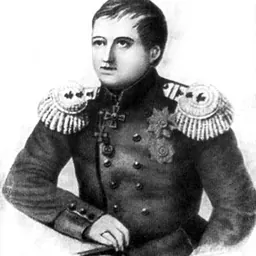


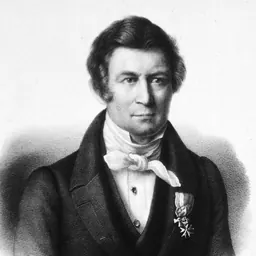
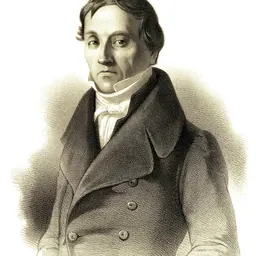
Contemporaries
People whose lives overlapped José María Narváez's




Frequently asked questions
Who was José María Narváez?
Spanish naval officer, explorer, and navigator
When was José María Narváez born?
José María Narváez was born in 1768 in Cádiz.
When did José María Narváez die?
José María Narváez died on 4 August 1848 in Guadalajara.
What was José María Narváez's occupation?
José María Narváez was an explorer and navigator.
What nationality was José María Narváez?
José María Narváez was Spanish.
Sources & further reading
· Wikipedia: José María Narváez
Cite this page
APA: Biography.guide. (2026). José María Narváez. https://biography.guide/jose-maria-narvaez/
MLA: "José María Narváez." Biography.guide, https://biography.guide/jose-maria-narvaez/.
Chicago: "José María Narváez." Biography.guide. https://biography.guide/jose-maria-narvaez/.
Data last updated: 2026-09-26 · Spot an error? Report a correction.
Page generated 2026-09-27 05:15 UTC