
About José Manuel Pando
Lived 1849 – 1917 (aged 67). José Manuel Pando was a Bolivian politician.
José Manuel Inocencio Pando Solares (27 December 1849 – 17 June 1917) was a Bolivian explorer, military officer, and politician who served as the 25th president of Bolivia from 1899 to 1904. He was a member of the Liberal Party.
He fought the so-called Acre War with Brazil, which led to Bolivia's loss of the Acre territories.
At the age of twenty-three, Pando fought alongside the people of La Paz to overthrow the government of Mariano Melgarejo on 15 January 1871, after which he was incorporated into the Bolivian Army.
Military career After overthrowing Melgarejo, Bolivian President Agustín Morales appointed Pando as his personal aide-de-camp in 1871. Pando and Morales had an excellent relationship which allowed for the former's career in the army to be propelled to new heights. However, on 27 November 1872, when Morales was assassinated by his nephew and also aide-de-camp, Federico Lafaye, a heartbroken Pando resigned from the position of assistant to the President of Bolivia.
In 1876, after Hilarión Daza's deposition of President Tomas Frías, Pando retired to private life in his Luribay hacienda. However, the outbreak of the War of the Pacific called him back to arms.
During the War of the Pacific, Pando contributed to the Bolivian Army when, in the midst of the war, he took steps to bring artillery pieces from the United States, a task that General Daza had entrusted to him. Pando fought in the Battle of Alto de la Alianza on 26 May 1880, where he was seriously wounded in the left arm and taken prisoner by the Chileans and brought to Santiago. Upon his return to Bolivia, Pando led an artillery regiment until 1884. Today, this territory is composed of the departments of La Paz, Beni and Pando, the latter bears his last name in honor of his expeditions there. Several of his expeditions to the region took place around the Madidi, Madre de Dios, and Mamoré rivers, collective studies were made on the subject and published by the University of La Plata, in Argentina.
Political career
The Liberal Party He entered as a member of the Liberal Party in 1884, a party of which he started leading after replacing General Eliodoro Camacho in 1894. He was head of the Liberal Party of Bolivia until the end of his presidency. Over the years, Pando became one of the greatest landowners of Bolivia, benefiting from the laws of 1874 and 1880. Turning several officers to his cause, including Octavio La Faye and Carlos Manuel de Villegas, Pando had large following in the army. Thus, the Bolivian Civil War began. After four months of fighting, he triumphed over the conservative forces of President Fernández in the Battle of the Segundo Crucero. A Federal Government Board was created, made up of Pando, Serapio Reyes Ortiz and Macario Pinilla Vargas, which installed the seat of government in La Paz. The Board carried out some institutional reforms and public works, such as the construction of the government palace of La Paz. The Board was dissolved at the National Convention of 1899, when Pando was elected president.
Internationally, Pando fought the so-called Acre War with Brazil. The region of Acre, located in the north and adjacent to the border with Brazil, had been invaded by Brazilian settlers and rubber tappers in the midst of a rubber boom. The Bolivians suffered setbacks at the hands of the Acrean revolutionaries, so Pando personally marched to Acre at the head of an army.
Modern investigations, however, maintain that Pando's death was due to natural causes, when he suffered a stroke while he was going from his farm in Catavi to the city of La Paz. According to this hypothesis, the members of the Jáuregui family, in whose hut Pando had stayed shortly before, upon discovering the body on the road, fearing being blamed for his death, threw the body into the ravine.
Don’t just read it —
keep it.
Full-length biographies made to live with: read them, listen on the way to work, watch them tonight.
- E-book
- Audio
- Video
Instant download · yours to keep · every purchase keeps this site free
Important facts
People in José Manuel Pando's life
Named in this biography and alive at the same time
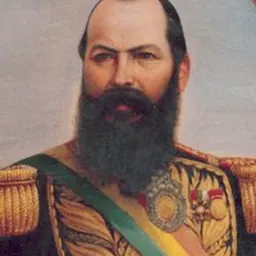
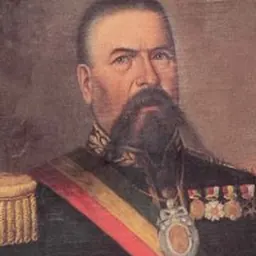




Related people
Same field, nearest in time


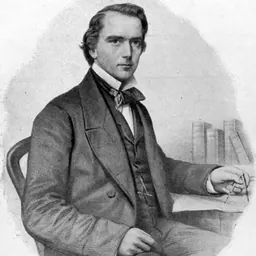



Contemporaries
People whose lives overlapped José Manuel Pando's



Frequently asked questions
Who was José Manuel Pando?
President of Bolivia (1849-1917)
When was José Manuel Pando born?
José Manuel Pando was born on 27 December 1849 in Luribay.
When did José Manuel Pando die?
José Manuel Pando died on 17 June 1917 in El Alto.
What was José Manuel Pando's occupation?
José Manuel Pando was a politician.
What nationality was José Manuel Pando?
José Manuel Pando was Bolivian.
Sources & further reading
· Wikipedia: José Manuel Pando
Cite this page
APA: Biography.guide. (2026). José Manuel Pando. https://biography.guide/jose-manuel-pando/
MLA: "José Manuel Pando." Biography.guide, https://biography.guide/jose-manuel-pando/.
Chicago: "José Manuel Pando." Biography.guide. https://biography.guide/jose-manuel-pando/.
Data last updated: 2026-09-20 · Spot an error? Report a correction.
Page generated 2026-09-27 05:25 UTC