
About Hilarión Daza
Lived 1840 – 1894 (aged 54). Hilarión Daza was a Bolivian politician.
Hilarión Daza Grosellé (né Grosoli Daza; 14 January 1840 – 27 February 1894) was a Bolivian military officer who served as the 19th president of Bolivia from 1876 to 1879.
Born in Sucre, Daza enlisted in the Bolivian Army and rapidly ascended the ranks. He earned the favor of Mariano Melgarejo, who promoted him to commander, but later helped oust him in an 1871 uprising. He served as minister of war in the cabinet of Tomás Frías from 1874 to 1876, but overthrew him in another coup d'état in May 1876.
During his term, Daza settled debts with the Catholic Church and withdrew Bolivia's debased currency from circulation. He contended with the Grande Seca, the century's most severe drought, which had major economic ramifications. In foreign policy, Daza imposed a ten-cent tax per quintal of exported saltpeter, a measure that triggered the War of the Pacific in 1879. Daza personally commanded the Bolivian Army through a series of military disasters, resulting in the nation's defeat and the permanent loss of its coastline to Chile.
Following the war, Daza was stripped of his command and forced to relinquish the presidency. He fled to exile in Europe, and lived in Paris for fourteen years. In 1894, he petitioned to return to Bolivia but upon his arrival was assassinated in Uyuni by the officials charged with his custody. The circumstances of his death remain unresolved.
Early life
Early life and family Daza was born in Sucre on 14 January 1840. His father, Marcos Grosellé, was originally from Piedmont—his surname was Grosoli, later transformed into Grosellé—while his mother, Juana Daza, was of mestizo origin. Daza changed his surname to his mother's in order to fit in better into Bolivian society.
Little is known about the lives of Daza’s parents. Most Bolivian historians agree that Daza’s father worked as a saltimbanque in a circus—akin to an acrobat. Historian Roberto Querejazu describes Daza’s father as a "man fond of attracting public attention through displays of his muscular strength".
Daza entered the military at a very young age in the 1850s. Here, he performed well.
Military and political career Initially, Daza was a supporter of President Mariano Melgarejo (1864–1871). However, in 1870, he began his political career by revolting against his protector, Melgarejo, betraying him for 10,000 pesos. The Colorados were a unit which were supposed to physically protect the President of Bolivia, essentially serving as bodyguards. However, they were trained soldiers and feared, for they were very well trained and skilled in combat. Thereafter, the Colorados remained loyal to Daza and would help him rise to power.
After the assassination of President Morales in November 1872, he temporarily assumed power, later transferring it to Tomás Frías, who was the legal successor since he was president of the Council of State. Later, he supported the government of Adolfo Ballivián (1873–1874) and when he died, he supported Frías who assumed the presidency after the sudden death of his predecessor. It was under Frías that Daza served as Minister of War.
Presidency
Coup against Frías and struggles Daza as portrayed by Le Monde illustré, a world news French magazine, during the War of the Pacific. Once promoted to the rank of army general, in 1876, Daza revolted against President Frías, whom he overthrew, and then dictatorially assumed power. He was confirmed as Provisional President by the Constituent Assembly of 1878, approving by law the acts of his provisional government. With the support of his Colorados Battalion, he imposed his authority, severely repressing the slightest opposition to his government. Daza hoped to gather the support of nationalist Bolivians to strengthen his internal position from insurrections, a massive demonstration by artisans in Sucre, and widespread opposition. He was a militaristic caudilloist.
Tension with the Chileans The Atacama desert coast, the disputed territory that sparked the War of the Pacific in 1879. To a large extent, Daza Groselle entered the Palacio Quemado with a desire to create Bolivian control over the remote, sparsely populated maritime province of Litoral. By the late 1870s, the latter was already settled mostly by Chileans, who found access to the region much easier than did the highland Bolivians. Predictably, a corollary of this growing physical and economic Chilean presence in the region was its irredentist claim by Santiago, especially when rich deposits of guano were discovered near the Bolivian port of Mejillones. In 1878, there was a very strong earthquake in Bolivia followed by a severe drought that caused a famine.
The conflict with Chile had its genesis in the Chilean influence in the territory of the Bolivian coast, whose attraction was in guano and saltpeter. The Compañía de Salitres y Ferrocarril de Antofagasta, a company with Chilean capital, had many prominent political shareholders of that country. Daza, once in power, initiated a completely anti-Chilean policy. Chileans residing in Antofagasta complained of mistreatment by the Bolivian authorities.
The treaty with he Compañía de Salitres y Ferrocarril de Antofagasta In 1873, the Bolivian government signed an agreement with the representative of the Compañía de Salitres y Ferrocarril de Antofagasta, an agreement that at the beginning of 1878 was not yet in force, because, according to the Bolivian constitution, contracts on natural resources had to be approved by congress. This was done by the Bolivian National Constituent Assembly through a law, on 14 February 1878, on the condition that a tax of 10 cents per quintal of saltpeter exported by the company be paid.
For Chile, the collection of the tax of 10 cents per quintal exported explicitly violated article IV of the 1874 Treaty between Bolivia and Chile, which prohibited raising taxes for twenty-five years on "Chilean people, industries and capital working between parallels 23 º and 24º" and residents in that area. Bolivia counterargued that the company was not a "Chilean citizen" nor a resident but a commercial entity, which constituted, according to the laws of Bolivia, as subject, therefore, to its ius imperium. The Chilean owners of the affected company flatly refused to pay said tax, considering it to be abusive, and requested help from the government of Chile. Santiago pledged their support for the company's cause, despite the fact that it was a dispute between a private company and the Bolivian State.
Economic policies Hilarión Daza's administration in Bolivia between 1876 and 1879 was marked by series of economic reforms. In the economic sphere, Daza's government implemented a series of measures aimed at boosting Bolivia's industrial and agricultural development. Foreign investment was encouraged, protectionist policies were established to foster domestic production, and the export of products such as tin and rubber was incentivized. In addition, reforms were implemented in the tax system with the aim of increasing state revenue, and the construction of infrastructure such as railways and highways was promoted to facilitate the transport of goods. These measures included the imposition of high taxes. His administration was the implementation of economic reforms that sought to modernize the country. The government of Hilarión Daza, which took place between 1876 and 1879, was marked by a series of economic policies that sought to strengthen and modernize the country. Infrastructure projects were promoted, such as the construction of railways and the promotion of mining. Another important consequence of Daza's administration was the severe economic crisis the country faced. During his tenure, unfavorable economic policies were implemented, such as the issuance of unbacked paper currency and excessive borrowing from foreign countries, which led to severe inflation and an increase in foreign debt. The country's economic situation deteriorated, generating widespread discontent among the population. These included the global economic crisis. Despite this, Daza's government left a legacy of economic development.
The War of the Pacific
First phase: The unchallenged occupation of the Bolivian Litoral
The entire Bolivian coastline was occupied by Chilean troops, completely unchallenged by the Bolivian Army. A widely spread version of the events of the outbreak of the war affirms that Daza celebrated his birthday when Chile invaded Antofagasta. Coinciding with carnival, it is said that Daza withheld the news of the Chilean invasion so as not to interrupt the festivities. However, this has never been confirmed.
Finally, on 28 February, the news of the Chilean invasion was known in Bolivia. On 1 March, Daza declared the breakdown of communications with Chile and the seizure of the properties of Chilean citizens with the use of force. At the same time, he claimed the support of Peru, in compliance with the Defensive Alliance Treaty signed in 1873. In 1894, Daza arrived at the port of Antofagasta (former Bolivian territory) from where he headed to Uyuni with the hope of reaching the city of La Paz. However, he was assassinated by his guards upon his arrival at the Uyuni railway station. who they had commercial interests in partnership with Chilean investors on the Pacific coast, occupied by Chile after the military actions of March 1879. However, nothing has ever been proven.
Personal life He married in La Paz, on 12 October 1872, with the distinguished lady Doña Benita Gutiérrez. Acting as witnesses to the marriage were Agustín Morales and Casimiro Corral, who was Minister of Foreign Affairs of Bolivia at the time. From this marriage, Doña Raquel Daza y Gutiérrez was born.
Don’t just read it —
keep it.
Full-length biographies made to live with: read them, listen on the way to work, watch them tonight.
- E-book
- Audio
- Video
Instant download · yours to keep · every purchase keeps this site free
Important facts
People in Hilarión Daza's life
Named in this biography and alive at the same time
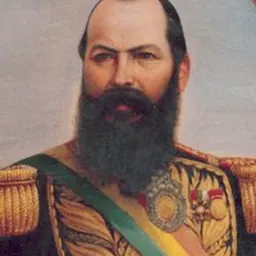

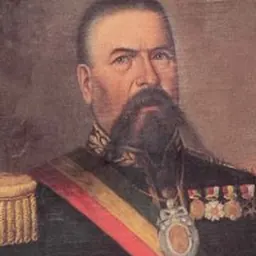
Related people
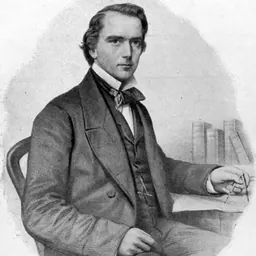
Same field, nearest in time





Contemporaries
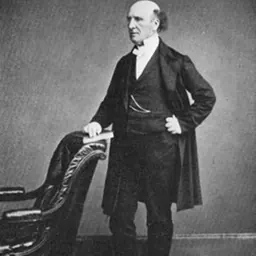
People whose lives overlapped Hilarión Daza's

Frequently asked questions
Who was Hilarión Daza?
President of Bolivia (1840-1894)
When was Hilarión Daza born?
Hilarión Daza was born on 14 January 1840 in Sucre.
When did Hilarión Daza die?
Hilarión Daza died on 27 February 1894 in Uyuni.
What was Hilarión Daza's occupation?
Hilarión Daza was a politician.
What nationality was Hilarión Daza?
Hilarión Daza was Bolivian.
Sources & further reading
Cite this page
APA: Biography.guide. (2026). Hilarión Daza. https://biography.guide/hilarion-daza/
MLA: "Hilarión Daza." Biography.guide, https://biography.guide/hilarion-daza/.
Chicago: "Hilarión Daza." Biography.guide. https://biography.guide/hilarion-daza/.
Data last updated: 2026-09-20 · Spot an error? Report a correction.
Page generated 2026-09-27 05:20 UTC