
About José Lémery
Lived 1811 – 1886 (aged 74). José Lémery was a Spanish politician and military officer.
José Nicolás Francisco Pablo Lémery-Ney e Ibarrola-González, Marquess of Baroja (2 December 1811 – 11 April 1886) was a Spanish general who served as the 82nd governor-general of the Philippines, 109th governor of Puerto Rico, deputy and senator of Baleares. He was distinguished in his military and political career, striving for justice, equality and fair government in the positions he held.
Early life and career Lemery was born in Madrid, Spain, on 2 December 1811 to Nicolás Lémery y Ney and Genara Ibarrola y González. He served as the chief military officer of the Spanish royal family, particularly as adjutant of Francis, Duke of Cadiz. In 1848, he married Flora Ferrer y Alvarez Torres. In 1854, he succeeded Joaquín Francisco Pacheco y Gutiérrez-Calderón as Deputy of Baleares. In 1855, he was appointed by Queen Isabel II of Spain as Governor of Puerto Rico, where he succeeded Andrés García Camba. Before holding these offices, he had a brief stint in Cuba (1850–1852), wherein he was appointed as commanding general of the colonial armed forces. This appointment was done with the help of his friend, José Gutiérrez de la Concha, 1st Marquis of Havana, who was then serving as Governor of Cuba. He was known to have employed harsh policies in suppressing an "impending rebellion." Among those who were arrested out of suspicion was Joaquín de Agüero, who would lead a rebellion in 1851. In 1858, he was promoted lieutenant general and was elected senator for life (senador vitalicio) in the Senate of Spain. This organization was made possible by the relative peace being experienced by the archipelago at the time. In addition, the separation of executive and judicial functions exercised by alcaldes and gobernadorcillos were also implemented. However, this was not done in full measure until 1885, during the term of Emilio Terrero y Perinat. The primary purpose of these reforms was to improve the conditions in the colony to the local level, but friar influence dampened their impact. The lack of continuity in the implementation also contributed to the slow reception of reforms in the local level. The province of Manila was organized and a governor installed. As for Mindanao, wherein the Spaniards had launched a number of military campaigns in the first half of the 19th century, it was divided into six districts. The Central District would serve as the capital of the government organized in Mindanao, and its administrator known as the Governor of Mindanao. The division of politico-military districts in Mindanao were as follows: First: Zamboanga District, which includes all of Sibugay Bay, and the west coast of Mindanao as far as Murcielagos Island Second: District of the North, which includes all territory north of Mindanao between the boundary line of the First District and Dapitan Point, on Tutwan Bay Third: Eastern District, which includes territory between Dapitan Point and Karaga Bay Fourth: Davao District, which includes the Bay of Davao and all of southern Mindanao from the boundary of the Third District Fifth: Central District, which includes Illana Bay, and all territory between the First and Fourth districts Sixth: District of Basilan, which includes the Spanish possessions in Sulu and Basilan Upon the restoration of the Jesuits in the Philippines, he gave them Mindanao as their mission field. Also in 1861, the Isabel Gate (Pintong Isabela II) was built between Fort San Gabriel and Fort Santo Domingo in honor of Queen Isabel II of Spain. All municipalities were required to make appropriations for schools to provide basic education and solve the illiteracy problem. The Royal Academy of Fine Arts was established during his administration. In 1862, he handed over his position to Salvador Valdés. In 1866, he presented his adherence to the decision on the modification of the 1851 law concerning the Pacific Squadron. In 1868, he participated in the Senate's March to the Court. In 1877, he was a member of the Commission of Army Promotions. In 1883, he was again senator for life, but by appointment of royal decree and approval of the Permanent Commission.
Death He died in Madrid on 11 April 1886.
Don’t just read it —
keep it.
Full-length biographies made to live with: read them, listen on the way to work, watch them tonight.
- E-book
- Audio
- Video
Instant download · yours to keep · every purchase keeps this site free
Important facts
People in José Lémery's life
Named in this biography and alive at the same time
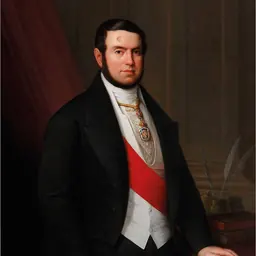
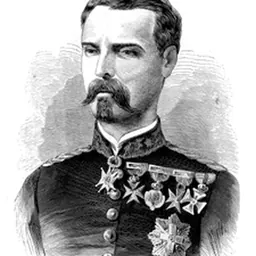
Related people
Same field, nearest in time



Contemporaries
People whose lives overlapped José Lémery's




Frequently asked questions
Who was José Lémery?
Spanish politician and military officer (1811–1886)
When was José Lémery born?
José Lémery was born on 2 December 1811 in Madrid.
When did José Lémery die?
José Lémery died on 11 April 1886 in Madrid.
What was José Lémery's occupation?
José Lémery was a politician and military officer.
What nationality was José Lémery?
José Lémery was Spanish.
Sources & further reading
· DBpedia: José Lémery e Ibarrola
Cite this page
APA: Biography.guide. (2026). José Lémery. https://biography.guide/jose-lemery/
MLA: "José Lémery." Biography.guide, https://biography.guide/jose-lemery/.
Chicago: "José Lémery." Biography.guide. https://biography.guide/jose-lemery/.
Data last updated: 2026-09-20 · Spot an error? Report a correction.
Page generated 2026-09-27 05:33 UTC