
About José Gerson da Cunha
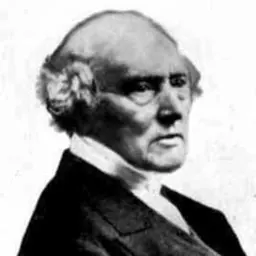
Lived 1844 – 1900 (aged 56). José Gerson da Cunha was a linguist, author, historian, numismatist, obstetrician and orientalist.
José Gerson da Cunha OCI (2 February 1844 – 3 August 1900) was a Portuguese physician who achieved international renown as an indologist, historian, linguist and numismatist.
Early life and medical career José Gerson da Cunha was born in Arpora, Bardes on 2 February 1844, the eldest of twelve children to a Portuguese couple, Francisco Caetano da Cunha and Leopoldina Maria Gonçalves. He then moved to Bombay and enrolled in the Grant Medical College to pursue his medical studies. While there, da Cunha distinguished himself by winning many prizes. His other best known historical works include Memoir on the history of the tooth-relic of Ceylon; with a preliminary essay on Gautama Buddha The life and system of Gautama Buddha (1875), Historical and Archeological Sketch of the Island of Angediva (1875), and The History and Antiquities of Chaul and Bassein (1876).
Linguistics Da Cunha was inspired by the Portuguese civil servant Joaquim Heliodoro da Cunha Rivara's efforts to revive Konkani in Goa. Cunha concluded that while Konkani bears close similarities to Marathi, it is quite distinct, though cognate with Marathi, and has a predominance of Sanskrit words and a faint Turanian or Dravidian element. It possesses an elaborate grammar of its own and a rich vocabulary which is derived from various sources (Sanskrit, Persian, Kannada and Portuguese, with all the contributing elements having lost their autonomy in the course of time and becoming so fused together that only a careful analysis can discover their etymology. He further had serious misgivings about the language's future. In The Konkani Language and Literature, he states:
Numismatics Da Cunha was an avid coin collector. He began collecting coins in 1876 and in addition to his own collection, purchased the collections of James Gibbs and Bhau Dhaji. They had two daughters and a son. His grandson EPW da Costa was a pioneer of opinion polling in India. Da Cunha was a hyperpolyglot, possessing knowledge of Konkani, Marathi, Portuguese, Italian, French, English, German, Pahlavi, Persian, Latin and Sanskrit.
Don’t just read it —
keep it.
Full-length biographies made to live with: read them, listen on the way to work, watch them tonight.
- E-book
- Audio
- Video
Instant download · yours to keep · every purchase keeps this site free
Important facts
People in José Gerson da Cunha's life
Named in this biography and alive at the same time
Related people
Same field, nearest in time


Contemporaries
People whose lives overlapped José Gerson da Cunha's

Frequently asked questions
Who was José Gerson da Cunha?
Indo-Portuguese physician, orientalist, historian, linguist, and numismatist
When was José Gerson da Cunha born?
José Gerson da Cunha was born on 2 February 1844 in Goa.
When did José Gerson da Cunha die?
José Gerson da Cunha died on 3 August 1900.
What was José Gerson da Cunha's occupation?
José Gerson da Cunha was a linguist, author, historian, numismatist, obstetrician and orientalist.
What nationality was José Gerson da Cunha?
José Gerson da Cunha's recorded nationality: Kingdom of Portugal.
Sources & further reading
· Wikipedia: José Gerson da Cunha
· DBpedia: José Gerson da Cunha
Cite this page
APA: Biography.guide. (2026). José Gerson da Cunha. https://biography.guide/jose-gerson-da-cunha/
MLA: "José Gerson da Cunha." Biography.guide, https://biography.guide/jose-gerson-da-cunha/.
Chicago: "José Gerson da Cunha." Biography.guide. https://biography.guide/jose-gerson-da-cunha/.
Data last updated: 2026-09-20 · Spot an error? Report a correction.
Page generated 2026-09-27 05:08 UTC