
About Jose E. Romero
Lived 1897 – 1978 (aged 81). Jose E. Romero was a Filipino politician and minister.
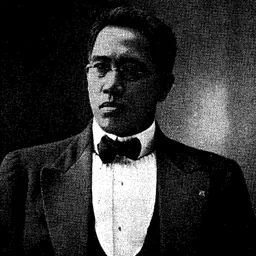
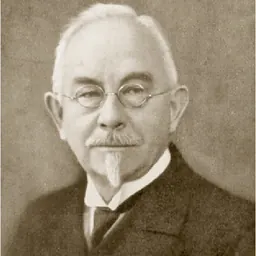
José Emeterio Muñoz Romero Sr. (3 March 1897 – 23 October 1978), commonly known as José E. Romero, was a statesman and diplomat from the Philippines. He represented Negros Oriental's Second District and was Majority Floor Leader during the Ninth and Tenth Philippine Legislatures and the First and Second National Assemblies of the Philippines. He was senator-elect of the First Congress of the Philippines and later became the first Philippine ambassador to the United Kingdom and Secretary of Education.
Early life and education Romero was born as José Derecho y Muñoz on 3 March 1897, one of three children born to Francisco Romero Sr., mayor of Tanjay, Negros Oriental from 1909 to 1916 and later a member of the Provincial Board of Negros Oriental, and Josefa Calumpang Muñoz, daughter of Tanjay gobernadorcillo Don José Teves Muñoz and Doña Aleja Ines Calumpang. His mother died in a stampede that occurred on 24 December 1906 while midnight mass was being celebrated at the St. James the Greater Parish in Tanjay. A group of hooligans falsely announced the approach of pulahanes, a notorious group of bandits, which resulted in a stampede that killed and injured churchgoers rushing to leave the church.
Beginning in 1904, he received primary instruction in the public schools of Tanjay where he spent his formative years. In 1905, he moved to study at Silliman Institute in Dumaguete, Negros Oriental. In 1907, when he was only 10 years old, he was appointed municipal school teacher in Tanjay. From 1908 to 1913, he studied at the Negros Oriental High School for secondary education until he went on to Manila High School where he finished in 1915. As a student in Manila, he was the ward of his father's only sister Adela Romero de Prats and her husband Francisco Prats Mestre.
On 17 July 1918, Romero and Carlos P. Romulo led the first student protest march at UP to show support for university president Ignacio Villamor who was then being criticized and defamed by newspaper columnist Manuel Xerez Burgos of The Manila Times. In April 1922, Romero was a delegate to the World Student Christian Federation conference held at Tsinghua University in Beijing.
Romero published The Rising Philippines in 1917, the first English language magazine published by Filipinos, together with Romulo, Mauro Mendez and Fernando Maramag as editor-in-chief. Later on, he was the sole owner and publisher of the Oriental Negros Chronicle.
Political career Romero, together with his cousin Angel Calumpang, was elected to the Provincial Board of Negros Oriental for two consecutive terms from 1925 to 1928 and from 1928 to 1931 during the incumbency of Atilano Villegas as provincial governor. Together with fellow assemblymen Salvador Z. Araneta, Tomas Oppus and Carlos Tan, they formed the Philippine Civic League, which conducted education campaigns on the problems and deficiencies of the Philippine independence mission.
In 1946, Romero was elected to the Philippine Senate but was replaced by Prospero Sanidad after a highly politicized electoral protest filed against him and senators-elect Ramon M. Diokno and Jose O. Vera, and elected members of congress belonging to the Democratic Alliance.
Government service Romero in 1949 as Philippine foreign minister, later first ambassador, to the Court of St. James's. In 1917, after finishing his undergraduate degree, he worked as an assessor at the Bureau of Customs but only stayed on for four months due to conflicts in schedule with his classes at law school.
On 20 August 1949, Romero was appointed by Elpidio Quirino as envoy extraordinary and minister plenipotentiary of the Philippine foreign service. He took his oath of office on 6 September 1949 as minister of the Philippine Legation to London, replacing Don Ramon Fernandez who was appointed to the Philippine Council of State. He was accredited by the Court of St. James's on 9 November 1949. The legation was later upgraded to embassy status with Romero serving as the first ambassador extraordinary and plenipotentiary of the Philippines to the Court of St. James's. While ambassador, he headed the Philippine delegation, which included senator José Locsin, to the 1953 International Sugar Agreement convened by the United Nations in London.
In 1953, he ended his tour of duty when he resigned to become the representative of the Philippine Sugar Association (PSA) to Washington for whom he was longtime executive officer and secretary-treasurer, and later president. Upon the recommendation of the PSA, he served as a director of the Philippine Sugar Institute (PHILSUGIN), an agency tasked to conduct research work for the sugar industry in all its phases, agricultural and industrial. PHILSUGIN together with the then Sugar Quota Administration (SQA) effectively replaced the Philippine Sugar Administration in 1951. In May 1956, together with Joaquín M. Elizalde who was chief delegate, he represented the Philippines at one of the meetings of the United Nations Sugar Conference, which opened at the Headquarters of the United Nations in New York.
Romero served as Secretary of Education to Carlos P. Garcia and Diosdado P. Macapagal from 1959 to 1961 and from 1961 to 1962 respectively. He was then concurrently ex-officio chairman of the Jose Rizal National Centennial Commission, a commission created in 1954 by Ramon Magsaysay to spearhead preparations for the centenary of José Rizal's birth in 1961. He was also ex-officio chairman of the Board of Regents of the University of the Philippines.
On 13 August 1959, Romero issued Department Order (D.O.) no. 7, s. 1959 ordering the use of the term Pilipino as the proper name for the national language of the Philippines, which up until that point was referred to as either wikang pambansa or Tagalog.
Personal life Marriage and children He was married to Pilar Guzmán Sinco, a schoolteacher and sister of University of the Philippines president and United Nations Charter signatory Vicente G. Sinco, on 16 June 1923 Jose Emeterio Romero Jr. (4 May 1934 - 10 September 2018), former Philippine ambassador extraordinary and plenipotentiary to Italy; co-founder of the Makati Business Club; former permanent representative to the Food and Agriculture Organization and the International Fund for Agricultural Development; former executive director of the Common Fund for Commodities; former chairman of the Philippine Coconut Authority; formerly married to Carmelita Beatriz Corominas, niece of Anita Corominas-Guerrero, wife of Leon Ma. Guerrero III. Teresita Romero (died in 1992), married in 1961 to lawyer Ricardo J. Romulo, son of Filipino statesman Carlos P. Romulo. Jose Ernesto Romero, president of the Georgetown Club of the Philippines. Jose Rodolfo Romero, lawyer and journalist. Raquel Romero-Smith, retired diplomat and civil servant. George Albert Romero, former diplomat and civil servant.
SS Corregidor On 17 December 1941, he was aboard the ill-fated SS Corregidor when it hit a mine off the coast of Manila Bay where his cousin Juanito Calumpang, an academic supervisor of the Department of Education, and his daughter died. His wife's great-uncle Hermenegildo Villanueva and his son also perished in the incident.
Ancestry Romero's paternal grandfather José Maria Romero emigrated from Sanlúcar de Barrameda in the middle of the 19th century and married Maria Ramona Derecho of Manila. His maternal family was descended from gentry who were part of the Principalía. His maternal grandfather José Teves Muñoz was the last gobernadorcillo and capitan municipal of Tanjay who became the town's first presidente municipal in 1901.
His maternal grandmother Aleja Silva Calumpang was the daughter of Leogardo Garcia Calumpang, a capitan pasado of Tanjay. Siblings Martin Silva Calumpang and Agapito Silva Calumpang, as well as brother-in-law Don Bernardo Vea Barot were also capitanes pasados of Tanjay. Agapito later became the first vice presidente municipal of Tanjay in 1901. Jose E. Romero's maternal grandmother Aleja Silva Calumpang was a great-granddaughter of Fernando Vélaz de Medrano y Bracamonte y Dávila, 4th Marquess of Tabuérniga de Velazar (es), 15th Marquis of Cañete (GE) (es), 6th Marquis of Fuente el Sol (es), 8th Marquis of Navamorcuende (es), 15th Lord of Montalbo, and Knight of the Order of Malta who was exiled to the Philippines in 1781. Through his maternal grandmother, Romero was a descendant of Alfonso XI of Castile through four of his sons: Peter of Castile, the twins Henry II of Castile and Fadrique Alfonso, 1st Lord of Haro, and Sancho Alfonso, 1st Count of Albuquerque. Through Peter of Castile's mother Maria of Portugal, he was also a descendant of Afonso IV of Portugal. ahnentafel
A longtime member of the Nacionalista Party, he ran for a seat in the senate during the 1961 Philippine Senate election but lost where all but two candidates of the Nacionalista ticket, Lorenzo S. Sumulong and Jose J. Roy, won. In 1970, he ran for a seat as delegate to the Constitutional Convention that year representing the first district of Negros Oriental but lost.
In 1973, Romero became president of Bel-Air Village Association, which manages Bel-Air Village, a gated community in Makati where he was a resident.
Romero died on 23 October 1978 in Manila, Philippines and is buried at the Manila North Cemetery.
Don’t just read it —
keep it.
Full-length biographies made to live with: read them, listen on the way to work, watch them tonight.
- E-book
- Audio
- Video
Instant download · yours to keep · every purchase keeps this site free
Important facts
Family & relationships
People in Jose E. Romero's life
Named in this biography and alive at the same time





Related people
Same field, nearest in time






Contemporaries
People whose lives overlapped Jose E. Romero's

Frequently asked questions
Who was Jose E. Romero?
Filipino diplomat and assemblyman
When was Jose E. Romero born?
Jose E. Romero was born on 3 March 1897 in Bais.
When did Jose E. Romero die?
Jose E. Romero died on 23 October 1978 in Manila.
What was Jose E. Romero's occupation?
Jose E. Romero was a politician and minister.
What nationality was Jose E. Romero?
Jose E. Romero was Filipino.
Sources & further reading
Cite this page
APA: Biography.guide. (2026). Jose E. Romero. https://biography.guide/jose-e-romero/
MLA: "Jose E. Romero." Biography.guide, https://biography.guide/jose-e-romero/.
Chicago: "Jose E. Romero." Biography.guide. https://biography.guide/jose-e-romero/.
Data last updated: 2026-09-20 · Spot an error? Report a correction.
Page generated 2026-09-27 05:17 UTC