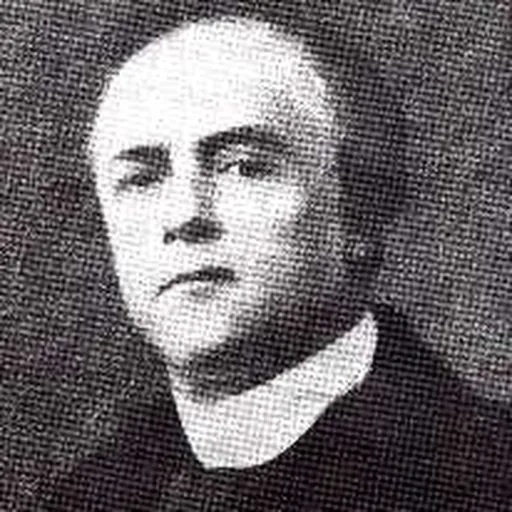
José de Salamanca, 1st Count of los Llanos
Spanish politician and entrepreneur
About José de Salamanca, 1st Count of los Llanos
Lived 1811 – 1883 (aged 71). José de Salamanca, 1st Count of los Llanos was a Spanish politician, entrepreneur, art collector and banker.
José de Salamanca y Mayol, 1st Marquess of Salamanca, 1st Count of Llanos, GE (23 May 1811 – 21 January 1883) was a Spanish businessman and politician. He served as Finance Minister of Spain and briefly as de facto prime minister in 1847.
Prominent during the reign of Isabella II, he was responsible for an extension to the city of Madrid; the Salamanca neighborhood of that city now bears his name. He had an adventurous life with many ups and downs,
Youth, student and mayor Salamanca studied philosophy and law at the Colegio de San Bartolomé y Santiago in Granada, finishing his studies in 1828.
Shortly after his return to his native Málaga, the liberal general José María Torrijos was detained for an attempted coup. Salamanca was probably involved in the coup; His revolutionary ardor was calmed for a time and, thanks to his father's friendship with Francisco Cea Bermúdez, the President of the Council of Ministers (effectively, prime minister), he was made mayor of Monòver, (province of Alicante) in 1833. He became a prominent figure in the highest circles of Madrid society. Among his associates over the next few years were Nazario Carriquiri, the Marquess of Marismas del Guadalquivir, Gaspar Remisa, José Buschenthal, Agustín Muñoz and the Rothschilds' agents in Madrid, Daniel Weisweiller and Ignacio Bauer. His possession of the salt monopoly, however, gained him the enmity, for the time, of General Ramón María Narváez.
As well as achieving such prominence (if not always honor and success) in business, his political star was also on the rise. On 28 March 1847 he was named Finance Minister of Spain in the government of Joaquín Francisco Pacheco; |La Ilustración (newspaper), 24 July 1854, at the outset of the bienio progresista, after Salamanca had gone into exile.
Long before the end of the bienio progresista Salamanca was back in Spain, This time his partners were the banker Nazario Carriquiri and the Count of Retamoso, Maria Christina's brother-in-law.
The construction of the line caused Salamanca some economic difficulties, and coincided with the financial crisis of 1846, not to mention Salamanca's failure at the Bank of Isabella II and a fall from grace that sent him into exile in France for 16 months.
Today, that route is part of the line from Madrid to Alcázar de San Juan, where it divides into a route to Andalusia and one to the Spanish Levante. A Sunday tourist train, the Tren de la Fresa ("Strawberry Train") keeps alive the nickname earned by the Madrid-Aranjuez line in its early years. The present-day Aranjuez station is located at a small distance from the original terminus immediately at the Royal Palace of Aranjuez.
Salamanca also invested in railways from Madrid to Irún, Córdoba to Málaga, and from Aranjuez to the Mediterranean;
Panic at the Bolsa de Madrid In autumn 1844, the Bolsa de Madrid—Spain's largest stock exchange—saw a series of enthusiastic sessions. Optimism reigned at the stability provided by the government of Narvaez. However, after several days of analysis, Salamanca began to sell short in a seemingly clumsy strategy.
Taking advantage of his privileged position in public affairs, Salamanca knew that several generals were considering a coup. He also knew that Narváez was maintaining a correspondence with some of them, intending to get them to drop the plan.
When the news arrived that General Martín Zurbano had risen up in rebellion in Nájera, Salamanca and his associates announced it to sow panic. The stock exchange, sensitive to any abrupt change in public affairs, plummeted, and Salamanca profited by some 30 million reales in a single day. Fernando Muñoz and General Narváez each received 2 million.
Failed Bank of Isabella II
Founded in 1844, it was to be an institution more or less on a par with the Bank of San Fernando. It was founded with capital of 100 million reales, which it distributed generously as credit among Spain's emerging capitalist investors.
Although the bank was never a financial success, Salamanca used its capital to make purchases, such as 71-block lot purchased from María Luisa de Borbón, paid for with a check for 1 million reales drawn on the bank. When the time came that the check had to be made good, Salamanca turned to Queen Isabella, who owed money to the bank. However, she insisted on paying the debt with her shares in the Madrid-Aranjuez railway, shares for which she had paid 4 million reales, but which were by this time practically worthless.
The bank was ultimately rescued by being merged into the Bank of San Fernando, forming the basis for the Bank of Spain.
However, he was not without other palaces. He owned the Palacio de Vista Alegre in Carabanchel Bajo, the Palacio de Buena Esperanza en Carabanchel Alto, and another in Aranjuez. He also owned extensive land in Los Llanos, the Palacio de Mitra in Lisbon, a hôtel particulier in Paris, and he rented a palace in Rome, each with an army of servants. José de Salamanca had been a lawyer, conspirator, mayor, judge, banker, underwriter of public works, theatrical impresario, director of businesses, engineer, agriculturalist, livestock rancher, government minister, senator, deputy, marquess, count, and Grandee of Spain. ("The Marquis of Salamanca") is a 1948 Spanish biopic about him. The marquis is played by Alfredo Mayo.
Don’t just read it —
keep it.
Full-length biographies made to live with: read them, listen on the way to work, watch them tonight.
- E-book
- Audio
- Video
Instant download · yours to keep · every purchase keeps this site free
Important facts
People in José de Salamanca, 1st Count of los Llanos's life
Named in this biography and alive at the same time
Related people
Same field, nearest in time


Contemporaries
People whose lives overlapped José de Salamanca, 1st Count of los Llanos's




Frequently asked questions
Who was José de Salamanca, 1st Count of los Llanos?
Spanish politician and entrepreneur (1811-1883)
When was José de Salamanca, 1st Count of los Llanos born?
José de Salamanca, 1st Count of los Llanos was born on 23 May 1811 in Málaga.
When did José de Salamanca, 1st Count of los Llanos die?
José de Salamanca, 1st Count of los Llanos died on 21 January 1883 in Madrid.
What was José de Salamanca, 1st Count of los Llanos's occupation?
José de Salamanca, 1st Count of los Llanos was a politician, entrepreneur, art collector and banker.
What nationality was José de Salamanca, 1st Count of los Llanos?
José de Salamanca, 1st Count of los Llanos was Spanish.
Sources & further reading
· Wikipedia: José de Salamanca, 1st Count of los Llanos
· DBpedia: José de Salamanca, Marquess of Salamanca
Cite this page
APA: Biography.guide. (2026). José de Salamanca, 1st Count of los Llanos. https://biography.guide/jose-de-salamanca-1st-count-of-los-llanos/
MLA: "José de Salamanca, 1st Count of los Llanos." Biography.guide, https://biography.guide/jose-de-salamanca-1st-count-of-los-llanos/.
Chicago: "José de Salamanca, 1st Count of los Llanos." Biography.guide. https://biography.guide/jose-de-salamanca-1st-count-of-los-llanos/.
Data last updated: 2026-10-01 · Spot an error? Report a correction.
Portrait: Wikimedia Commons · author & licence
Page generated 2026-10-04 14:34 UTC