
About José Chávez Morado
Lived 1909 – 2002 (aged 93). José Chávez Morado was a Mexican painter, printmaker, sculptor and graphic artist.
Mural The Conquest of Energy by José Chávez Morado at UNAM, Mexico City.
José Chávez Morado (4 January 1909 – 1 December 2002) was a Mexican artist who was associated with the Mexican muralism movement of the 20th century. His generation followed that of Diego Rivera, José Clemente Orozco and David Alfaro Siqueiros. Although Chávez Morado took classes in California and Mexico, he is considered to be mostly self-taught. He experimented with various materials, and was an early user of Italian mosaic in monumental works. His major works include murals at the Ciudad Universitaria, Secretaría de Comunicaciones y Transportes and Museo Nacional de Antropología in Mexico City as well as frescos at the Alhóndiga de Granaditas in the city of Guanajuato that took twelve years to paint. From the 1940s on, he also worked as a cultural promoter, establishing a number of cultural institutions especially in his home state of Guanajuato including the Museo de Arte Olga Costa – José Chávez Morado, named after him and his wife, the artist Olga Costa.
Life Chávez Morado was born on 4 January 1909 in Silao, Guanajuato, shortly before the outbreak of the Mexican Revolution. His father was a merchant, José Ignacio Chávez Montes de Oca; his mother was Luz Morado Cabrera. He came from a modest family; however, his grandfather was in possession of a private library of over 5,000 volumes which had been collected by his grandparents and great grandparents. The illustrations in those books provided the child with his first exposure to art; when he was small, he spent time copying them, especially illustrations from La Ilustración Española.
His mother died when he was a teenager, and at age 16, he began to work at the Silao electrical company, Compañia de Luz. He lost this job when he drew a caricature of his boss. They married in 1935.
In 1949, he studied abroad in Europe and Cuba. At the time of his death, he was considered to be the "last of the Mexican muralists".
Career Chávez Morado was a painter, engraver, muralist and cultural promoter during his career. He also worked to support educational institutions in the state of Guanajuato. El retorno de Quetzalcoatl and La conquista de la energia are outside of the usual social and political themes of his work, but with La ciencia y el trabajo, he returned to examining social issues, this time in relation to the science building of the Ciudad Universitaria itself, which was designed by Mexico City architect Eugenio Peschard. It is not popular with those at the university but it is sought out by foreign tourists. It shows how the farm workers of the expropriated haciendas were used in the construction of the university as well as the architects and engineers who designed it, as well as the Van de Graaff generator which was a centerpiece of the university in the 1950s. This last work was created on the vestibule of the Auditorium with a vinyl substance. Its location has made this piece subject to damage from humidity and vandalism.
During his career, Chávez Morado was involved in leftist politics, which influenced his art. In the 1930s, he joined the Liga de Escritores y Artistas Revolucionarios. The Liga edited a print album, Estampas del Golfo, which carried ten of his wood engravings. In 1937 he traveled as part of a committee of Mexican intellectuals which included Silvestre Revueltas, Juan de la Cabada, Octavio Paz, Carlos Pellicer, Elena Garro and José Mancisidor to Spain to support the Republicans. In 1938, he joined the Taller de Gráfica Popular, leaving in 1941. In 1941, he collaborated with La Voz de México, drawing cartoons under the pseudonym 'Juan Brochas'. He used the pseudonym 'Chon' to make illustrations for the weekly Combate headed by Narciso Bassols. In early 1942, he published four editions of a newspaper/poster called El Eje-Le, which was a publication of the Artistas Libres de México. In the 1940s, he was the general secretary of the Fine Arts Professors’ Union, which made non-commercial engravings with socialist messages to paste on poles outside. They had to do this activity at night as they were subject to attack by reactionaries such as the Camisas Doradas (Golden Shirts).
Later work included the reliefs on the column of the "umbrella" structure in the center of the Museo Nacional de Antropología in 1964, a monument to Benito Juárez on the Guadalajara–Colima highway in the 1970s, and the copper grilling on the façade of the new Legislative Palace in Mexico City.
His artistic legacy consists of over 2,000 works, including murals, other monumental works, etchings and paintings. His first exhibition was in 1944 at the Galería de Arte Mexicano. After that, his works were shown at the Instituto Nacional de Bellas Artes, the Instituto Nacional de Antropología e Historia and the Universidad Nacional Autónoma de Mexico as well as abroad. In 1976, he exhibited his drawing work for the first time at the José Clemente Orozco Gallery in the Zona Rosa, with the title of Apuntes de mi libreta, which were later published in a book of the same name. His works can be found in the collections of the Museo de Antropologia, UNAM, Centro Médico Nacional Siglo XXI, the Alhóndiga de Granaditas, Museo del Pueblo, the Olga Costa Chávez Morado Museum, Museo de los hermanos Tomás y José Chávez Morado and in private collections around the world.
He received his first recognition for his work in 1945 when he won first prize at a graphics competition sponsored by the Mexico City government for the 25th anniversary of the Mexican Revolution. In the 1950s, he began to receive accolades and appointments to art commissions. He received the National Prize for Arts and Sciences from the Mexican government in 1974. In 1985, he was admitted into the Academia de Artes and received an honorary doctorate from the Universidad Nacional Autónoma de México. He was also the vice president for Latin America of the World Crafts Council of UNESCO and a member emeritus of the Sistema Nacional de Creadores de Arte. His last homage while he was alive was at the Festival Internacional Cervantino. A retrospective of his work was hosted in Cádiz in 2012 on the 10th anniversary of his death.
Artistry Chávez Morado created engravings, illustrations, cartoon drawings, sculpture, murals, canvas painting, frescos, bronze, glass, and was one of the first Mexican artists to work with Italian mosaic on monumental works. Although he had some training in California and Mexico, he is considered to be mostly self-taught. He was interested in experimenting with new techniques and materials for murals. His work ranged from traditional frescos to those made with vinyl, mosaics, stone, bronze and terracotta.
His work was always figurative in the style of Mexican muralism also known as the Escuela Mexicana de Pintura. He is grouped with contemporaries such as Juan O'Gorman, Raúl Anguiano and Alfredo Zalce as the generation of the school to follow Diego Rivera, José Clemente Orozco and David Alfaro Siqueiros . Like the others, Chávez Morado promoted the social and political principles of the Mexican Revolution. He believed that art should be esthetic and political and was both politically active as well as an artist. His work emphasized faith in the masses, the exaltation of the struggle and heroes of the Mexican Revolution, popular culture and the railroad. His painting tended to emphasize the human form, with depictions of rural areas in Mexico, customs, dances and folk religion. By the mid 20th century, his politics and art became militant and communist, as can best be seen in his engravings and the work he did with the Taller de Gráfica Popular.
Don’t just read it —
keep it.
Full-length biographies made to live with: read them, listen on the way to work, watch them tonight.
- E-book
- Audio
- Video
Instant download · yours to keep · every purchase keeps this site free
Important facts
People in José Chávez Morado's life
Named in this biography and alive at the same time




Related people
Same field, nearest in time
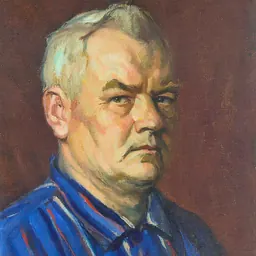


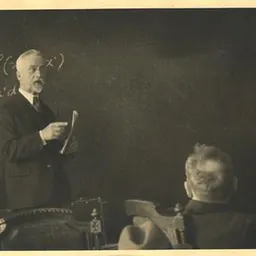
Contemporaries
People whose lives overlapped José Chávez Morado's




Frequently asked questions
Who was José Chávez Morado?
Mexican artist (1914-2002)
When was José Chávez Morado born?
José Chávez Morado was born on 4 January 1909 in Silao.
When did José Chávez Morado die?
José Chávez Morado died on 1 December 2002 in Guanajuato.
What was José Chávez Morado's occupation?
José Chávez Morado was a painter, printmaker, sculptor and graphic artist.
What nationality was José Chávez Morado?
José Chávez Morado was Mexican.
Sources & further reading
· Wikipedia: José Chávez Morado
Cite this page
APA: Biography.guide. (2026). José Chávez Morado. https://biography.guide/jose-chavez-morado/
MLA: "José Chávez Morado." Biography.guide, https://biography.guide/jose-chavez-morado/.
Chicago: "José Chávez Morado." Biography.guide. https://biography.guide/jose-chavez-morado/.
Data last updated: 2026-09-20 · Spot an error? Report a correction.
Page generated 2026-09-27 04:59 UTC