
About Elena Garro
Lived 1916 – 1998 (aged 81). Elena Garro was a Mexican writer, journalist, playwright, prose writer and screenwriter.
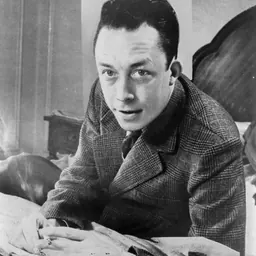
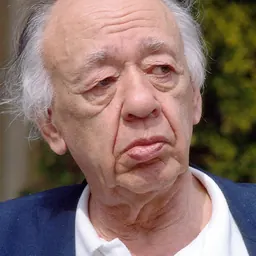
Elena Delfina Garro Navarro (December 11, 1916 – August 22, 1998) was a Mexican author, playwright, screenwriter, journalist, short story writer, and novelist. She has been described as one of the pioneers and an early leading figure of the Magical Realism movement, though she rejected this affiliation. Alongside the works of Juan Rulfo, her first three works: Un hogar sólido, Los recuerdos del porvenir (1963), and La semana de colores (1964), are considered to be among the earliest examples of Magical Realism in Latin American literature. Garro's writing, despite being mostly theatre and fictional prose, borrowed heavily from poetry and its literary elements. Author and biographer Patricia Rosas Lopategui has described Garro's style as "an attempt to rescue the use of everyday language in the form of poetry". Her style has also been compared to that of French writers like Georges Schéhadé, Jean Genet, as well as Romanian-French playwright Eugène Ionesco, due to the surreal nature of her stories. A close friend of Albert Camus, her works were also heavily influenced by his style and philosophy. Despite the hostilities, they are considered among the most talented couple of writers to emerge during the Latin American literary boom of the twentieth century.
Garro is seen as one of the unsung figures of the boom; her legacy was influenced, in part, by her rejection of Magical Realism as she considered the term "a cheap marketing label".
Biography
Early life and education Elena Garro was born in the city of Puebla to José Antonio Garro Melendreras, a Spanish national, and Esperanza Navarro Benítez, a native from Mexico's northern state of Chihuahua. The third of five children, she spent her childhood in Mexico City but moved to Iguala, Guerrero, during the Cristero War. At the age of 12 she returned to Mexico City where she finished her studies at the Antiguo Colegio de San Ildefonso. Afterwards, she studied literature, choreography and theater in the National Autonomous University of Mexico in Mexico City, where she was an active member of Julio Bracho's theatre group. Spain was in the midst of its Civil War and political fervors were in an all-time high. The congress was seen as an attempt from communists to spread their ideals and foster propaganda and that edition was its last. In 1992, Garro published, Memorias de España 1937, which captured her experiences during the trip. ,7
In addition to her fiction writing, Garro sometimes wrote "for various Mexican journals and newspapers", including "opinion pieces, political notes and two feature series". 1996 for Busca mi esquela & Mi primer amor 1996 Sor Juana Inés de la Cruz Prize for Busca mi esquela (translated as Look for My Obituary)
Works Los recuerdos del porvenir, Mexico City, Joaquín Mortiz, 1963, translated as Recollections of Things to Come by Ruth L. C. Simms. Andamos huyendo Lola, Mexico City, Joaquín Mortiz, 1980. Testimonios sobre Mariana, Mexico City, Grijalbo, 1981. Reencuentro de personajes, Mexico City, Grijalbo, 1982, La casa junto al río. Mexico City, Grijalbo, 1983, Y Matarazo no llamó..., Mexico City, Grijalbo, 1991. Inés. Mexico City, Grijalbo, 1995, Tiempo destino y opresión en la obra de Elena Garro [Time, Destiny and Oppression in the Work of Elena Garro], by Rhina Toruño Haensly (under Rhina Toruño). An authoritative book on the work of Elena Garro, a leading twentieth-century Mexican author. New York, NY: Mellen University Press, 1996. Busca mi esquela & Primer amor. 2. ed. Monterrey, Ediciones Castillo, 1998. (Colección Más allá; 14) , translated as First Love & Look for My Obituary: Two Novellas, and winner of the Sor Juana Inés de la Cruz Prize Un traje rojo para un duelo. Monterrey, Ediciones Castillo, 1996, Un corazón en un bote de basura, Mexico City, Joaquín Mortiz, 1996, Mi hermanita Magdalena, Monterrey, Ediciones Castillo, 1998. Cita con la memoria. Elena Garro cuenta su vida a Rhina Toruño. Análisis de sus obras. [Encounter With Memory. Elena Garro Recounts her Story Life to Rhina Toruño], by Rhina Toruño Haensly (under Rhina Toruño). Buenos Aires: Prueba de Galera, 2004.
Don’t just read it —
keep it.
Full-length biographies made to live with: read them, listen on the way to work, watch them tonight.
- E-book
- Audio
- Video
Instant download · yours to keep · every purchase keeps this site free
Important facts
Family & relationships
People in Elena Garro's life
Named in this biography and alive at the same time



Related people
Same field, nearest in time



Contemporaries
People whose lives overlapped Elena Garro's





Frequently asked questions
Who was Elena Garro?
Mexican writer (1916–1998)
When was Elena Garro born?
Elena Garro was born on 11 December 1916 in Heroica Puebla de Zaragoza.
When did Elena Garro die?
Elena Garro died on 22 August 1998 in Cuernavaca.
What was Elena Garro's occupation?
Elena Garro was a writer, journalist, playwright, prose writer and screenwriter.
What nationality was Elena Garro?
Elena Garro was Mexican.
Sources & further reading
Cite this page
APA: Biography.guide. (2026). Elena Garro. https://biography.guide/elena-garro/
MLA: "Elena Garro." Biography.guide, https://biography.guide/elena-garro/.
Chicago: "Elena Garro." Biography.guide. https://biography.guide/elena-garro/.
Data last updated: 2026-09-22 · Spot an error? Report a correction.
Page generated 2026-09-27 05:34 UTC