
About José Cândido de Campos Júnior
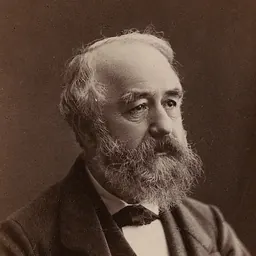
Lived 1854 – 1939 (aged 84–85). José Cândido de Campos Júnior was a Brazilian politician.
José Cândido de Campos Júnior (Santo Antônio da Patrulha, 1854 - Porto Alegre, 1939) was a Brazilian politician and lawyer
Biography Campos Júnior, son of José Cândido de Campos and Honorata, was born into a poor and obscure family. He was mulatto and descended from slaves, a fact almost always omitted by official historiography. He reportedly lost his father at an early age and became the family breadwinner by working as a musician and then as a public employee. He joined the Rio-Grandense Republican Party (PRR), obtained a law degree and then, through the PRR, was appointed to the position of prosecutor of the Comarca of Vacaria.
Later, he became municipal secretary of Caxias do Sul and assumed the Intendency by nomination of the state president, Júlio de Castilhos, after the resignation of the previous intendant, Alorino Machado de Lucena, being appointed on September 30 and sworn in on October 11, 1895. At the same time, he also became Grand Master of the local Masonic Lodge, Força e Fraternidade. The PRR was strongly attuned to the positivist philosophy and had broad support in Freemasonry, to the point that most of the most influential public positions were held by Freemasons. Campos Júnior governed during one of the most turbulent periods in the history of the village of Caxias, since the place was in the process of structuring its most basic functions as a municipality, and there were still difficulties and shortages in all areas. Until 1884 it was a colony, and from that date until 1890 it was a district of São Sebastião do Caí.
In Caxias, most of the settlers who constituted its population were Italians from different regions who had arrived in Brazil bringing many of the old social, political and cultural rivalries that had divided Italy for long centuries into a multiplicity of independent states. The rivalries between the settlers were replicated in the public administration and in the City Council, which was divided into divergent political currents.
On taking office, Campos Júnior found a precarious government structure and an agitated social environment, which worsened after the arrival of Father Pietro Nosadini in early 1896. Dynamic, charismatic, combative and a great organizer, Nosadini soon managed to unite the settlers around the Catholic religion, a cultural element that was common to all. He was a supporter of ultramontanism, a Catholic current that preached the primacy of the Church in both sacred and secular matters. He also fiercely fought freemasonry and progressive philosophies such as positivism, and under his leadership the people began to organize and demand measures that would serve their interests, accusing the administration of the backwardness and confusion in which the village found itself. According to Loraine Giron, "the priest was a powerful force in organizing and unifying the Catholic community, and under his leadership the Catholic movement gained strength and became feared". Besides political and ideological differences, Campos Júnior took very unpopular measures, such as banning the traditional morra game, one of the favorite hobbies of Italian settlers, alleging that it promoted disorder and crime.
On September 24, 1896, Campos Júnior was brought back to power by popular vote, taking office on October 13. However, conflicts increased, leading to violence. On February 8, 1897, Nosadini was the victim of an attack in public that almost took his life, and on March 24, 1898, Campos Júnior suffered a second one, which was not witnessed by anybody and caused no injuries. He accused Ambrosio Bonalume and members of Salvador Sartori's family, who were strong supporters of Nosadini and important leaders in the community, as the authors of his attack, but the allegations were vigorously refuted and did not gain credibility among the population. Angelo Costamilan believes that Campos Júnior put on an act in order to incriminate Nosadini and provide a good excuse for expelling him from the village, since Campos Júnior considered him to be a nuisance and an inciter of revolts. The conflicts with the Catholics calmed down after Nosadini's transfer in December 1898, but the situation was not peaceful.
Don’t just read it —
keep it.
Full-length biographies made to live with: read them, listen on the way to work, watch them tonight.
- E-book
- Audio
- Video
Instant download · yours to keep · every purchase keeps this site free
Important facts
People in José Cândido de Campos Júnior's life
Named in this biography and alive at the same time


Related people
Same field, nearest in time





Contemporaries
People whose lives overlapped José Cândido de Campos Júnior's





Frequently asked questions
Who was José Cândido de Campos Júnior?
Brazilian politician
When was José Cândido de Campos Júnior born?
José Cândido de Campos Júnior was born in 1854.
When did José Cândido de Campos Júnior die?
José Cândido de Campos Júnior died in 1939.
What was José Cândido de Campos Júnior's occupation?
José Cândido de Campos Júnior was a politician.
What nationality was José Cândido de Campos Júnior?
José Cândido de Campos Júnior was Brazilian.
Sources & further reading
· Wikipedia: José Cândido de Campos Júnior
· DBpedia: José Cândido de Campos Júnior
Cite this page
APA: Biography.guide. (2026). José Cândido de Campos Júnior. https://biography.guide/jose-candido-de-campos-junior/
MLA: "José Cândido de Campos Júnior." Biography.guide, https://biography.guide/jose-candido-de-campos-junior/.
Chicago: "José Cândido de Campos Júnior." Biography.guide. https://biography.guide/jose-candido-de-campos-junior/.
Data last updated: 2026-09-20 · Spot an error? Report a correction.
Page generated 2026-09-27 05:28 UTC