
About José Antonio Raón Gutiérrez
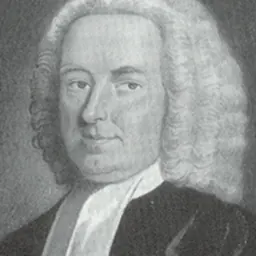
Lived 1703 – 1773 (aged 69). José Antonio Raón Gutiérrez was a Spanish military officer and politician.
José Antonio Raón y Gutiérrez (c. 1700 – 4 January 1773) was a Spanish general who served as Royal Governor of Panama, and the 50th Governor-General of the Philippines. He is known as an able administrator despite being perceived as corrupt.
Early life and career There is not much known about the early career of Raón other than that he was from Calahorra and that he was born around 1700. However, there is documentary evidence which suggests that he was married to Josefa Mondragon. They had two children: José Raón, a lieutenant, and Josefa Delgado y Amate. In 1761, he was appointed as interim Royal Governor of Panama, the first appointment made by Charles III of Spain in the colonial administrative district. Before his appointment, he served as a brigadier general in the Spanish Army.
Governor General of the Philippines Only 6 July 1765, Raón arrived in the Philippines, coincidental with the arrival of the ship Buen Consejo, which went around the Cape of Good Hope. The Buen Consejo was the first Spanish ship to travel through the area since the Dutch took over in 1652. He was responsible for the expulsion of Jesuits in the Philippines, pursuant to the royal decree made by Charles III of Spain in 1767, as well as revising the "Ordinances of Good Government" in 1768, a document drafted by former Governor-General Pedro Manuel de Arandía Santisteban. Between 1769 and 1771 the Jesuits in the Philippines were transported to Spain and from there deported to Italy. The lack of Jesuits in Spain and the colonies prompted José Moñino, 1st Count of Floridablanca, the reformist chief minister of Charles III of Spain, to undertake a program of hiring new teachers and modernizing the Spanish educational system. In the Philippines, this meant that every village or barrio was allocated a school and a teacher. The implementation of these reforms expanded the reach of basic education in the archipelago.
The British invasion of Manila encouraged Moro raiders to attack Mariveles, Bataan, a town in the Manila Bay area. During the invasion, Sultan Azim ud-Din I of Sulu was reinstated by the British, and the attack was part of the sultan's revenge on the Spaniards. In response to this, Raón launched a military campaign against the raiders. However, lack of resources dampened Raón's resistance. Meanwhile, the Chinese were ordered to be exiled following a royal decree in 1766. This was in response to the collaboration of a number of Chinese during the British invasion. However, he chose not to implement the decree in full measure, and Chinese and other foreign vessels continued to anchor in Manila Bay. At this time, French astronomer Guillaume Le Gentil visited the Philippines. He observed that Raón received "presents" from the respective captains of the vessels, which Raón himself displayed to the French astronomer. This elevated the perception of corruption during the Raón administration. It was also during Le Gentil's visit in 1766 when a powerful storm struck Manila. Raón wrote that this storm "brought great misery to the people."
Death
In 1770, the Real Audiencia sent Simón de Anda y Salazar to assume Raón's position. Anda arrived in July of the same year to succeed as Governor-General. The subsequent investigation (residencia) into Raón and three other associates, namely Francisco Henriquez de Villacorta, Domingo Blas de Basaraz (special commissioner for the expulsion of Jesuits), and Juan Antonio Cosio (Raón's secretary), was one of Anda's first acts as the new governor. The first two were members of the Real Audiencia of Manila, while the last one was Raón's secretary.
Don’t just read it —
keep it.
Full-length biographies made to live with: read them, listen on the way to work, watch them tonight.
- E-book
- Audio
- Video
Instant download · yours to keep · every purchase keeps this site free
Important facts
People in José Antonio Raón Gutiérrez's life
Named in this biography and alive at the same time
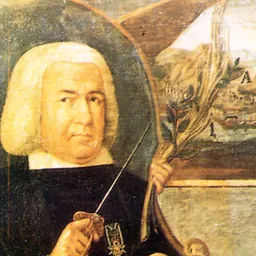


Related people
Same field, nearest in time
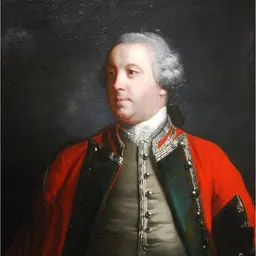
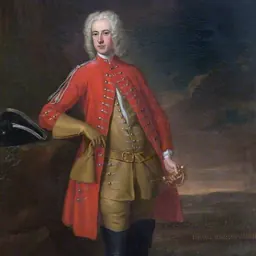


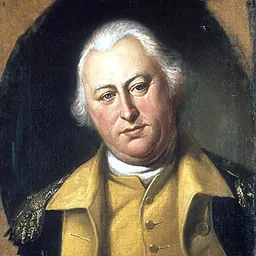
Contemporaries
People whose lives overlapped José Antonio Raón Gutiérrez's



Frequently asked questions
Who was José Antonio Raón Gutiérrez?
Spanish military personnel
When was José Antonio Raón Gutiérrez born?
José Antonio Raón Gutiérrez was born on 29 April 1703 in Calahorra.
When did José Antonio Raón Gutiérrez die?
José Antonio Raón Gutiérrez died on 4 January 1773 in Manila.
What was José Antonio Raón Gutiérrez's occupation?
José Antonio Raón Gutiérrez was a military officer and politician.
What nationality was José Antonio Raón Gutiérrez?
José Antonio Raón Gutiérrez was Spanish.
Sources & further reading
· Wikipedia: José Antonio Raón Gutiérrez
· DBpedia: José Antonio Raón y Gutiérrez
Cite this page
APA: Biography.guide. (2026). José Antonio Raón Gutiérrez. https://biography.guide/jose-antonio-raon-gutierrez/
MLA: "José Antonio Raón Gutiérrez." Biography.guide, https://biography.guide/jose-antonio-raon-gutierrez/.
Chicago: "José Antonio Raón Gutiérrez." Biography.guide. https://biography.guide/jose-antonio-raon-gutierrez/.
Data last updated: 2026-09-20 · Spot an error? Report a correction.
Page generated 2026-09-27 05:05 UTC