
About José Antonio Aponte
Lived 1760 – 1812 (aged 51–52). José Antonio Aponte was a Cuban carpenter and military personnel.
José Antonio Aponte, often known as "Black" José Aponte, (died April 9, 1812, in Havana) was a Cuban political activist and military officer of Yoruba origin who organized one of the most prominent slave rebellions in Cuba, the Aponte Conspiracy of 1812. He held the rank of first corporal (cabo primero) in Havana's black militia, and was the leader of his local Yoruba association. Aponte, a free black carpenter in Havana, was proclaimed to be the leader of a plot to rebel against the Cuban government, free the slaves and uplift free blacks, and overthrow slavery in Cuba. The movement struck several sugar plantations on the outskirts of Havana, but it was soon crushed by the government. He was eventually caught and hanged on April 9, 1812. He was then decapitated, and his head was placed in an iron cage and showcased in front of the house where he lived, with his hand going on display in another street. There are gaps in knowledge regarding his family and upbringing; the name of his mother is unknown and details about his childhood and adolescence are not recorded in many dominant narratives about him.
His grandfather, Joaquín Aponte worked his way up the military hierarchy eventually becoming captain of the grenadiers and serving for 43 years in the free black militia in Havana. As a descendant of this legacy, he too joined the free black militia of Havana.
Aponte also taught himself about politics and history, as well as world cultures. He was well versed in African and Creole languages and history. He had a small library of twelve books, some of which included Aesop's Fables, a guide to Rome, and a history of Ethiopia. In the 19th century, as Cuba became more of a plantation society due to the sugar boom, a massive importation of slaves by the government transformed Cuban society by dividing social class more by racial lines. This may have reduced the rights of people of African descent, but it set the stage for more unity among both free and enslaved people of African descent for rebellion. Thus, Aponte was motivated to lead a mass insurrection to abolish slavery, overthrow the colonial tyranny, and create an independent society free of discrimination. Aponte assembled a group of slaves and people of color to plan and burn sugar mills, attack the armories in Havana, and arm 400 men he amassed in order to revolt and overthrow the slavery system. However, the government violently crushed the revolt, and hanged Aponte and some of his comrades on April 9, 1812. There is pushback against the narrative of Aponte being the sole leader of the rebellion of 1812; some historians claim that the movement was decentralized with multiple leaders with congregant leadership, since there were various ethnic groups enslaved on the island.
Book of paintings When authorities searched Aponte's place of residence they found a book of paintings and plan made by Aponte. According to Spanish officials, the book of drawings contained maps of streets and military garrisons in Cuba, pictures of black soldiers beating whites, sketches of his father and grandfather, a drawing of George Washington, portraits of black kings, and episodes in Aponte's own life. After interrogating Aponte, colonial officials asserted that he used the book of drawings as a blueprint for the revolution to illustrate and explain his plans for the rebellion, considering he allegedly showed the book to members of the free black militia and numerous others during meetings at his house. It is proposed that he used images of black revolutionaries (like Toussaint L'Ouverture, Jean-Jacques Dessalines, and Henri Christoph) and drew inspiration from the Haitian Revolution to inspire his followers. Because of Aponte's book of paintings, the officials declared José Antonio Aponte the leader of the island-wide rebellion.
Unfortunately the book of paintings was lost, and the only knowledge we have about it is through the description Aponte gave to authorities while being interrogated. Some consider his work a political and pedagogical tool, and highlight its recovery of the knowledge of the western Ethiopians to celebrate Africa's future in universal history. Others think that Aponte wanted the book to be read as a meditation on black sovereignty, an intellectual and subversive representation of imagining a black kingdom—one in which he was trying to create in Cuba. However, Fernando Ortiz—a renowned Cuban anthropologist and influential Cuban social scientist of the twentieth century—regarded Aponte's Rebellion as a strong commitment on the part of slaves to gain their freedom, and thus validated the importance of the rebellion for Cuba's past, allowing scholars to shift the narratives about Aponte.
Black scholars and intellectuals have seized upon the image of Aponte and his movement to assert the important role of Afro-Cubans in their country's past, while revolutionaries have referenced Aponte as a model of insurrection against injustice and systemic prejudice. Most recently, Aponte has also been re-imagined as a national figure in Cuba, following a 2012 bicentennial that commemorated his death at the hands of colonial authorities.
Don’t just read it —
keep it.
Full-length biographies made to live with: read them, listen on the way to work, watch them tonight.
- E-book
- Audio
- Video
Instant download · yours to keep · every purchase keeps this site free
Important facts
People in José Antonio Aponte's life
Named in this biography and alive at the same time
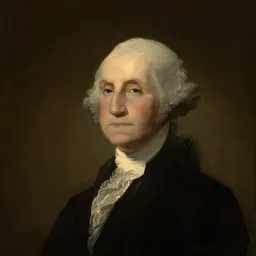
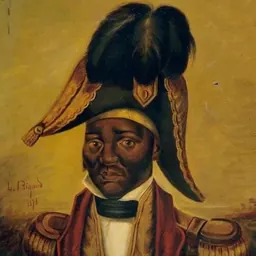
Related people
Same field, nearest in time



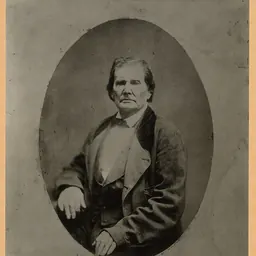

Contemporaries
People whose lives overlapped José Antonio Aponte's





Frequently asked questions
Who was José Antonio Aponte?
leader of Aponte Conspiracy
When was José Antonio Aponte born?
José Antonio Aponte was born in 1760 in Havana.
When did José Antonio Aponte die?
José Antonio Aponte died on 9 April 1812.
What was José Antonio Aponte's occupation?
José Antonio Aponte was a carpenter and military personnel.
What nationality was José Antonio Aponte?
José Antonio Aponte was Cuban.
Sources & further reading
· Wikipedia: José Antonio Aponte
· DBpedia: José Antonio Aponte
Cite this page
APA: Biography.guide. (2026). José Antonio Aponte. https://biography.guide/jose-antonio-aponte/
MLA: "José Antonio Aponte." Biography.guide, https://biography.guide/jose-antonio-aponte/.
Chicago: "José Antonio Aponte." Biography.guide. https://biography.guide/jose-antonio-aponte/.
Data last updated: 2026-09-20 · Spot an error? Report a correction.
Page generated 2026-09-27 05:24 UTC