
About José Alfredo Jiménez
Lived 1926 – 1973 (aged 47). José Alfredo Jiménez was a Mexican singer-songwriter, singer, songwriter, mariachi, composer and musician.
José Alfredo Jiménez Sandoval (; 19 January 1926 – 23 November 1973) was a Mexican actor and singer-songwriter, whose songs are regarded as the basis of modern Regional Mexican music and Rancheras.
Early life Jiménez was born in Dolores Hidalgo, Guanajuato, Mexico. His father died when he was ten years old, and his mother moved the family to Mexico City. Jiménez worked from a young age to help support his family. He took a job as a waiter at a Yucatacan restaurant in Santa María de la Ribera
In his youth, Jiménez enjoyed playing football as a goalkeeper. He and Antonio Carbajal—who would later become a legendary Mexican goalkeeper and the first player to participate in five FIFA World Cups—competed for the goalkeeper position at the amateur club El Oviedo in Santa María la Ribera, Mexico City, in 1942.
Career The singer Miguel Aceves Mejía claims to have discovered him from Los Rebeldes. According to Mejía, Jiménez did not play an instrument and did not even know the Spanish word for "waltz" or what keys his songs were in. Following Mejía's instruction, Jiménez auditioned at the Radio Station XEW's Amanecer Ranchero together with the Mariachi Vargas and Rubén Fuentes. Jiménez performed a cappella, including his song "Ella". Don Miguel subsequently recorded "Ella, "Yo", "Serenata huasteca" and "Tu Recuerdo y yo". José Alfredo Jiménez in a traditional charro suit, photographed circa 1950 by Simón Flechine. After this, he composed more than 1,000 songs. Among the most famous are "Yo", "Me equivoqué contigo", "Ella", "Paloma querida", "Que se me acabe la Vida ", "Tú y la mentira", "Media vuelta", "El Rey", "Sin sangre en las venas", "El jinete", "Si nos dejan", "Amanecí en tus brazos", "Llegando a ti", "Tu recuerdo y yo", El hijo del pueblo", "Cuando el destino", "El caballo blanco", "Llegó borracho el Borracho" and "Que te vaya bonito", as well as "Camino de Guanajuato", where he sang about his home state of Guanajuato.
One of his last appearances on Mexican television occurred in 1973, just months prior to his death, where he introduced his last song, "Gracias", accompanied by his wife, singer Alicia Juarez. Later, Jiménez died at the age of 47 years old in Mexico City on 23 November 1973 due to complications resulting from cirrhosis. In 1970, Jiménez married singer Alicia Juárez in a religious ceremony; however, due to the unresolved status of his first marriage, the legality of this union is disputed. They remained together until Jiménez's death in 1973.
Tribute
Jiménez is buried in his hometown of Dolores Hidalgo, Guanajuato. His tomb, the "Mausoleum of José Alfredo Jiménez", is in the shape of a traditional shawl and sombrero, much like the ones Jiménez would wear during his performances.
Son of José Alfredo Jiménez, singer José Alfredo Jiménez Medel, wrote a prologue to a 214-page book commemorating him that is titled En el último trago nos vamos. His daughter, Paloma Jiménez Gálvez, also released a book titled Es Inútil Dejar De Quererte: 50 Años Sin José Alfredo in the 37th edition of the Guadalajara International Book Fair.
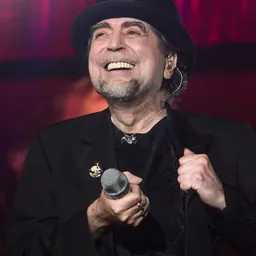
His songs have been recorded by many artists, such as Selena, Miguel Aceves Mejía, Little Joe Hernández & The Latinaires, and the Mexican rock group Maná. Joaquín Sabina paid homage to Jiménez with his song, "Por el Bulevar de los Sueños Rotos" ("On the Boulevard of Broken Dreams"). thumb
Discography Studio albums La Sota De Copas (1970) El Cantinero (1971) El Rey (1971) Gracias (1972)
Compilation albums 15 Exitos Inolvidables De (1983) — RCA Records 12 Exitos De Oro (1988) — RCA Records Lo Esencial (2008) — RCA/Legacy Recordings
Partial filmography
The Guests of the Marquesa (1951) Here Comes Martin Corona (1952) El enamorado (1952) Ni pobres ni ricos (1953) Los aventureros (1954) Tres bribones (1955) – Cantante Camino de Guanajuato (1955) – José Alfredo Martínez Pura Vida (1956) – El mismo La fiera (1956) – Cantante La feria de San Marcos (1958) Guitarras de medianoche (1958) – José Alfredo Ferias de México (1959) Mis padres se divorcian (1959) – Cantante (uncredited) Cada quién su música (1959) El hombre del alazán (1959) Juana Gallo (1961) – Nabor, el caporal Las hijas del Amapolo (1962) La Sonrisa de los Pobres (1964) Escuela para solteras (1965) – El desesperado Audaz y bravero (1965) – Cantante Me cansé de rogarle (1966) Arrullo de Dios (1967) El caudillo (1968) – Borrego La chamuscada (1971) – Revolucionario La loca de los milagros (1975) – (final film role)
Don’t just read it —
keep it.
Full-length biographies made to live with: read them, listen on the way to work, watch them tonight.
- E-book
- Audio
- Video
Instant download · yours to keep · every purchase keeps this site free
Important facts
People in José Alfredo Jiménez's life
Named in this biography and alive at the same time





Related people
Same field, nearest in time


Contemporaries
People whose lives overlapped José Alfredo Jiménez's


Frequently asked questions
Who was José Alfredo Jiménez?
Mexican singer and songwriter (1926–1973)
When was José Alfredo Jiménez born?
José Alfredo Jiménez was born on 19 January 1926 in Dolores Hidalgo Municipality, Guanajuato.
When did José Alfredo Jiménez die?
José Alfredo Jiménez died on 23 November 1973 in Mexico City.
What was José Alfredo Jiménez's occupation?
José Alfredo Jiménez was a singer-songwriter, singer, songwriter, mariachi, composer and musician.
What nationality was José Alfredo Jiménez?
José Alfredo Jiménez was Mexican.
Sources & further reading
· Wikipedia: José Alfredo Jiménez
· DBpedia: José Alfredo Jiménez
Cite this page
APA: Biography.guide. (2026). José Alfredo Jiménez. https://biography.guide/jose-alfredo-jimenez/
MLA: "José Alfredo Jiménez." Biography.guide, https://biography.guide/jose-alfredo-jimenez/.
Chicago: "José Alfredo Jiménez." Biography.guide. https://biography.guide/jose-alfredo-jimenez/.
Data last updated: 2026-09-25 · Spot an error? Report a correction.
Page generated 2026-09-27 05:11 UTC