
About Jorge Dias
Lived 1907 – 1973 (aged 65–66). Jorge Dias was a Portuguese anthropologist, writer and ethnologist.
António Jorge Dias (31 July 1907 – 5 February 1973) was a Portuguese ethnologist. He is mainly known for his ethnographic fieldwork in the late 1950s during Portuguese colonial times in Angola and Mozambique. Based on this, he and his wife, the self-trained ethnologist Margot Dias, published three ethnographic volumes titled Os Macondes de Moçambique about the Makonde people of northern Mozambique. Further, Dias was the first director of the Museu de Etnología do Ultramar that later became the Museu Nacional de Etnología in Lisbon.
Notwithstanding his general acceptance of assimilationist concepts of Portuguese colonial rule and having authored classified reports about attitudes towards this rule in the later colonial era of Mozambique, Dias has been called "the most important Portuguese anthropologist of the 20th century."
Life and career
Early life Dias was born in Porto in 1907 and spent most of his youth there. His parents had a farm near Guimarães, where Dias grew up experiencing Portuguese rural life. After finishing his schooling, he moved to the village of Gralheira, near Cinfães. As a travelling salesman, he roamed around the regions of Minho and Trás-os-Montes, selling umbrellas and even accompanying a travelling circus. At the age of twenty-two, he prepared for the entrance exams in order to study Germanic Philology at the University of Coimbra. During the following years, he had three children with his first wife, Madalena Lima de Almeida Dias.
Before and during World War II, Dias was seconded by the Portuguese Ministry of Education to Germany as lecturer in Portuguese. He taught at the University of Rostock from 1938 to 1939, the Ludwig-Maximilians-Universität München from 1939 to 1942, and the Friedrich Wilhelm University of Berlin from 1942 to 1944. At the Ludwig-Maximilians-Universität München, he started his interest in Regional Ethnology (in German: Volkskunde), a discipline still unknown in Portugal at the time. In 1940, he met the German pianist Margot Schmidt at a concert in Rostock. They married in November 1941 and had three children in the following years. Dias studied contemporary history and German studies for six semesters at the Faculty of Philosophy at the Ludwig-Maximilians-Universität München, majoring in Romance philology; his professors were Romanist , Germanists Otto Höfler and , and historian Karl Alexander von Müller. In March 1944, he obtained his doctorate from the Ludwig-Maximilians-Universität München with a thesis in European ethnology based on his research on the Portuguese town Vilarinho da Furna,
From 1952 to 1956, Dias was Professor of Ethnology at the University of Coimbra, after which he moved on to the University of Lisbon. As professor of Cultural Anthropology, he taught General and Regional Ethnology, including courses about so-called "Native Institutions" at the Institute of Overseas Studies. In 1954, he was visiting professor at the Centre for Portuguese Studies teaching a course on Portuguese Ethnography at the Paraná State University in Curitiba, Brazil. Further, he spoke about Portuguese Culture in Africa as a guest lecturer at the University of the Witwatersrand, Johannesburg, South Africa, in 1959.
Classified reports about the campaigns At the same time when Dias's mission undertook their ethnographic fieldwork that resulted in the monographs on the Makonde and their region, the mission also produced classified reports on the ethnic minorities in the Portuguese colonies. These were delivered to the director of the Centre for Political and Social Studies of the Overseas Research Board and to the Overseas Ministry at the end of each campaign. This was part of a political strategy of "scientific coverage" of the colonies, promoted by the authoritarian regime known as Estado Novo. Especially in Mozambique, ethnological research was promoted due to the colony's proximity to Tanzania, where numerous Makonde people live just across the border and the political developments in other neighbouring countries. These classified documents describe the political and social situation surrounding the mission's research and have been found important to better understand the context in which the monographs on the Makonde and northern Mozambique were produced. Among other observations, Dias had denounced the racism of the Portuguese settlers in these confidential reports.
Towards the end of his life, Dias became pessimistic about the endangered relationship of nature and human demographic growth:
Jorge Dias died in 1973 at age 65 and was survived by his wife Margot Dias, who died in 2001 at the age of 93.
Selected publications Dias authored numerous articles and books of ethnology and cultural anthropology. His most important works and a milestone in the history of Portuguese social anthropology are the volumes about the Makonde people of Mozambique, volume II and III co-authored and with photographs by Margot Dias. The fourth volume on cultural knowledge, language, literature and games of the Makonde was written by their collaborator Manuel Viegas Guerreiro. Volume I – Aspectos históricos e económicos (1964) Volume II – Cultura material (with Margot Dias – 1964) Volume III – Vida social e ritual (with Margot Dias – 1970) Volume IV – Sabedoria, lingua, literatura e jogos, (by M. Viegas Guerreiro, 1966) A new edition of the first volume was published in 1998 with an introduction by Rui Pereira.
Recognition and awards Dias was posthumously decorated as Commander of the Military Order of Saint James of the Sword (4 July 1973) and with the Grand Cross of the Order of Prince Henry the Navigator (3 July 1987).
Reception According to studies by Portuguese scholars such as Rui Pereira and Joana Cunha Leal, the team of ethnologists created by Jorge Dias as part of the Centre for Peninsular Ethnology Studies (CEEP) carried out rigorous and systematic surveys and ethnographic investigation, which Dias set apart from general Anthropology, as he understood the latter as Physical Anthropology and the former as Cultural Anthropology or Ethnology. From an early stage, Jorge Dias' work was influenced by German-born US-American anthropologist Franz Boas. This was especially credited to Dias's understanding that an individual's behaviour is largely dictated by the social and cultural environment and not by biological factors such as racial traits. but social anthropologist Susan Drucker criticised their "uncritical use of sources, ethnocentric prejudice, conjecture and literary style." In his introduction to the new edition of the first volume published in 1998, the Portuguese politician Rui Pereira commented on the colonial context of the mission: "In the course of the campaigns, Jorge Dias [seems] to have reversed the hierarchy of interests previously established by the sponsors of his research in northern Mozambique, i.e. he placed the eminently ethnological objectives in the foreground." On the other hand, as these classified documents describe the political and social situation surrounding the mission's research, they have been found important to better understand the context in which Dias's monographs on the Makonde and northern Mozambique were produced.
In her 2021 study "Evidence and Fiction: An Untimely Alliance with the Photography Archive of Margot Dias and Jorge Dias", the artist Catarina Simão used photographs by Jorge and Margot Dias, among others, as a photographic medium to investigate concepts such as "authenticity" and "coloniality" as documents of Visual anthropology.
Don’t just read it —
keep it.
Full-length biographies made to live with: read them, listen on the way to work, watch them tonight.
- E-book
- Audio
- Video
Instant download · yours to keep · every purchase keeps this site free
Important facts
People in Jorge Dias's life
Named in this biography and alive at the same time


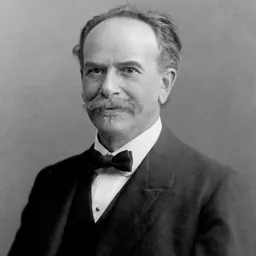
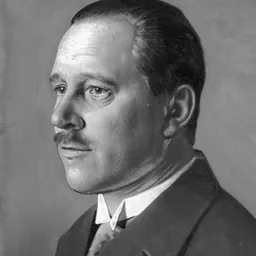
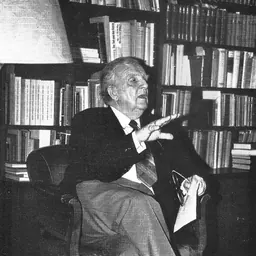


Related people
Same field, nearest in time

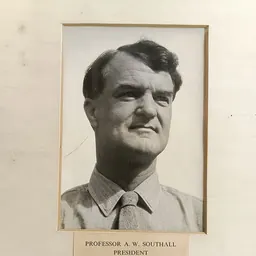
Contemporaries
People whose lives overlapped Jorge Dias's

Frequently asked questions
Who was Jorge Dias?
Portuguese ethnologist (1907-1973)
When was Jorge Dias born?
Jorge Dias was born in 1907 in Porto.
When did Jorge Dias die?
Jorge Dias died in 1973 in Lisbon.
What was Jorge Dias's occupation?
Jorge Dias was an anthropologist, writer and ethnologist.
What nationality was Jorge Dias?
Jorge Dias was Portuguese.
Sources & further reading
· DBpedia: Jorge Dias (ethnologist)
Cite this page
APA: Biography.guide. (2026). Jorge Dias. https://biography.guide/jorge-dias/
MLA: "Jorge Dias." Biography.guide, https://biography.guide/jorge-dias/.
Chicago: "Jorge Dias." Biography.guide. https://biography.guide/jorge-dias/.
Data last updated: 2026-09-20 · Spot an error? Report a correction.
Page generated 2026-09-27 05:15 UTC