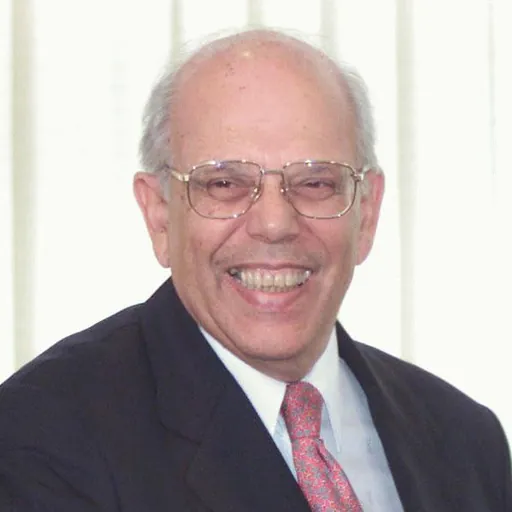
About Jorge Batlle Ibáñez
Lived 1927 – 2016 (aged 88). Jorge Batlle Ibáñez was an Uruguayan lawyer, politician, journalist and jurist.
Jorge Luis Batlle Ibáñez (; Batlle locally or ; 25 October 1927 – 24 October 2016) was a Uruguayan politician and lawyer, who served as the 38th president of Uruguay from 2000 to 2005. A member of the Colorado Party, he previously served as National Representative from 1959 to 1967, and as Senator of the Republic from 1985 to 1990 and from 1990 to 1999. Batlle is, to date, the last president from the Colorado Party.
The eldest son of the 30th president Luis Batlle Berres and a member of the Batlle family, he was the fourth member of the family to serve as president of the country. He graduated from the University of the Republic in 1959 with a law degree, and then began a career as a journalist in El Día newspaper. He began his political career in the 1950s, being elected National Representative in the 1958 general election. During the civil-military dictatorship he was banned and in the 1984 general election that led to the democratic transition he was prevented from running for president, he could only run for the Senate.
His presidency was marked by the worsening of a banking crisis and a foot-and-mouth epidemic that affected the country's economy. Some of his initiatives consisted of the creation of the , an investigative body on human rights with the purpose of determining the situation of those detained-disappeared during the civil-military dictatorship. In foreign policy, Batlle's government strengthened Uruguay's ties with the United States and broke diplomatic relations with Cuba.
Early life and education Jorge Luis Batlle Ibáñez was born on October 25, 1927 in Montevideo. He was the eldest son of Luis Batlle Berres and Matilde Ibáñez Tálice. He had two siblings, Luis (1930–2016) and Matilde (born 1932). He was a member of the Batlle family originally from Sitges, Catalonia, Spain, and which includes several presidents of Uruguay, such as José Batlle y Ordoñez, who was his great-uncle.
He attended the Elbio Fernández School and the German School of Montevideo. He obtained a law degree from the University of the Republic in 1959.
Early political career (1958–1965) By 1958, when he was first elected Congressman for the Colorado Party, Batlle had been active in journalism both in Radio "Ariel" and the newspaper "Acción". He was also by that time a member of the governing body of his Party.
National leadership (1965–1971) In 1965 Batlle was elected the sole leader of List 15 of the Colorado Party, a position that had become vacant after the death of his father the previous year. He proposed a return to a presidential system, eliminating the National Council of Government, and was one of the drafters and promoters of the constitutional reform that gave rise to the 1967 Constitution. He unsuccessfully ran for president in 1966, and was part of a financial scandal in 1968, which was never proven. He ran for president again in 1971 without success. He was detained on several occasions.
He proposed the legalization of cocaine, as a way to reduce the political clout of drug cartels.
He was also in favour of the creation of the Free Trade Association of the Americas (FTAA). As president, Batlle was firmly set against protectionism and subsidies of any kind; he has been a consistent spokesman for unhampered free trade.
Human rights deserve a separate chapter in Batlle's presidency. He helped create the Comisión para la Paz. Later on, he announced the finding of Macarena, the granddaughter of Argentine poet Juan Gelman born to her disappeared mother.
Post-presidency (2005–2016)
Final years Jorge Batlle stayed active in politics after the end of his presidency. He criticised the Uruguayan presidents that succeeded him (Tabaré Vázquez and José Mujica) through newspapers columns and social media. He was hospitalized at the Sanatorio Americano hospital, and underwent surgery to stop an intracranial hemorrhage. The operation failed, and he died on 24 October 2016, one day shy of his 89th birthday. Uruguay declared a day of national mourning upon his death. They had two children, Beatriz (born 1962) and Raúl Lorenzo (born 1965).
Documentary Jorge Batlle: entre el cielo y el infierno. A 2024 documentary directed by Federico Lemos.
Don’t just read it —
keep it.
Full-length biographies made to live with: read them, listen on the way to work, watch them tonight.
- E-book
- Audio
- Video
Instant download · yours to keep · every purchase keeps this site free
Important facts
Family & relationships
People in Jorge Batlle Ibáñez's life
Named in this biography and alive at the same time



Related people
Same field, nearest in time


Contemporaries
People whose lives overlapped Jorge Batlle Ibáñez's


Frequently asked questions
Who was Jorge Batlle Ibáñez?
president of Uruguay (1927-2016)
When was Jorge Batlle Ibáñez born?
Jorge Batlle Ibáñez was born on 25 October 1927 in Montevideo.
When did Jorge Batlle Ibáñez die?
Jorge Batlle Ibáñez died on 24 October 2016 in Montevideo.
What was Jorge Batlle Ibáñez's occupation?
Jorge Batlle Ibáñez was a lawyer, politician, journalist and jurist.
What nationality was Jorge Batlle Ibáñez?
Jorge Batlle Ibáñez was Uruguayan.
Sources & further reading
· Wikipedia: Jorge Batlle Ibáñez
Cite this page
APA: Biography.guide. (2026). Jorge Batlle Ibáñez. https://biography.guide/jorge-batlle-ibanez/
MLA: "Jorge Batlle Ibáñez." Biography.guide, https://biography.guide/jorge-batlle-ibanez/.
Chicago: "Jorge Batlle Ibáñez." Biography.guide. https://biography.guide/jorge-batlle-ibanez/.
Data last updated: 2026-09-22 · Spot an error? Report a correction.
Portrait: Wikimedia Commons · author & licence
Page generated 2026-09-27 05:02 UTC