
About Jordan Howard Sobel
Lived 1929 – 2010 (aged 80). Jordan Howard Sobel was a Canadian philosopher and university teacher.
Jordan Howard Sobel (22 September 1929 – 26 March 2010) was a Canadian-American philosopher specializing in ethics, logic, and decision theory. He was a professor of philosophy at the University of Toronto, Canada. In addition to his areas of specialization, Sobel made notable contributions in the fields of philosophy of religion, and value theory. Before his death, Sobel was considered by Christian apologist William Lane Craig to be the leading philosophical defender of atheism prior to Graham Oppy.
Life Born and raised in Chicago, Illinois, Sobel was a graduate of Hyde Park High School in Chicago before going on to study at the University of Illinois, where he earned a B.S. in Commerce and Law in 1951. He went on to earn an M.A. in Philosophy at the University of Iowa, followed by a doctorate in Philosophy at the University of Michigan in 1961. His dissertation, titled "What if everyone did that?" was supervised by Richard Cartwright and William Frankena.
Teaching Sobel's teaching career starting at Monteith College, Wayne State University (1960–1961), before holding positions at Princeton University (1961–1963), UCLA (1963–1969), University of Massachusetts, Amherst (1968–1969). The same year he joined the University of Toronto, where he taught for 28 years until his retirement in 1997.
Sobel has enjoyed a close relationship with the University of Uppsala, Sweden, holding two visiting professorships in 1986, 1991, 1997–1998, and then onwards until 2004. Sobel has also been a Fellow at the Swedish Collegium for Advanced Study in Uppsala. In 2003, the University of Uppsala bestowed an honorary doctorate on Sobel. He also held visiting professorships at Dalhousie University in 1988, and the University of Umeå in 1995.
Logic and Theism In 2004, Sobel published what many consider to be his magnum opus: Logic and Theism: Arguments For and Against Beliefs in God. The work is a comprehensive overview of many of the arguments on both sides within analytic philosophy of religion. Sobel utilizes symbolic logic, inductive logic, set theory and other tools within analytic philosophy to critically analyze cosmological arguments, ontological arguments, teleological arguments and other arguments for God's existence. Sobel also reformulates a new version of the logical problem of evil, and reveals tension between God's divine attributes. The work was well-received by philosophers on both sides of the debate. Atheist philosopher Graham Oppy stated that the work is the "very best book on arguments about the existence of God that has yet appeared." Catholic philosopher Robert Koons described the work as the best book on philosophy of religion written from an atheistic point of view since J. L. Mackie’s The Miracle of Theism. Protestant philosopher William Lane Craig describes the work as an "acid bath for theism" and writes "I can think of no other treatment of theism, whether by theist or non-theist, comparable to it. Its combination of wide-ranging scope and penetrating analysis makes it a unique contribution to philosophical theology. The product of a lifetime of study, Logic and Theism is testimony to Howard Sobel’s remarkable mastery of this subject, for very few contemporary philosophers could have written so comprehensive and incisive a treatment."
Books Taking Chances: Essays on Rational Choice, Cambridge University Press (1994) Puzzles for the Will, University of Toronto Press (1998) Logic and Theism: Arguments for and against Beliefs in God, Cambridge University Press (2004) Walls and Vaults: A Natural Science of Morals, Wiley (2011) Book manuscripts At the time of his death, Sobel had been working on several book projects. With the exception of Walls and Vaults, which was published posthumously, all these books remain unpublished, but are available on the archived version of his website.
No Light Matter: Socrates and Plato on Justice Ends and Means: Aristotle on Happiness and Virtue The Mystery and The Glory: Immanuel Kant’s Philosophy of Morals Good and Gold: a Judgmental History of Metaethics from G. E. Moore through J. L. Mackie Words and Symbols, Proofs and Invalidations
Don’t just read it —
keep it.
Full-length biographies made to live with: read them, listen on the way to work, watch them tonight.
- E-book
- Audio
- Video
Instant download · yours to keep · every purchase keeps this site free
Important facts
People in Jordan Howard Sobel's life
Named in this biography and alive at the same time



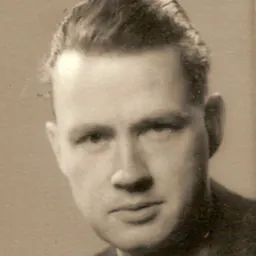



Related people
Same field, nearest in time
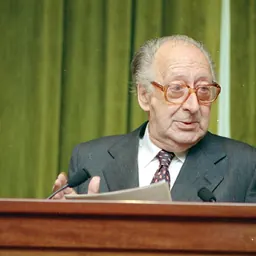
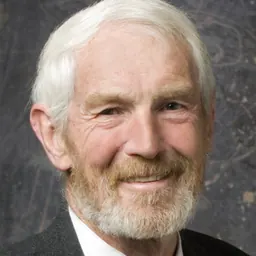
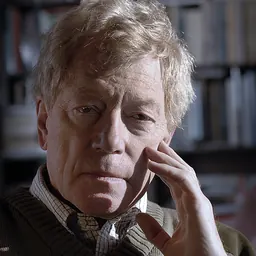


Contemporaries
People whose lives overlapped Jordan Howard Sobel's


Frequently asked questions
Who was Jordan Howard Sobel?
Canadian-American philosopher
When was Jordan Howard Sobel born?
Jordan Howard Sobel was born on 22 September 1929 in Chicago.
When did Jordan Howard Sobel die?
Jordan Howard Sobel died on 26 March 2010 in Toronto.
What was Jordan Howard Sobel's occupation?
Jordan Howard Sobel was a philosopher and university teacher.
What nationality was Jordan Howard Sobel?
Jordan Howard Sobel was Canadian.
Sources & further reading
· Wikipedia: Jordan Howard Sobel
· DBpedia: Jordan Howard Sobel
Cite this page
APA: Biography.guide. (2026). Jordan Howard Sobel. https://biography.guide/jordan-howard-sobel/
MLA: "Jordan Howard Sobel." Biography.guide, https://biography.guide/jordan-howard-sobel/.
Chicago: "Jordan Howard Sobel." Biography.guide. https://biography.guide/jordan-howard-sobel/.
Data last updated: 2026-09-20 · Spot an error? Report a correction.
Page generated 2026-09-27 05:30 UTC