
About Jordaki Kuparenko
Lived 1784 – 1844 (aged 59–60). Jordaki Kuparenko was a Romanian engineer.
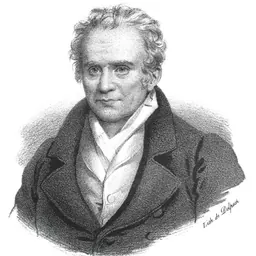
Iordache Cuparencu (born 1780 in Călinești (Șerbăuți), Suceava; died 1844 in Warsaw) was a Polish-Romanian circus artist, aeronautics pioneer, engineer and theatre manager of Moldavian-Romanian descent.
Life
Early life Iordache Cuparencu (Cuparentco, in the Polish newspapers: Jordaki Kuparentko/Kupareńko, or as in his autographs - Kuparenko) While touring in Poland, he fell from a height during a tightrope act and broke his leg severely. It turned out to be the end of his professional career as a stunt performer and tied him to Warsaw for the rest of his life, although he was an active entrepreneur of the circus later on.
Engineering and aeronautics career
Soon after a partial recovery from the accident, Cuparencu found his new venture, engineering, and experimented with constructing and piloting hot air balloons, taking inspiration from successes heard from abroad. The first two of his designs were made partly of paper; between 1806 and 1808 he flew publicly three times over Warsaw and Vilnius, rousing public interest. Despite some dangerous accidents, his flights were a commercial success, drawing large audiences Cuparencu and these incidents are now listed in the Guinness World Records as the first survivor of an air crash and the first successful use of a parachute in action.
Puppet theatre and other activities One of Cuparencu's other great interests was the art of puppeteering. From 1816 he was known as a theatre owner and manager, establishing his headquarters four times in different places in Warsaw, one of them in the chambers of the National Theatre. The first of his creations was a shadow theatre, the first permanent theatre of this kind in Warsaw. He constructed and managed a mechanized puppet theatre named Pitoresque, which officially premiered in 1830 (upgraded in 1842), and was well received in the city; it was even exhibited in Paris. It also featured optical-mechanical illusions, where the visitor could witness dioramas and panoramic "pictures of diverse places". According to a 19th-century encyclopedia, "sunsets, sun in the midday, sundowns and nights were witnessed", accompanied by realistic sound effects, such as thunder and rain. During one of his ticketed exhibitions he demonstrated his repeating gun, which he described as "a gun that, after one loading, shoots 10 times".
In 1808 he married for the second time with Anna Henrtietta Teiflin, the daughter of the owner of the Heca amphitheatre; he subsequently took over management of the theatre, and eventually bought it in 1821.
Don’t just read it —
keep it.
Full-length biographies made to live with: read them, listen on the way to work, watch them tonight.
- E-book
- Audio
- Video
Instant download · yours to keep · every purchase keeps this site free
Important facts
Related people
Same field, nearest in time

Contemporaries
People whose lives overlapped Jordaki Kuparenko's



Frequently asked questions
Who was Jordaki Kuparenko?
Polish aviation inventor
When was Jordaki Kuparenko born?
Jordaki Kuparenko was born in 1784 in Iași.
When did Jordaki Kuparenko die?
Jordaki Kuparenko died in 1844 in Warsaw.
What was Jordaki Kuparenko's occupation?
Jordaki Kuparenko was an engineer.
What nationality was Jordaki Kuparenko?
Jordaki Kuparenko was Romanian.
Sources & further reading
· Wikipedia: Jordaki Kuparenko
Cite this page
APA: Biography.guide. (2026). Jordaki Kuparenko. https://biography.guide/jordaki-kuparenko/
MLA: "Jordaki Kuparenko." Biography.guide, https://biography.guide/jordaki-kuparenko/.
Chicago: "Jordaki Kuparenko." Biography.guide. https://biography.guide/jordaki-kuparenko/.
Data last updated: 2026-09-20 · Spot an error? Report a correction.
Page generated 2026-09-27 05:08 UTC