
About Jonathan Agnew
Born 1960. Jonathan Agnew is a British cricketer, journalist and autobiographer.
Jonathan Philip Agnew (born 4 April 1960) is an English cricket broadcaster and a former cricketer. He was born in Macclesfield, Cheshire, and educated at Uppingham School. He is nicknamed "Aggers" and, less commonly, "Spiro" – the latter, according to Debrett's Cricketers' Who's Who, after former US Vice-president Spiro Agnew.
Agnew had a first-class career as a fast bowler for Leicestershire from 1979 to 1990, returning briefly in 1992. In first-class cricket he took 666 wickets at an average of 29.25. Agnew won three Test caps for England, as well as playing three One Day Internationals in the mid-1980s, although his entire international career lasted just under a year. In county cricket, Agnew's most successful seasons came toward the end of his career when he had learned to swing the ball. He was second- and third-leading wicket-taker in 1987 and 1988 respectively, including the achievement of 100 wickets in a season in 1987. He was named as one of the five Cricketers of the Year by Wisden Cricketers' Almanack in 1988.
While still a player, Agnew began a career in cricket journalism and commentary. Since his retirement as a player, he has become a leading voice of cricket on radio, as the BBC Radio cricket correspondent and as a commentator on Test Match Special. He has also contributed as a member of Australian broadcaster Australian Broadcasting Corporation's Grandstand team.
Agnew's on-air "leg over" comment on Test Match Special, made to fellow commentator Brian Johnston in 1991, provoked giggling fits during a live broadcast and widespread reaction. The incident has been voted "the greatest sporting commentary ever" in a BBC poll.
Agnew has been called "a master broadcaster ... the pick of the sports correspondents at the BBC."
Playing career
Background and early years Agnew was born on 4 April 1960 at West Park Hospital in Macclesfield, Cheshire, to Margaret (née McConnell) and Philip Agnew. His parents' forthcoming marriage was announced in The Times in 1957: Philip Agnew was described as "the only son of Mr and Mrs Norris M. Agnew of Dukenfield Hall, Mobberley, Cheshire" and Margaret as "youngest daughter of Mr and Mrs A.F.V. McConnell of Hampton Hall, Worthen, Shropshire". The Agnews had a second son in June 1962 and were recorded as living at "Bainton near Stamford, Lincs"; in April 1966, a daughter, Felicity, was born and was announced as "a sister for Jonathan and Christopher". Agnew's paternal grandmother, Lady Mona Agnew, died aged 110 years and 170 days in 2010 and was on the list of the 100 longest-lived British people ever.
Jonathan Agnew recalls growing up on the family farm and first becoming aware of cricket aged "eight or nine"; his father would carry a radio around and listen to Test Match Special:
"The programme sparked an interest in me, in the same way it has in so many tens of thousands of children down the years, igniting a passion that lasts a lifetime."
Driven by early enjoyment of the media coverage of cricket, Agnew developed a love for playing the game. At the end of days spent watching cricket on television in a blacked-out room with the commentary provided by the radio, Agnew would go into the garden and practise his bowling for hours, trying to imitate the players he had seen. Agnew's father, an amateur cricketer, taught him the rudiments of the sport, including an offspin action, as he wanted his son to develop into a bowler like him.
From the age of eight, Agnew boarded at Taverham Hall School near Norwich. His first cricket coach was Eileen Ryder and, according to Agnew, after "a couple of years" In 1971, aged 11, Agnew attended the Gillete Cup Final, and was inspired by Peter Lever, a fast bowler: "I saw a fast bowler running in from the Nursery End. I'd never seen anything like it. I turned to my dad and said: "That's who I want to be." It was Peter Lever. There was something about the way he bowled. The energy, the run-up. It lit a spark under me and, from that moment on, I was Peter Lever. My dad wanted me to be an off-spinner, like him, but there was no chance after I'd seen Peter bowl. I copied his action and he was everywhere in my life as I grew up."
Agnew attended Uppingham School for his secondary education, That summer, he saw fast bowler Michael Holding take 14 wickets in the 1976 Oval Test match, a performance of pace bowling referred to as "devastating" by cricket writer Norman Preston, which made a lasting impression on Agnew. More than 30 years later he wrote of his bowling during his schooldays:
"For an eighteen-year-old bowler I was unusually fast, and enjoyed terrorising our opponents, be they schoolboys (8 wickets for 2 runs and 7 for 11 stick in the memory) or, better still, the teachers in the annual staff match. This, I gather, used to be a friendly affair until I turned up, and I relished the chance to settle a few scores on behalf of my friends – for whom I was the equivalent of a hired assassin – as well as for myself."
Having played for Surrey under-19s the previous year, he began playing for Surrey's second XI in 1977, but Surrey made no move to sign him as a player. At a home match against Hampshire, the teenage Agnew was the only player to stand up to then Surrey coach and former England player Fred Titmus after the latter racially abused the Guyanese-born Surrey player Lonsdale Skinner, an incident of which Agnew later said: "The consequences hadn’t really dawned on me. But clearly it was a career-ender". Leicestershire County Cricket Club did, however, take note of Agnew's impressive performances in local club cricket and for Uppingham School, for whom he took 37 wickets at a bowling average of 8 in 1977, the 18-year-old Agnew bowled to England international David Lloyd, an opening batsman with nine Test caps. Reported in Wisden Cricketers' Almanack, Lloyd "was halfway through a forward defensive push when his off stump was despatched halfway towards the Leicestershire wicket-keeper."
Agnew won a Whitbread Brewery award at the end of his debut season, an achievement he ascribes to the influence of his county captain, Ray Illingworth: he had taken only six first-class wickets at an average of 35. Illingworth was quoted in The Times as saying that Agnew was "the second fastest bowler" in England in 1978, behind only Bob Willis. The award afforded him the opportunity to spend a winter in Australia developing his skills, alongside fellow winners Mike Gatting, Wayne Larkins and Chris Tavaré, and to be coached by former England fast bowler, Frank Tyson. |group=note On that Australia tour, Agnew played his only youth Test, but made headlines when invited to bowl at the touring England team in the nets: "He struck the captain, Mike Brearley, a nasty blow in the face. It was, Agnew recalls, merely a gentle delivery off two paces that flew off a wet patch; but it did not deter the headline writers. Such early publicity did him no favours, but when a bowler arrives who is young, fast and English, a quiet settling-in period to one of the more difficult apprenticeships in sport is often denied him." – Wisden Agnew's own account is that 1979–80 was "the worst winter of his life", although his recollection is that he spent it working as a lorry driver. He did, however, make his List A limited overs debut in 1979, playing just once, against the Sri Lanka touring team – his competitive List A debut followed in 1980, in the Benson & Hedges Cup against Scotland: he bowled just three overs (for five runs) and did not bat.
Test cricket Future captain of West Indies, Viv Richards, was the second player Agnew dismissed in his Test career. Agnew's career did not initially live up to his early promise. In his first six seasons as a first-class cricketer, his largest haul of wickets was 31 in 1980. The 1984 season was his breakthrough year: he played 23 first-class matches, taking 84 wickets at an average of 28.72.
He carried that success forward into the County Championship, picking up wickets for Leicestershire including a ten wicket match haul against Surrey in June, and five wickets in an innings against Kent in the days leading up to the fifth Test against West Indies. The England selectors took note and, with the West Indies leading the series 4–0, Agnew and Richard Ellison were given debuts, in an ultimately unsuccessful effort to avoid the "blackwash".
Wisden describes how in the first innings, Agnew's accuracy was affected by debutant nerves, but an improved display in the second innings resulted in figures of 2–51. Wisden called the pair of batsmen Agnew's "first illustrious victims in Test cricket". this was only their 12th Test match and their first at Lord's, but they dominated the match, taking a 121-run lead on first innings and declaring twice. It was a disappointment for England and, in a batsman-friendly match in which the Sri Lankans racked up 785 runs for just 14 wickets, Agnew suffered. Wisden described England's pacemen as ineffective;
England toured India and Sri Lanka that winter. Agnew replaced the injured Paul Allott after the second Test. However, he failed to be selected for a Test match, with England's decision to field two spinners (Pat Pocock and Phil Edmonds) in each Test playing a part in limiting Agnew's opportunities. Agnew played just one first-class match on the tour, versus South Zone in Secunderabad, achieving match figures of seven wickets at an average of 29, but he did play in three One Day Internationals (ODIs), two in India and one in Australia. His debut ODI was promising, as he took 3–38 in a losing cause. However, in his remaining two ODIs, he proved very expensive, taking no further wickets and conceding more than seven runs an over in each.
Agnew began the 1985 season vying with the established England fast bowlers to get back into the Test team. Over the winter, the team had been settled, with Norman Cowans and Chris Cowdrey playing all five Tests. Neil Foster and Richard Ellison shared the third spot alongside the spinners, playing two and three Tests respectively. However, the team was extensively remodelled for the first Test of that summer's Ashes series. Of the bowlers who had played the last Test in India, only Cowans had survived the cull and it set the tone for the series. England won the first Test, yet dropped Cowans and Peter Willey, replacing them with Phil Edmonds and Foster. After losing the second Test, and struggling with the ball in the third Test, when Australia made 539 all out in their only innings, England decided to make further changes.
Agnew had performed consistently in county cricket through June and July, culminating in what was to be, statistically, his finest moment as a bowler. Playing against Kent, he took 9–70 in the first innings. His timing was perfect and he was called up for the Fourth Test at Old Trafford to partner Ian Botham and Paul Allott in an all-Cheshire born seam attack. The match finished as a draw, and Agnew failed to take a wicket. He was relegated from an opening bowler in the first innings, to fifth bowler in the second, in which he only bowled nine overs. He was subsequently dropped again from the team, only for Richard Ellison to cement his place with match-winning performances that helped claim the Ashes for England.
Later playing career and retirement In the 1987 season, Agnew achieved the feat of 100 first-class wickets in an English cricket season when he took 101 wickets for his county. By this stage, he was working on local radio during the winters and he found the reassurance of the additional income and career path a major factor in his improved form. Wisden preferred to attribute his success to "bowling off a shorter run and ... a wicked slower ball added to his armoury". by taking the third-most in 1988. In 1989, with two years of good form behind him and England losing 4–0 in the 1989 Ashes series, (In Thanks, Johnners, Agnew erroneously calls this "the following year" to 1987.)
Agnew formally retired from playing professional cricket at the end of the following season: Leicestershire's last match of the 1990 Championship season was his last first-class game. Aged 30, Agnew took 1–42 in Derbyshire's only innings and scored 6 in his only turn to bat.
Playing style and career summary Agnew's best first-class bowling figures were 9 for 70 and he took six ten-wicket hauls in 218 matches. In the 1988 Cricketer of the Year editorial on Agnew, Wisden noted that "his pace comes from a whippy wrist action and co-ordination ... In the field, Agnew has at times appeared to be moving with his bootlaces tied together, but his long run-up was one of the more graceful in the game. However, it was the shortening of that run-up, and a cutting-down of pace, which led to ... achievements [late in his career]" Wisden commented that Agnew was no all-rounder, but he could "certainly bat ... on his day he can destroy anything pitched up around off stump." His final Test was only twelve months after his England debut, and his first and last ODIs were played less than a month apart. Cricket commentator Colin Bateman opined, "his fleeting taste of Test cricket should have been added to in 1987 and 1988 when he was the most consistent fast bowler in the country, taking 194 wickets, but in 1989, when England were desperate for pace bowlers, his omission amounted to wanton neglect by a regime which questioned his desire". In 1988, when Agnew was selected as a Cricketer of the Year, Wisden recorded this verdict on the contrariness of Agnew's Test career: "Asked about Agnew's omission, the chairman of selectors, P. B. H. May, expressed concern about his fitness – rather a baffling statement to make about someone who bowled more overs than any other fast bowler in the Championship." While covering the 1990–91 Ashes series for Today, he was approached by Peter Baxter about joining Test Match Special. Unhappy at certain editorial decisions that had been taken during his time with the newspaper, Agnew agreed to attend an interview after the tour. in time for the first Test match of the summer. He was initially a junior member of the Test Match Special team, learning at close quarters from figures such as Brian Johnston, Henry Blofeld and Bill Frindall. The same year, he was also appointed the BBC's cricket correspondent, In 2007, when asked which sports journalist he most respected, Martin-Jenkins named Agnew, because he "combines astute journalism with apparently effortless communication skills." He has also commentated for the Australian ABC Radio network during Ashes series in Australia.
When Channel 4 won the broadcasting rights to television coverage of England's home Test matches in 1998, Agnew was approached by the broadcaster and offered a job on the commentary team. Agnew declined the opportunity, opting to remain BBC cricket correspondent, in part because he was a "radio man" and in part out of loyalty. His recollections of the experience are that it was something of a trial, helped only by the experienced Richie Benaud alongside him:
In addition to his writing and broadcasting work, Agnew's commentary has been recorded for several computer games, including the International Cricket Captain and Brian Lara Cricket series. He is a shareholder in TestMatchExtra.com Ltd, a company which runs the website of the same address and acquired The Wisden Cricketer magazine from BSkyB in December 2010.
Agnew has won many awards for his broadcasting, including two Sony Awards for Best Reporter (1992 and 1994), and Best Radio Broadcaster of the Year (2010), an award from the Association of Sports Journalists. an Honorary Doctor of Letters by Loughborough University in July 2011. and Honorary Doctor of Letters by Leicester University in July 2018.
His peers in sports journalism have frequently commented on Agnew's skills as a broadcaster and writer. Michael Henderson, in the aftermath of the Stanford cricket controversy, wrote of Agnew as a "master broadcaster ... the pick of the sports correspondents at the BBC ... Agnew's is a sane, reasonable voice in a game that is going potty. Fair-minded, even-tempered, he has become one of the finest specialists the BBC has ever had. In his understated way he speaks for the game: not the people who play it." He retired as BBC cricket correspondent in 2024, after 35 summers, but remains the presenter of Test Match Special.
Agnew was appointed as a Deputy Lieutenant of Leicestershire in October 2015, and as a Member of the Order of the British Empire (MBE) in the 2017 New Year Honours for services to broadcasting.
Notable broadcasting incidents
In 2001, Agnew was part of the BBC team that was sent to Sri Lanka to cover England's Test match series. As a result of confusion and a row over broadcasting rights, the BBC team found itself barred from the Galle International Stadium, where the first Test was to take place. Agnew's reaction to the event was, "It's a sad day for everyone involved in English cricket. Is it really that cricket is getting so greedy that everyone who wants to come and report on the game for the good of the game is going to have to be charged for it?" Agnew's reaction was combative, appearing on BBC Breakfast and giving his opinion that the ban presented the ECB with a chance to withdraw from the controversial tour and that they should take the opportunity. When Atherton had himself been England captain, Agnew had led the calls for Atherton to resign over a controversy known as the "dirt in the pocket" affair.
Agnew was involved in a minor controversy regarding an appearance by Lily Allen on Test Match Special in 2009. The Daily Telegraph reported that "the cricket-loving Allen struck up an instant rapport with Agnew, and the BBC received largely positive feedback for the 30-minute interview", but Will Buckley, writing for The Observer, described Agnew's "amorous ambitions" as "positioned ... firmly on the pervy side of things". Agnew was furious, noting he "gave ... Will Buckley 24 hrs to apologise for calling me a pervert, and he has declined ... As you can imagine, I have taken being called a pervert quite badly." One example took place in August 1991, when Agnew was commentating with Brian Johnston. In a review of the day, Johnston was describing how Ian Botham, while batting, had overbalanced and tried, but failed, to step over his stumps. Botham was consequently given out hit wicket. Agnew's comment on this action was: "He just didn't quite get his leg over." Botham had attracted a number of headlines during his career for his sexual exploits and in British English, "getting one's leg over" is a euphemism for having sexual intercourse.
The comment led to Johnston becoming incapacitated by laughter. He initially tried to continue his summary, before becoming unable to speak for laughing, at one point saying "Aggers, for goodness' sake, stop it" as he struggled to regain his composure.
The incident was heard by thousands of commuters driving home from work, many of whom were forced to stop driving because they were laughing so much: In response, Agnew sent several abusive direct messages to Liew on Twitter, describing him as "Fucking disgraceful. You have massive chips on your shoulder ... you are a racist," going on to demand an apology, calling him a "cunt" and asking "who the fuck are you?" Liew reposted the DMs publicly on his Twitter account. Agnew was reprimanded by the BBC for the messages, and issued an apology to Liew; he also resigned from the Cricket Writers' Club. Agnew deleted his Twitter account after Liew made a formal complaint to the BBC about the tweets. He has written about the role that cricket played in the collapse of the relationship, comparing his circumstances with those of then England batsman Graham Thorpe. when they worked together on BBC Radio Leicestershire.
In 2013 Agnew told BBC Desert Island Discs he struggled to maintain contact with his daughters after his divorce from their mother saying he wanted to "stand up" for absent fathers in broken families. Agnew's first wife and two daughters responded to this claiming Agnew had made little effort to stay in contact with his daughters.
Agnew suffers from Dupuytren's contracture, a medical condition that affects the connective tissue in his hands. He has had numerous operations to address the progressive condition, which causes the hands to contract into a claw-like position.
Personality During Agnew's playing career, a dispute with team-mate Phillip DeFreitas attracted media attention: when DeFreitas poured salt over Agnew's lunch, Agnew responded by throwing DeFreitas' cricket bag and kit from the dressing room balcony. Former England cricketer Derek Pringle has written about Agnew's sense of humour, describing him as "hysterical". The pair toured Sri Lanka together on England B's 1986 tour. Pringle recalls that one hot day when England were in the field, Agnew came in for lunch: "It's fucking red hot on the field, and when you come off it's fucking red hot in the dressing room," Agnew screamed. "Then, what do you get for lunch, fucking red hot curry?"
Don’t just read it —
keep it.
Full-length biographies made to live with: read them, listen on the way to work, watch them tonight.
- E-book
- Audio
- Video
Instant download · yours to keep · every purchase keeps this site free
Important facts
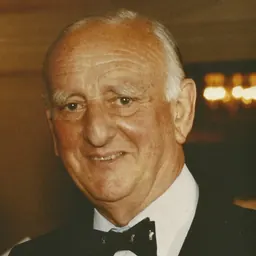
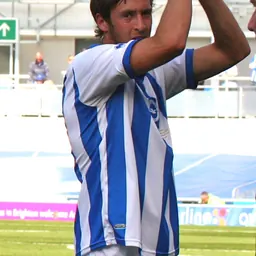
People in Jonathan Agnew's life
Named in this biography and alive at the same time




Related people
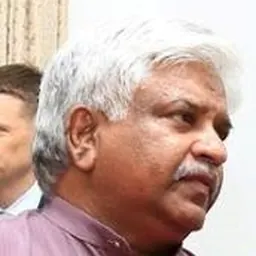
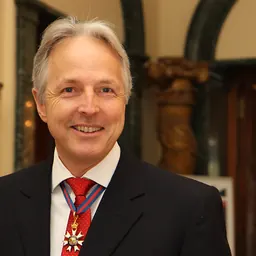
Same field, nearest in time



Contemporaries
People whose lives overlapped Jonathan Agnew's

Frequently asked questions
Who is Jonathan Agnew?
cricketer (born 1960)
When was Jonathan Agnew born?
Jonathan Agnew was born on 4 April 1960 in Macclesfield.
What is Jonathan Agnew's occupation?
Jonathan Agnew is a cricketer, journalist and autobiographer.
What nationality is Jonathan Agnew?
Jonathan Agnew is British.
Sources & further reading
Cite this page
APA: Biography.guide. (2026). Jonathan Agnew. https://biography.guide/jonathan-agnew/
MLA: "Jonathan Agnew." Biography.guide, https://biography.guide/jonathan-agnew/.
Chicago: "Jonathan Agnew." Biography.guide. https://biography.guide/jonathan-agnew/.
Data last updated: 2026-09-20 · Spot an error? Report a correction.
Page generated 2026-09-27 05:20 UTC