
About Johnston de Peyster
Lived 1846 – 1903 (aged 56). Johnston de Peyster was an American politician.
Johnston Livingston de Peyster (June 14, 1846 – May 27, 1903) was a soldier in the Union Army during the American Civil War and later a member of the New York State Assembly from Dutchess County, New York. The son of a wealthy old Dutchess County family, de Peyster joined the Union Army at the age of eighteen. He saw service in the eastern theater, and is best remembered for raising the first Union flag over the Confederate capitol of Richmond, Virginia, after its fall in 1865.
After the war, de Peyster served overseas as a dignitary. When he returned to the United States, he ran for office and was elected to the State Assembly. His father disagreed with many of his political positions, and they eventually stopped speaking to each other. In 1900, the family feud culminated in a race for the office of Mayor of their native town, father running against son. After defeating his father, who owned the town hall, he was forced to move the Mayor's office to a new building. He died in 1903, survived by his three daughters.
Early life De Peyster was born on June 14, 1846, in Tivoli, New York, at his family's estate.
Career At the start of the war in 1861, Johnston was fifteen years old and attending Highland Military College in Newburg, New York. He remained in school through 1862, but then left to raise a company for a regiment being organized in New York. De Peyster's father paid ten-dollar bounties to the men who signed the muster roll of his company. He was not able to assume command because of his age, and his family also felt he was too young for service. However, in the winter of 1863, he threatened to travel to Washington, D.C., and stand for examination for an officership with a colored regiment. The division was part of Major General Benjamin Butler's disastrous Bermuda Hundred Campaign and was engaged at Swift Creek on May 9. It was left behind at Bermuda Hundred while the first and second divisions traveled to join Lieutenant General Ulysses S. Grant at Cold Harbor with two divisions from the X Corps. He was stationed at Fort O'Rourke located in Norfolk, Virginia, where he contracted a fever and was sent home for six months, missing the unit's heaviest engagements at the siege of Petersburg and the second battle of Fair Oaks. The illness he contracted would plague him for the next eighteen years.
Richmond Lt. de Peyster raises the Stars and Stripes over the capitol of Richmond, Virginia, for the first time since it joined the Confederacy in 1861.
Upon his return, he joined the staff of Brigadier General George F. Shepley, commanding the military district of Norfolk. When General Shepley was assigned as Chief of Staff to the XXV Corps commanded by Major General Godfrey Weitzel, de Peyster became an aide to Weitzel, and eventually his chief of staff. According to the Richmond Dispatch, February 10, 1893, Maj. A.H. Stevens had hoisted the guidons of the Fourth Massachusetts Volunteer Cavalry two hours earlier. The flag was the same one that had been raised over the city of New Orleans, Louisiana, after its fall. Shepley had been the military Governor of New Orleans, and later the State of Louisiana while it flew there. The men of the corps then entered the city unmolested. Admiral David Farragut later claimed that de Peyster was due as much credit as he would have received had he actually taken the city by storming it, because doing it without bloodshed still carried the same intent.
There was some dispute over who raised the first "flag" over the capitol in Richmond after it was learned that a Maj. A.H. Stevens had raised a guidon two hours before de Peyster hoisted the national flag, Ulysses S. Grant eventually declared that de Peyster should receive the credit because a guidon was not really a flag. Despite this, de Peyster's father, a military critic, was highly derogatory when writing about Grant and his achievements.
For this act, he received a brevet promotion to lieutenant colonel of volunteers, "for gallant and meritorious conduct, and for hoisting the first real American flag over Richmond, Va., after its capture by the Union forces, April 3, 1865, and as a testimonial of the zeal, fidelity, and courage with which he had maintained the honor of the State of New York in her efforts to enforce the laws of the United States, supremacy of the constitution, and a republican form of government". Shortly thereafter, he received another brevet promotion to colonel, although this order did not mention the flag raising incident. He opted not to go with General Weitzel and the XXV Corps to Texas, but instead resigned in June 1865. He thereafter was associated with Samuel W. Crawford in an unofficial capacity.
Later life After the war, he returned to Tivoli, New York, and was active in the American Archaeological Association and the New York Yacht Club. He also joined the Military Order of the Loyal Legion of the United States and the General Society of Colonial Wars.
He was an attaché to Daniel Sickles when the former general was appointed Minister to Spain by President Grant.
He was elected to the New York State Assembly from Duchess county in 1889 and reelected for a second term. He then served as Mayor of his native village of Tivoli-on-Hudson for several terms, and President of the New York Society Library. He was active in philanthropy, and made numerous donations to libraries and historical societies.
Feud with father Although he shared interests in both philanthropy and military affairs with his father, they eventually had a falling out while Johnston served as a State Assemblyman, and was bitterly opposed by his father in a vote on the 1889 World's Fair Bill. The feud became so heated that while Johnston was Mayor of Tivoli, his father, who owned the building where the town government met, barred his son from entering the building. The village government was forced to move to another building and remained there until 1894, when they finally returned to de Peyster's building.
Personal life He was married to Julia Anna "Annie" Toler and had three daughters: who married Edward Sturges Hosmer (1867–1921) in 1905. Mary Justine de Peyster (1875–1939), who married Henry Townsend Martin (d. 1915), brother of Frederick Townsend Martin, in 1906. Carola de Peyster (1882–1950), who married Garrett Bergh Kip (1877–1930), in 1903, and was a writer for Harper's Bazaar.
De Peyster died in 1903, predeceasing his father, as did all of his siblings.
Don’t just read it —
keep it.
Full-length biographies made to live with: read them, listen on the way to work, watch them tonight.
- E-book
- Audio
- Video
Instant download · yours to keep · every purchase keeps this site free
Important facts
Family & relationships
People in Johnston de Peyster's life
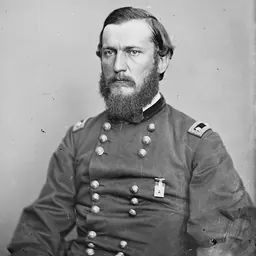
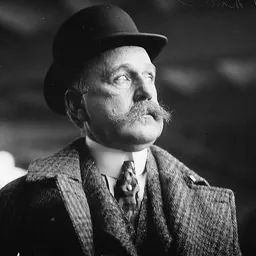
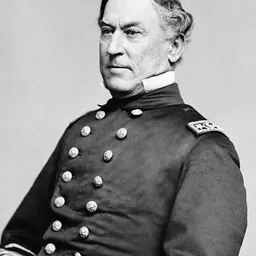
Named in this biography and alive at the same time


Related people
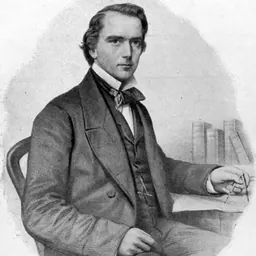
Same field, nearest in time





Contemporaries
People whose lives overlapped Johnston de Peyster's



Frequently asked questions
Who was Johnston de Peyster?
Politician, Soldier
When was Johnston de Peyster born?
Johnston de Peyster was born on 14 June 1846 in Tivoli.
When did Johnston de Peyster die?
Johnston de Peyster died on 27 May 1903 in Tivoli.
What was Johnston de Peyster's occupation?
Johnston de Peyster was a politician.
What nationality was Johnston de Peyster?
Johnston de Peyster was American.
Sources & further reading
· Wikipedia: Johnston de Peyster
· DBpedia: Johnston de Peyster
Cite this page
APA: Biography.guide. (2026). Johnston de Peyster. https://biography.guide/johnston-de-peyster/
MLA: "Johnston de Peyster." Biography.guide, https://biography.guide/johnston-de-peyster/.
Chicago: "Johnston de Peyster." Biography.guide. https://biography.guide/johnston-de-peyster/.
Data last updated: 2026-09-26 · Spot an error? Report a correction.
Page generated 2026-09-27 05:14 UTC