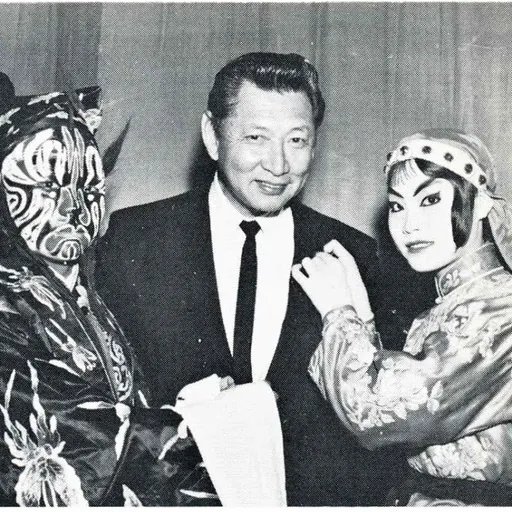
About Johnny Kan
Lived 1906 – 1972 (aged 65–66). Johnny Kan was an American restaurateur, known for Chinatown, San Francisco.
Johnny Kan (1906–1972) was a Chinese American restaurateur in Chinatown, San Francisco, ca 1950–1970. He was the owner of Johnny Kan's restaurant, which opened in 1953, and published a book on Cantonese cuisine, Eight Immortal Flavors, which was praised by Craig Claiborne and James Beard. Kan and Cecilia Chiang (proprietor of the Mandarin in Ghirardelli Square) are credited with popularizing authentic Chinese cuisine as a fine dining option, displacing the stereotypical chop suey American Chinese cuisine prevalent in the 1950s and 60s.
Life and career Kan was raised in Grass Valley, Oregon and moved to San Francisco with his family when he was nine. Because his parents could not afford the tuition, he began working at a grocery store (Sam Hing and Company, 1040 Grant) instead of attending junior high school. Sam Hing also roasted peanuts; Kan advertised in Variety at his brother's suggestion, and earned a lucrative contract with Barnum and Bailey.
Kan and Dr. Theodore Lee jointly founded the Cathay House restaurant, housed in the landmark Sing Chong building at Sacramento and Grant, on September 28, 1939; the largest single investor was Ernest Tsang, who contributed US$5,500 of the US$9,700 in capital raised. After his discharge, Kan expected to be restored as co-manager of Cathay House, but Tsang refused and Kan sued him in 1944. According to Tsang's testimony, he had offered Kan the co-manager job at his previous salary of US$500/month upon Kan's return from the Army, but Kan had refused and asked for a salary equivalent to Tsang's, at US$750/month. The initial suit was not successful, and a subsequent state-level appeal was also unsuccessful,
Kan's
The eponymous restaurant "Kan's" operated at 708 Grant Avenue. In Kan's words, he wanted to "launch the first efficiently operated and most elaborate Chinese restaurant [in Chinatown] since the collapse of the old Mandarin [Restaurant on Bush]."
To tourists (and natives) who would innocently order chop suey, Johnny would purr, 'I'm sorry, we serve only Chinese food here.' — Herb Caen, Eulogy for Johnny Kan
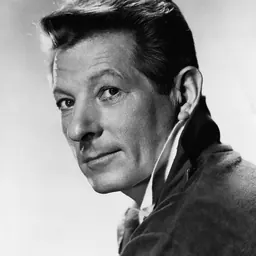
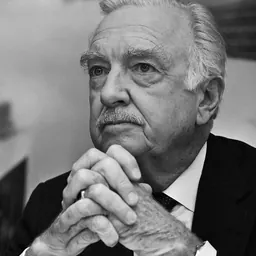
text= ... in a party of six or eight persons, there would always be one who disliked Chinese food. No matter what the captain or waiters may say to him, his answer is, 'I hate Chinese food, bring me a steak!' Then what?Well, with our glass-enclosed kitchen, we could say to the difficult guest, 'Will you please do us a favor? Come and watch us prepare fresh food and see our woks.' It usually took me about fifteen minutes to educate a disliker when I could have him smell the aroma of fresh, barbecued pork coming out of the oven, or sizzling filet of chicken breasts in a wok with beautiful, fresh vegetables around, snow peas or chard toss-cooked for just a few seconds. Usually a man like this will end up being a real enthusiast. Why? Because he never knew how real Chinese food was prepared. Now he was no longer a chop suey believer. And of course, in the years since that initial education period, we've introduced our friends to Peking Duck and many other complex dishes enjoyed by Cantonese people on the mainland, in Hong Kong, and here in San Francisco. — Johnny Kan, interviewed c.1963 for Longtime Californ (1972) Jeanne Phillips, best known for helping her mother with and then taking over the advice column Dear Abby, confesses she "had a huge crush on the maitre d', and the food was good, too." While covering the 1964 Republican National Convention, Walter Cronkite dined at Kan's; after Kan asked if he would like to meet the chef, Cronkite was ushered into the kitchen and introduced to Danny Kaye, who had been studying at Chinese cooking at Kan's for years.
Following the immediate success of Kan's Restaurant, the four partners recruited a fifth partner, Dan Lee, and opened another premium Chinese restaurant in 1956 named Ming's, located on El Camino Real near Stanford University in Palo Alto, on the San Francisco Peninsula. Ming's moved to 1700 Embarcadero Road in 1968, and was subsequently sold in 1991 to Vicky Ching. That restaurant closed at the end of 2014, and the land was intended to be redeveloped as an extended-stay hotel which would host a smaller Ming's in the lobby by 2016. However, those plans fell through. The City of Palo Alto adopted a mitigated negative declaration for plans to redevelop the site as an auto dealership in 2016.
Gum Shan paintings by Jake Lee Kan commissioned twelve paintings from Jake Lee in 1959, and hung them in the Gum Shan private dining room at Kan's. After Kan died in 1972, the paintings were thought to be lost; the succeeding owner, Guy Wong, had kept the paintings up until he closed the restaurant in the early 1990s, after which he stored them in the garage of one of his busboys, Bloor Chau. Chau later ran out of space and threw them away in 2008. Eleven of the twelve later surfaced at an auction in Pasadena in 2010. The Chinese Historical Society of America acquired seven of the eleven that were on auction Funeral services were held in Oakland on December 11.
Kan and his wife Helen were one of six couples who purchased the neglected Hakone Gardens in 1961 and restored the site before selling it to the city of Saratoga in 1966.
Don’t just read it —
keep it.
Full-length biographies made to live with: read them, listen on the way to work, watch them tonight.
- E-book
- Audio
- Video
Instant download · yours to keep · every purchase keeps this site free
Important facts
People in Johnny Kan's life
Named in this biography and alive at the same time



Related people
Same field, nearest in time



Contemporaries
People whose lives overlapped Johnny Kan's


Frequently asked questions
Who was Johnny Kan?
1906 - certain 7 Dec 1972
When was Johnny Kan born?
Johnny Kan was born in 1906.
When did Johnny Kan die?
Johnny Kan died on 7 December 1972.
What was Johnny Kan's occupation?
Johnny Kan was a restaurateur.
What was Johnny Kan known for?
Johnny Kan was known for Chinatown, San Francisco.
What nationality was Johnny Kan?
Johnny Kan was American.
Sources & further reading
Cite this page
APA: Biography.guide. (2026). Johnny Kan. https://biography.guide/johnny-kan/
MLA: "Johnny Kan." Biography.guide, https://biography.guide/johnny-kan/.
Chicago: "Johnny Kan." Biography.guide. https://biography.guide/johnny-kan/.
Data last updated: 2026-09-22 · Spot an error? Report a correction.
Portrait: Wikimedia Commons · author & licence
Page generated 2026-09-27 05:01 UTC