
About John Woodhouse
Lived 1922 – 2008 (aged 85). John Woodhouse was a British military personnel and hall & Woodhouse.
Lieutenant Colonel John Michael Woodhouse, (29 September 1922 – 15 February 2008) was a British Army officer credited with helping to reform the Special Air Service.
In 1956 he was appointed an MBE for doing "more to enhance the operational reputation and technical skill of 22 Special Air Service Regiment than any other officer since the unit's formation six years ago".
He was described by David Stirling as a man "who created the modern SAS during the Malayan campaign by restoring to the regiment its original philosophy”.
Military career Second World War Woodhouse was not a member of the SAS during the Second World War. He fought with the East Surrey Regiment in Tunisia, Sicily, and Italy. While commanding with 1st Battalion, East Surrey Regiment, he received his Military Cross for leading an attack on buildings occupied by tank crews which turned out to be the headquarters of the 16th Panzer Division. In March 1944, a patrol he was commanding was ambushed near Cassino and he was taken prisoner and held until the 125th US Cavalry Regiment arrived on 12 April 1945.
Rejoining the army after the war, he completed a Russian course in September 1946, and was posted to Germany to work first for Allied Control Commission, then in September 1947 for the Anglo-Soviet Border Commission in Lübbecke. In 1948 he was in Austria, second-in-command of a company in the 1st Battalion, the Dorset Regiment. An accomplished skier, he came third in the British Army Ski Championships in 1949.
SAS years In 1950, he was sent to Hong Kong as part of the Divisional Intelligence Cell of the newly formed 40th Infantry Division, there to deter the Chinese Communist Army under Mao Tse-tong from invading the British colony.
Malaya On 19 August 1950 Woodhouse flew from Hong Kong to Malaya to take up his post as Intelligence Officer with the Malayan Scouts under Calvert, now promoted to Lieutenant Colonel. The Scouts moved to their new camp at Dusan Tua on 29 September 1950 to complete jungle training, and in January 1951 'A' Squadron was judged ready for operations.
Woodhouse and about 60 men in ‘A’ Squadron were tasked with locating and destroying terrorist bases on the northern border of Johore with Pahang. Under the Briggs Plan, the main military effort since June 1950 had been to clear Johore of terrorists, moving methodically from South to North. The squadron had no air cover and were bogged down by the worst rains since 1926, so progress was slow, but at the end of February a three-man patrol spotted six terrorists walking through a clearing and followed them to their camp. The next day the patrol's troop attacked the camp, killing or dispersing the terrorists and capturing supplies destined for Jahore. A police post was established among the local tribes and became an intelligence source for later operations. After 3 months, ‘A’ Squadron returned from the jungle with its first operation deemed a success.
Overall, the initial results of the re-formed SAS were not as successful as had been hoped.
Early in 1951 'B' Squadron arrived from the UK, recruited from 21 SAS (Territorial Army) and men from 1st and 2nd SAS regiments from WW2, under the command of Major Tony Greville-Bell, himself a veteran of Stirling's SAS. On some accounts, Greville-Bell was appalled by the lack of discipline of the troops in Malaya, clashed with Calvert, resigned and returned to the UK.
In June 1951 Calvert fell ill and was medically evacuated to the UK. He never returned to Malaya, ending his military career under something of a cloud. Woodhouse was put in charge of 'B' Squadron, and was joined by 'C' Squadron under Major Peter Walls. 'C' Squadron were formed mainly from Rhodesian SAS and were highly professional, serving in Malaya until 1953.
Lieutenant Colonel John Sloane of the Argyll and Sutherland Highlanders took over command of the Scouts from Calvert in July 1951, to “clear out dead wood” and “cleanse” the regiment, bringing ‘more conventional measures of discipline’ and ‘normal military order’. By the end of 1951 all three squadrons were deployed in Jahore, but in infantry roles at the jungle fringes, losing, or never learning, the art of small force jungle operations. The regiment moved to Singapore and was officially re-titled the 22 SAS Regiment in 1952.
Woodhouse returned to the UK at the end of his tour in March 1952. Before flying back, he trained a new troop which included John Slim, a future CO of 22 SAS. Woodhouse had spent 14 months of his 18-month tour in the jungle. He left with three clear convictions:
The men for the regiment must be carefully selected The internal administration and discipline must be good Calvert's tactics, together with the risks inherent in them, must be accepted.
He later said that the problem in the early days was an acute lack of training for the troops – that he and another officer tasked with training them had perhaps 9 months jungle experience between them, a case of ‘the blind leading the blind’.
Back in England, in September 1952 Woodhouse took command of ‘Z’ reservists and supervised their annual training.
In April 1953, a short paper Woodhouse had written, “Some Personal Observations on the Employment of Special Forces in Malaya” was published in the Army Quarterly. In the paper he describes his experience in Malaya from 1950 to 1952 with Calvert, and calls for a return to patrolling the jungle in small independent groups. Newell had joined SOE's Force 136 to fight behind the lines in Albania and Malaya during WW2. Like Woodhouse, he had volunteered to join the Malayan Scouts, and had commanded a squadron in Malaya from 1952 to 1954. In his new London-based role, he liaised with Woodhouse and formally took over the SAS selection process]. The rigorous systems Woodhouse and Newell helped to develop become the basis of selection and training of the modern SAS. Perhaps because of this, when Woodhouse took the Army Staff College exam in 1954, he failed - as did Peter de la Billiere a decade later (de la Billiere went on to become Director SAS and Commander British Forces during the Gulf War).
In January 1955 Lt. Col. George Lea became CO 22SAS with a mission to shake up the regiment and further improve operational methods. In the three years that Woodhouse had been away, the regiment had become more mobile, having perfected 'tree jumping' (low-level parachute drops into the jungle), and making use of helicopters for one of the first times in a war zone. However, the priority for Woodhouse remained jungle craft, particularly the ‘hard routine’: how troops could hide their presence when in close proximity to the enemy. In March 1956 Woodhouse was recalled to HQ Squadron to train newly joined officers and see how the efficiency of the squadron could be improved. One of the young officers passing through was Peter de la Billiere, who had undergone selection in October 1956 on Brecon Beacons during which he lost 15 pounds in weight. Dare Newell had run the selection and had informed him he had passed. In Malaya, de la Billiere describes a three-week intensive jungle training exercise run by Woodhouse, with 'five typed pages' of 'curt recommendations' aimed at preparing him for living in the jungle for weeks on end, moving silently, leaving no trace, ready to engage with the enemy at any moment.
At the end of his tour Lea recommended Woodhouse for an MBE. His citation states: 'Many of the techniques now proving successful on deep jungle operations were conceived and developed by him personally and have now become standard procedure throughout the Regiment". Many others would also have suffered serious injuries. Colonel Oliver Brooke, CO of 22 SAS from 1953 to 1954, suffered a complicated leg fracture from a parachute jump which required months of hospital treatment in England and crippled him for life.
On return to the UK, Woodhouse became second-in-command of 21 SAS (TA) under Colonel David Sutherland, where he was responsible from late 1956 to 1958 for organising and supervising training for the European (nuclear Cold War) theatre.
By late 1958 the conflict in Malaya had been won, and most people in the SAS expected that the two remaining SAS sabre (fighting) squadrons would be disbanded on their return to the UK. Woodhouse, looking to his future, seriously considered leaving the army, but instead moved to 3 Para, where he was eventually given command of B Company at Aldershot. Then, in January 1959, the SAS successfully stormed the Jebel Akhdar in Oman, giving the regiment a new lease of life. To all those watching in the War Office, the Jebel Akhdar operation proved that the SAS could respond quickly and flexibly in a new environment with relatively few resources and with minimal publicity. The squadrons started a wide-ranging training programme ‘for the mountains, for the jungle, for the arctic and for the desert’. An SAS soldier in 1962 recalls taking part in operations in 13 different countries in the first 8 months of the year. In mid-1961 Woodhouse was given a GS02 staff appointment in Aden (despite having previously failed the Staff College exam) as senior staff officer with the six-battalion force that comprised the Aden Protectorate Levies. On 1 July 1962 he took over from Dare Wilson as CO 22SAS.
Borneo
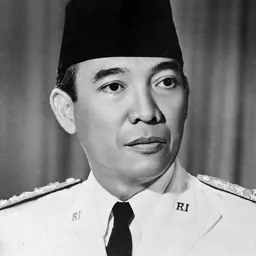
In January 1963 trouble broke out in the north of Borneo, at the start of the Indonesian Confrontation. President Sukarno of Indonesia objected to the ‘neocolonialist’ British plan to amalgamate the Federation of Malaya, Singapore and British Borneo (North Borneo and Sarawak) into the new country of Malaysia - the south of Borneo was, and still is, part of Indonesia. Small, ill-trained and poorly armed gangs of Indonesian insurgents started to cross the 900-mile Borneo border. Sensing an opportunity, Woodhouse approached the MoD, who sent him out to meet General Walter Walker, the Director of Operations in Borneo.
In September 1963 the British embassy in Jakarta was stormed by angry Sukarno-supporting crowds, badly damaging the embassy. In an atmosphere of rising tension, the Indonesian government sent regular and elite soldiers (some of whom had been trained by US Special Forces) to fight alongside the border gangs in Borneo. During training in the UK, reports were received from Borneo of increasing Indonesian aggression and SAS actions in which men had been killed. 'D' Squadron arrived home exhausted. Watts took his new recruits to Brunei for final jungle training in October 1964, then in November started operations as part of the highly classified Operation Claret.
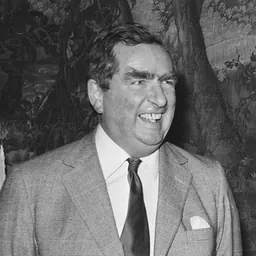
Under Operation Claret, Woodhouse sent Watts and his squadron up to six miles into the jungle across the Indonesian border, three times further than had been allowed before, to conduct covert reconnaissance so that British infantry and Gurkha units (which reported to Watts) could make ‘psychological rapier thrusts’ against Indonesian forces. The idea was to detect and engage infiltrators before they left Indonesian territory. SAS troops provided medical and other forms of assistance to indigenous tribes along the border to build trust and a network of local ‘eyes and ears’. Secrecy was paramount, as the British Government did not want this to be seen as an act of war against Indonesia. The operations of the SAS in Borneo helped to stabilize the situation until Indonesia fell apart after the October 1965 coup and subsequent Indonesian genocide. General Walker, who had requested the extra SAS squadron, later commented that "one SAS squadron with helicopters was worth ten infantry battalions to me". Denis Healey, the British Minister of Defence at the time, stated that Borneo was "a textbook demonstration of how to apply economy of force, under political guidance for political ends”. Of Woodhouse, he said: "He was, by common consent among the few who knew his record, the greatest guerrilla warrior yet produced by the West – a man to compare with Ho Chi Min”.
In December 1964 Woodhouse's period of command of 22SAS came to an end, and he chose to retire from the British Army, reportedly telling John Watts to "work hard to be a General". It had lost two of its men while operating north of Aden in the Radfan mountains. They had been tasked with night reconnaissance in rebel territory to identify possible drop zones for the Parachute Regiment. The bodies of the two SAS men were decapitated and the heads displayed at a rebel stronghold inside Yemen. Woodhouse continued to advise Watchguard (International) Ltd., the private company set up by ex-members of the SAS to help governments of friendly countries combat terrorism and insurgency, and was also an advisor to the Foreign Office.
Later, when Stirling hit the headlines in the UK with the launch of his political organization, GB75, in response to the economic and political travails of the mid-1970s, Woodhouse wrote a letter to Stirling, which was subsequently published, distancing himself from the initiative.
Brewing and later life Upon retirement, Woodhouse joined the family business, Hall & Woodhouse Brewery, Blandford St Mary, Dorset, where from scratch, he created the successful children's soft drink brand, Panda Pops, becoming the managing director of this division. He was involved in local forestry management and, from 1976 to 1984, he served as chairman of the SAS Association.
Don’t just read it —
keep it.
Full-length biographies made to live with: read them, listen on the way to work, watch them tonight.
- E-book
- Audio
- Video
Instant download · yours to keep · every purchase keeps this site free
Important facts
People in John Woodhouse's life
Named in this biography and alive at the same time




Related people
Same field, nearest in time



Contemporaries
People whose lives overlapped John Woodhouse's

Frequently asked questions
Who was John Woodhouse?
British Army officer
When was John Woodhouse born?
John Woodhouse was born on 29 September 1922 in Kensington.
When did John Woodhouse die?
John Woodhouse died on 15 February 2008 in Dorset.
What was John Woodhouse's occupation?
John Woodhouse was a military personnel and hall & Woodhouse.
What nationality was John Woodhouse?
John Woodhouse was British.
Sources & further reading
· DBpedia: John Woodhouse (British Army officer)
Cite this page
APA: Biography.guide. (2026). John Woodhouse. https://biography.guide/john-woodhouse-military-personnel/
MLA: "John Woodhouse." Biography.guide, https://biography.guide/john-woodhouse-military-personnel/.
Chicago: "John Woodhouse." Biography.guide. https://biography.guide/john-woodhouse-military-personnel/.
Data last updated: 2026-09-20 · Spot an error? Report a correction.
Page generated 2026-09-27 04:57 UTC