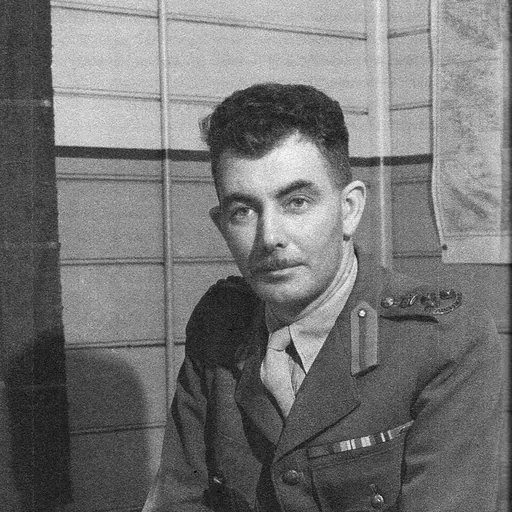
About John William Alexander O'Brien
Lived 1908 – 1980 (aged 71). John William Alexander O'Brien was an Australian soldier, engineer and woollahra.
Major General John William Alexander O'Brien, (13 June 1908 – 27 May 1980) was a senior officer in the Australian Army during the Second World War. He was awarded the Distinguished Service Order for his service as commander of the 2/5th Field Regiment during the Syria–Lebanon Campaign. As Deputy Master General of the Ordnance he was involved in the development of the short 25-pounder and the Owen Gun. After the war he was the Australian supply and defence production representative in Washington, D.C., from 1951 to 1954, and the mayor of Woollahra from 1971 to 1972 and 1975 to 1976.
Early life John William Alexander O'Brien was born in Collingwood, Victoria, on 13 June 1908, the only child of Henry Charles O'Brien, a policeman, and his wife Jeanne Doris Kerr. His father had served in the Boer War as a private in the 2nd Battalion, Australian Commonwealth Horse, and had served in the Militia. O'Brien was educated at Ivanhoe State School and St Patrick's College, East Melbourne. In 1925, he entered Working Men's College, where he studied civil engineering. That year he was a full-time student but the following year he secured a position as a draughtsman at Dorman Long & Company, an engineering firm, and became a part-time student. He graduated with his Diploma of Civil Engineering in 1928, and joined the Melbourne and Metropolitan Tramways Board.
Australia had compulsory military training at this time, and O'Brien served in the Australian Army Cadets at St Patricks' and then in the Militia. He joined the 2nd Survey Company of the Australian Garrison Artillery in 1927, and was promoted to lance sergeant in March 1927, and sergeant in March 1928. On 30 August 1928, he was commissioned as a lieutenant in the Australian Garrison Artillery. Conscription ended in 1929, but O'Brien remained with the now-volunteer Militia. In May 1930, O'Brien set out on a world tour to visit the battlefields of the American Civil War. A letter of introduction from Thomas Blamey, the Chief Commissioner of Victoria Police enabled him to obtain a work permit for the United States, and secure a position with the American Bridge Company in Gary, Indiana. He took a keen key interest in bridges, notably the Brooklyn Bridge, the George Washington Bridge and the Bayonne Bridge. He spent four days at the United States Army Field Artillery School at Fort Sill, Oklahoma, and toured the American Civil War battlefields in Virginia. In December 1930, O'Brien crossed the Atlantic to Britain, and then went to France to see the Australian battlefields there. He returned to England in January 1931, and served with the British Army's 1st Survey Company at Larkhill from 6 to 15 January 1835, before boarding the SS Barrabrook for the return trip to Australia. He became adjutant of the 2/7th Field Regiment, and supervised the training of its 13th and 14th Batteries. O'Brien had to shuttle between their camps at Woodside, South Australia and Northam, Western Australia. The two batteries did not come together for the first time until they sailed for the Middle East on the SS Stratheden in November 1940.
On 1 March 1941, O'Brien was given command of the 2/5th Field Regiment. Its commander, Lieutenant Colonel L. G. L. Ingate, had been invalided home, and the 7th Division was about to go into battle. The choice of replacements was limited to majors already in the Middle East, and the Commander Royal Artillery (CRA), 7th Division, Brigadier Frank Berryman, selected O'Brien. This made him the youngest regimental commander in the Army at the time. He was promoted to lieutenant colonel on 5 March. The 2/5th had trained with the old 18-pounders and 4.5-inch howitzers, and only received the new 25-pounders shortly before it moved to Mersa Matruh in April 1941.
The regiment participated in the Syria-Lebanon campaign in June 1941. The French counterattack at Merdjayoun caught the 2/5th Field Regiment with the 9th Battery at Jezzine and the 10th near Merdjayoun. O'Brien was with Berryman, conducting a reconnaissance of Beit ed-Dine, the 7th Division's next objective, when they received the news. They rushed back in the dark with the 9th Battery to plug the gap in the Allied position. O'Brien conducted a personal reconnaissance of the French position at Merdjayoun. He devised a fire support plan, and his guns supported the unsuccessful attack on the on 17 June, and 23 June attack that successfully recaptured the town. and awarded the Distinguished Service Order.
A short 25-pounder at Lae, New Guinea, in 1944. O'Brien initiated this project, and did the early design work on it. On 11 February 1942, the 2/5th Field Regiment embarked for Australia on the . It reached Adelaide on 23 March, As such, he worked closely with both the British Commonwealth Occupation Force and headed the Science and Technology Division of the Economic and Scientific Section at the headquarters of the Supreme Commander for the Allied Powers. As such, he travelled extensively around Japan. In October 1948, he was appointed the president of a military court convened to try Admiral Soemu Toyoda, the former commander of the Japanese Combined Fleet. After a lengthy trial that dragged on until 6 September 1949, the seven-member court acquitted Toyoda. Toyoda became the last top-level Japanese official to be tried for war crimes, and the only one to have all the charges against him dismissed.
Later life The post in Tokyo gradually became a sinecure, and O'Brien had time to produce a book, Guns and Gunners (1950), on the wartime deeds of the 2/5th Field Regiment. He was appointed Chief Military Observer for the United Nations in Korea, but before he could take up the post the Korean War broke out. His last Army assignment was as Australia's Senior Supply and Defence Production Representative in Washington, DC. He was transferred to the Reserve of Officers on 31 March 1951, and accorded the honorary rank of major general. As a brigadier in Tokyo, he had experienced problems because he had been senior to colonels, but junior to all generals, including brigadier generals. He ran into bureaucratic obstruction from the Department of Trade and Customs, the Department of External Affairs, and Joint Service Staff in Washington, where he was senior to the military attaché, Brigadier Lewis Dyke.
When the Washington posting came to an end in June 1954, O'Brien and his family took a tour of Europe before sailing from Southampton for Australia on the on 8 August. In April 1955 he became the director of engineering and sales with Howard Auto-Cultivators Pty Ltd, a Sydney firm that made rotary hoes. The company incorporated in October 1958, and the tool room was put up for sale. When no buyer was found, O'Brien bought it himself, setting up a new business, Contract Tooling Pty Ltd (CTPL), on 27 August 1959. He remained with CTPL until he decided to retire in 1972, and sold the company. He became involved in local politics. He was elected to the Woollahra Council on 9 December 1968, and served two terms as the mayor, from 1971 to 1972, and from 1975 to 1976. He died in Darlinghurst on 27 May 1980, and was buried in the South Head Cemetery in Bronte. A memorial service was held at St Mary Magdalene Church in Rose Bay.
Don’t just read it —
keep it.
Full-length biographies made to live with: read them, listen on the way to work, watch them tonight.
- E-book
- Audio
- Video
Instant download · yours to keep · every purchase keeps this site free
Important facts
People in John William Alexander O'Brien's life
Named in this biography and alive at the same time



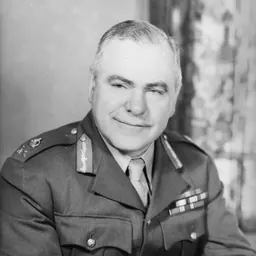

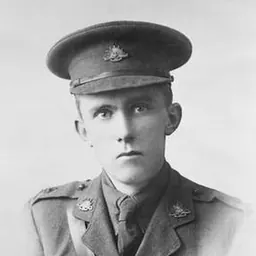

Related people
Same field, nearest in time
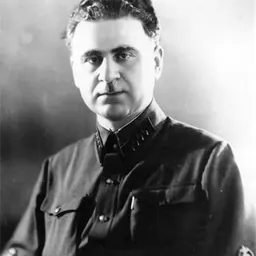


Contemporaries
People whose lives overlapped John William Alexander O'Brien's


Frequently asked questions
Who was John William Alexander O'Brien?
Australian engineer and soldier
When was John William Alexander O'Brien born?
John William Alexander O'Brien was born on 13 June 1908 in Collingwood.
When did John William Alexander O'Brien die?
John William Alexander O'Brien died on 27 May 1980 in Darlinghurst.
What was John William Alexander O'Brien's occupation?
John William Alexander O'Brien was a soldier, engineer and woollahra.
What nationality was John William Alexander O'Brien?
John William Alexander O'Brien was Australian.
Sources & further reading
· Wikipedia: John William Alexander O'Brien
· DBpedia: John O'Brien (Australian Army officer)
Cite this page
APA: Biography.guide. (2026). John William Alexander O'Brien. https://biography.guide/john-william-alexander-o-brien/
MLA: "John William Alexander O'Brien." Biography.guide, https://biography.guide/john-william-alexander-o-brien/.
Chicago: "John William Alexander O'Brien." Biography.guide. https://biography.guide/john-william-alexander-o-brien/.
Data last updated: 2026-09-20 · Spot an error? Report a correction.
Page generated 2026-09-27 05:10 UTC