
About John Wilkie
Lived 1860 – 1934 (aged 73–74). John Wilkie was an American journalist and u.S. Secret Service agent.
John Elbert Wilkie (1860 – December 13, 1934) was an American journalist and law enforcement officer who served as the 8th Chief of the United States Secret Service from 1898 to 1911.
Journalist career
At age 19, Wilkie joined the staff of the Chicago Times as a reporter. His father, Frank B. Wilkie, was an editorial writer at the newspaper; the two traveled to Europe and served. Upon returning to the United States, Wilkie joined the staff of the Chicago Tribune, where he initially served as financial editor and later city editor. While at the Tribune, Wilkie hired satirist Finley Peter Dunne.
On August 8, 1890, while working for the Tribune, Wilkie wrote a pseudonymous article that first described the Indian Rope Trick. Featured on the front page of the paper's second section, it was soon picked up by newspapers throughout the United States and United Kingdom, and it was translated into nearly every European language. Soon a number of people claimed to remember having seen the trick as far back as the 1850s. Four months later, the Tribune printed a retraction noting the story had been "written for the purpose of presenting a theory in an entertaining form." However, the notice of the hoax garnered little attention, and the myth of the Indian Rope Trick persisted for years. When The People's Friend, a British weekly magazine, contacted the Tribune in order to contact individuals mentioned in the story, Wilkie wrote a personal note: "I am led to believe that the little story attracted more attention than I dreamed it could, and that many accepted it as perfectly true. I am sorry that anyone should have been deluded."
Later career
Wilkie also served as assistant to the president of the Chicago Surface Lines and vice president of the Chicago Railway company.
In fiction
Wilkie is featured prominently in the 2014 novel The Great Abraham Lincoln Pocket Watch Conspiracy, where he is portrayed as a loyal but combative subordinate to President William Howard Taft. (There is also a major twist in the story about his real identity.) Many elements of the U.S. Secret Service from the era, such as their weapons and commission books, are featured, as are several U.S. Secret Service agents. An online-only chapter of the book also depicts Wilkie at work in his office at the Treasury Building, which is described in detail.
He is also a character in S.M. Stirling's Tales of the Black Chamber trilogy, an alternate history of World War II in which he remains chief of the Secret Service under a third Theodore Roosevelt administration.
Don’t just read it —
keep it.
Full-length biographies made to live with: read them, listen on the way to work, watch them tonight.
- E-book
- Audio
- Video
Instant download · yours to keep · every purchase keeps this site free
Important facts
People in John Wilkie's life
Named in this biography and alive at the same time


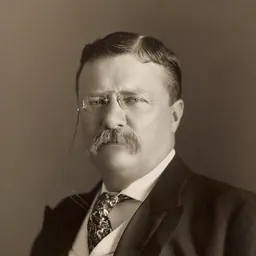
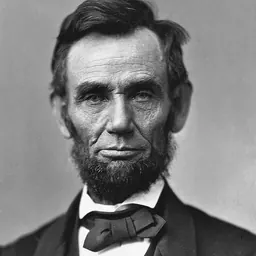
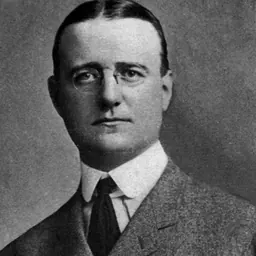
Related people
Same field, nearest in time
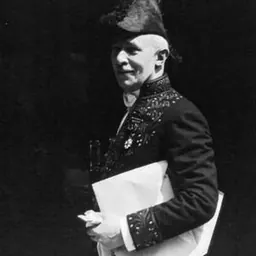

Contemporaries
People whose lives overlapped John Wilkie's




Frequently asked questions
Who was John Wilkie?
Director, US Secret Service
When was John Wilkie born?
John Wilkie was born in 1860 in Elgin.
When did John Wilkie die?
John Wilkie died on 13 December 1934.
What was John Wilkie's occupation?
John Wilkie was a journalist and u.S. Secret Service agent.
What nationality was John Wilkie?
John Wilkie was American.
Sources & further reading
Cite this page
APA: Biography.guide. (2026). John Wilkie. https://biography.guide/john-wilkie-journalist/
MLA: "John Wilkie." Biography.guide, https://biography.guide/john-wilkie-journalist/.
Chicago: "John Wilkie." Biography.guide. https://biography.guide/john-wilkie-journalist/.
Data last updated: 2026-09-20 · Spot an error? Report a correction.
Page generated 2026-09-27 05:24 UTC