
About John Weston
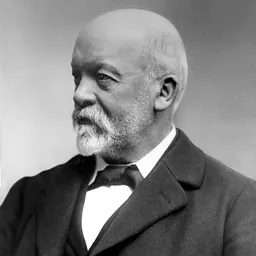
Lived 1873 – 1950 (aged 77). John Weston was a South African engineer and aircraft pilot.
John Weston (aka Maximilian John Ludwick Weston ) was a South African aeronautical engineer, pioneer aviator, farmer and soldier. He travelled extensively in a motor caravan (RV) that he designed and built himself.
Weston was a pioneer of aviation in South Africa. In 1911, Weston founded the Aeronautical Society of South Africa. The Society hosts a bi-annual memorial lecture in his honour.
Early life Weston's registration of birth is missing from the national records in Pretoria. in an ox wagon at Fort Marshall, northern Natal, South Africa. His father and mother's names are unknown and they may have been British. Weston's mother and sister, Lucy, died in China of cholera in 1928.
Early career
In 1888 Weston was apprenticed as an engineer to the J. Jaspar company in Liege, Belgium and then worked for de Puydt and Poncin Lighting and Power Company, where he rose to the position of partner and technical advisor. In 1900–1901, Weston established M. Weston and Co., (Manufacture de la Lampe a arc, 1900) a company manufacturing electrical lights in Liege.
Weston returned to South Africa during the Second Boer War to fight on the side of the Boers. Left poor after the war, Weston borrowed £100 from a friend and went to America.
In 1903, Weston applied for membership of the British Institute of Electrical Engineers and the company opened an office in Birkenhead, Liverpool.
France In France, Weston trained at the Henri Farman flying school at Étampes. On 30 December 1910, Weston flew solo at Étampes and on 5 January 1911, passed his pilot test. He was granted aviator certificate No. 357 by the French Aero Club on 3 February 1911.
At the outbreak of World War I Weston joined the South African forces taking part in the South West Africa Campaign (present day Namibia). He was responsible for providing and maintaining airfields. On 6 February 1915, he joined the South Africa Air Corps (SAAC) with the rank of lieutenant. It was not until 1 May 1915 that aircraft were available to South Africa's military forces and they were then found to be unserviceable. However, Weston was able to place beacons for pilots as far afield as Garub, now in Namibia.
After German forces capitulated in South West Africa on 9 July 1915, Weston and his family travelled to England, arriving in Tilbury on 9 September 1915. On 28 September 1916, he was promoted to temporary acting lieutenant. No. 3 (Naval) Wing] formed during the spring of 1916. Weston's group was one of the first departures to an airfield at Luxeuil-les-Bains, operating over a strategically important German manufacturing region. Weston's role included calibration of compasses and provision of marked maps to observers and airmen, intelligence work and retrieving downed airmen. He also negotiated reparations for local farmers and residents affected by his unit's operations, since he spoke French. From 28 July 1916, Weston also worked as a translator.
On 2 April 1917, Weston was posted as a compass officer to No. 2 wing, RNAS, at Moudros on the Greek island of Lemnos in the Aegean Sea. Weston also managed aerodrome construction, drainage and roadmaking. This posting included a short time as an intelligence officer in Port Said in Egypt. It also included training of pilots, crew and engineers of the Hellenic Naval Air Service. Weston was recorded as "a thorough and efficient mapping officer, very energetic and hardworking...a very capable 'E' officer". He remained in Moudros at least until 1918.
On the formation of the Royal Air Force from the Royal Naval Air Service and the Royal Flying Corps on 1 April 1918, Weston was commissioned as a Lieutenant in the RAF. In August 1918, while he was seconded to the British Naval Mission to Greece as head of the technical section, he was promoted to "Major whilst specially employed". On 9 January 1919, Weston was promoted to Major in recognition of his distinguished service. In July 1919, Weston was awarded the cross of Officer of the Order of the Redeemer. and in 1923 he was promoted to Vice-Admiral in the Royal Hellenic Navy. Weston later named his South African property, “Admiralty Estate”. Weston painted the vehicle yellow with black trim and called it "Suid Afrika". The Suid Afrika was essentially a large wooden structure on the rear chassis of the truck. Windows were placed at the front of the living quarters and in the sides of the lantern roof. The vehicle could be hoisted upright onto a ship's deck. A sign on the side read, "Our mansion: 7 by 14 feet, Our field: the world, Our family: mankind." and surrounding this, in a circle, "Round the World." Weston and his family took a tour of 18 weeks in the Suid Afrika from England to Greece. The Westons lived in Athens for two years then in May 1924, returned in the Suid Afrika to England and from there to South Africa. In 1925, Weston made extensive travels through southern Africa. In 1926, the family attempted to return to England, overland. In 1927, Weston found the motor home was not suitable for the trip and returned to Cape Town. (The house in Brandfort was sold in April 1928.)
The motor home remains on display as an exhibit of the Winterton Museum.
"Prairie Schooner" The Prairie Schooner was a second motor home built by Weston on the Commerce base. It had a removable living area with a canvas cover and was water-proofed for river crossings. In 1931–1932, Weston travelled from Cape Agulhas, the southernmost point of Africa, to Belgrade, Bulgaria (and to England and back). Weston used the Prairie Schooner for the remainder of his life. In 1975, the Prairie Schooner featured in the International Veteran and Vintage Car Rally from Durban to Cape Town. It was later donated to the Winterton Museum, KwaZulu Natal, South Africa, by Weston's son in law, Carl Rein Weston.
Later life On his return to South Africa in 1933, Weston bought a farm in the Bergville district, near the Sterkfontein dam. On 24 July 1950, Weston and his wife were injured in an attack. Weston died three days later at the age of 78. His wife survived. She lived with her eldest daughter, Anna, in the Transvaal, and died at age 91.
Don’t just read it —
keep it.
Full-length biographies made to live with: read them, listen on the way to work, watch them tonight.
- E-book
- Audio
- Video
Instant download · yours to keep · every purchase keeps this site free
Important facts
People in John Weston's life
Named in this biography and alive at the same time

Related people
Same field, nearest in time


Contemporaries
People whose lives overlapped John Weston's


Frequently asked questions
Who was John Weston?
South African aviator (1873-1950)
When was John Weston born?
John Weston was born on 17 June 1873.
When did John Weston die?
John Weston died on 24 July 1950 in Bergville.
What was John Weston's occupation?
John Weston was an engineer and aircraft pilot.
What nationality was John Weston?
John Weston was South African.
Sources & further reading
· DBpedia: John Weston (aviator)
Cite this page
APA: Biography.guide. (2026). John Weston. https://biography.guide/john-weston-engineer/
MLA: "John Weston." Biography.guide, https://biography.guide/john-weston-engineer/.
Chicago: "John Weston." Biography.guide. https://biography.guide/john-weston-engineer/.
Data last updated: 2026-09-20 · Spot an error? Report a correction.
Page generated 2026-09-27 05:24 UTC