
About John Weakland
Lived 1919 – 1995 (aged 76). John Weakland was an American anthropologist and psychotherapist.
John H. Weakland (8 January 1919 – 18 July 1995) was one of the founders of brief and family psychotherapy. At the time of his death, he was a senior research fellow at the Mental Research Institute (MRI) in Palo Alto, California, co-director of the famous Brief Therapy Center at MRI, and a clinical associate professor emeritus in the Department of Psychiatry and Behavioral Sciences at the Stanford University School of Medicine.
A brief biography
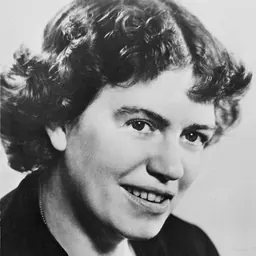
Weakland was a native of Charleston, West Virginia He was a brilliant student who entered Cornell University at the age of 16 and received a degree in chemical engineering. He worked as a chemical engineer with the DuPont Company before a chance encounter with Gregory Bateson led him to pursue anthropology at Columbia University. While at Columbia, he worked on the Cultures at a Distance Project with Margaret Mead and Ruth Benedict. Weakland never obtained his doctorate from Columbia; rejecting his adviser's criticisms of his thesis, he refused to rewrite it. "Towards a Theory of Schizophrenia" Weakland was also an early student and researcher of Milton Erickson.
Joining the Mental Research Institute in the early 1960s, Weakland was a founding member and co-director of MRI's Brief Therapy Center (along with Paul Watzlawick and Dick Fisch). This center helped to inspire many of the more influential psychotherapy approaches in brief and family therapy. Weakland mentored and befriended many therapists who would go on to make major contributions to the field.
Weakland died in Los Altos, California.
Quotations Weakland has often been quoted as saying
Weakland's final appeal to the field was published weeks before his death from ALS. He wrote in a letter to the Family Therapy Networker that:
Books Change: Principles of Problem Formation and Problem Resolution, with Paul Watzlawick and Richard Fisch (WW Norton, NY, 1974) The Tactics of Change: Doing Therapy Briefly, with Richard Fisch and Lynn Segal (Jossey Bass, SF, 1982) The Interactional View: Studies at the Mental Research Institute, Palo Alto, 1965–1974, edited with Paul Watzlawick (WW Norton, NY, 1979) Rigor and Imagination, Essays from the Legacy of Gregory Bateson, edited with Carol Wilder-Mott (Praeger, NY, 1981) Propagations: Thirty Years of Influence From the Mental Research Institute, edited with Wendel Ray (The Haworth Press, Inc., 1995)
Don’t just read it —
keep it.
Full-length biographies made to live with: read them, listen on the way to work, watch them tonight.
- E-book
- Audio
- Video
Instant download · yours to keep · every purchase keeps this site free
Important facts
People in John Weakland's life
Named in this biography and alive at the same time



Related people
Same field, nearest in time



Contemporaries
People whose lives overlapped John Weakland's



Frequently asked questions
Who was John Weakland?
American psychotherapist (1919–1995)
When was John Weakland born?
John Weakland was born on 8 January 1919 in Charleston.
When did John Weakland die?
John Weakland died on 18 July 1995.
What was John Weakland's occupation?
John Weakland was an anthropologist and psychotherapist.
What nationality was John Weakland?
John Weakland was American.
Sources & further reading
Cite this page
APA: Biography.guide. (2026). John Weakland. https://biography.guide/john-weakland/
MLA: "John Weakland." Biography.guide, https://biography.guide/john-weakland/.
Chicago: "John Weakland." Biography.guide. https://biography.guide/john-weakland/.
Data last updated: 2026-09-20 · Spot an error? Report a correction.
Page generated 2026-09-27 05:29 UTC