
John Walker
Church of Ireland priest, founder of the Church of God and classical scholar
About John Walker
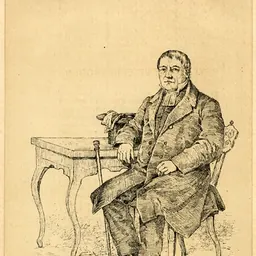
Lived 1769 – 1833 (aged 63–64). John Walker was a British priest, classical scholar, theologian and scholar.
John Walker (1769–1833) was a Church of Ireland cleric and academic of evangelical and Calvinist views. He seceded, as founder of a sect calling itself the Church of God, sometimes known as the Walkerites.
Early life Born in County Roscommon, or in Silvermines, County Tipperary, he was the son of Matthew Walker, a clergyman of the established Church of Ireland. He entered Trinity College, Dublin, on 18 January 1785, was chosen a scholar in 1788, graduated B.A. in 1790, and proceeded M.A. in 1796, and B.D. in 1800.
Walker was ordained a priest of the Church of Ireland in 1791, and then was elected a fellow of Trinity College.
At the Bethesda Chapel, Dublin, a centre for evangelicals, Walker was a chaplain from 1794 to 1804. It had been founded in 1786 by William Smyth, nephew of Archbishop William Smyth, a wealthy Dublin merchant and follower of William Romaine, and was attached to a female orphanage. Two previous chaplains, Edward Smyth who was brother to the founder and William Mann, had moved on, to Manchester and London respectively; Walker had as colleague Henry Maturin. he associated with John Wesley.
William Smyth passed control of the Chapel in 1794 to a group of five trustees, including Walker and Maturin. Robert Fowler, the Church of Ireland Archbishop, objected, and took steps affecting three of the trustees, the third being Thomas Kelly. It drew in Trinity College students, and so recruited the evangelical ranks, and the congregation was influential. Arthur Guinness II, an evangelical Christian, was one of them. In 1798 Maturin took the living of Clondavaddog, after the murder there the previous year of the incumbent William Hamilton, and Walker became the sole chaplain.
During the 1790s Walker also took part in revivalist activity in the County Armagh townlands, where Thomas Campbell was minister at Aghory, preaching at Richhill, as did Rowland Hill and James Haldane
Seceder Walker began to study the principles of Christian fellowship of the earliest Christians. Convinced that later departures were erroneous, he joined with a few others in an attempt to return to apostolic practices. Their doctrinal beliefs were Calvinist, and they rejected the idea of a clerical order. On 8 October 1804 Walker, convinced that he could no longer exercise the functions of a clergyman of the Church of Ireland, informed the provost of Trinity College, and offered to resign his fellowship. He was expelled the next day.
With a congregation of fellow-believers in Stafford Street, Dublin, Walker supported himself by lecturing on subjects of university study. After several visits to Scotland, he moved to London in 1819.
Works Walker was a scholar, and wrote educational works. His publications included:
Letters to Alexander Knox, Dublin, 1803. An Expostulatory Address to Members of the Methodist Society in Ireland, 3rd ed. Dublin, 1804. A Full and Plain Account of the Horatian Metres, Glasgow, 1822. Essays and Correspondence, ed. W. Burton, London, 1838. The Sabbath a Type of the Lord Jesus Christ, London, 1866.
He also edited:
Livy's Historiarum Libri qui supersunt, Dublin, 1797–1813, 7 vols; Dublin, 1862. The First, Second, and Sixth Books of Euclid's Elements, Dublin, 1808; first six books with a treatise on trigonometry, London, 1827. Selections from Lucian, Glasgow, 1816; 9th ed. Dublin, 1856.
For the opening of the Bethesda Chapel, on 22 June 1794, Walker wrote two hymns, one of which, "Thou God of Power and God of Love", was included in later collections.
Don’t just read it —
keep it.
Full-length biographies made to live with: read them, listen on the way to work, watch them tonight.
- E-book
- Audio
- Video
Instant download · yours to keep · every purchase keeps this site free
Important facts
People in John Walker's life
Named in this biography and alive at the same time
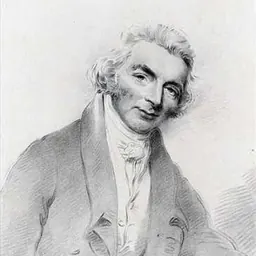
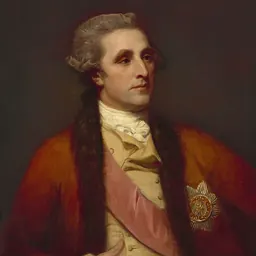
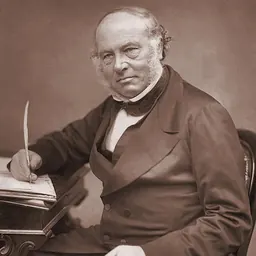

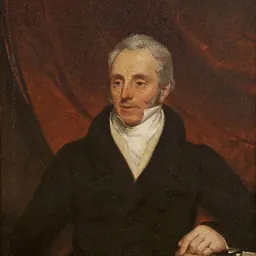



Related people
Same field, nearest in time

Contemporaries
People whose lives overlapped John Walker's




Frequently asked questions
Who was John Walker?
Church of Ireland priest, founder of the Church of God and classical scholar
When was John Walker born?
John Walker was born in 1769 in County Roscommon.
When did John Walker die?
John Walker died in 1833.
What was John Walker's occupation?
John Walker was a priest, classical scholar, theologian and scholar.
What nationality was John Walker?
John Walker was British.
Sources & further reading
· DBpedia: John Walker (1769–1833)
Cite this page
APA: Biography.guide. (2026). John Walker. https://biography.guide/john-walker-priest/
MLA: "John Walker." Biography.guide, https://biography.guide/john-walker-priest/.
Chicago: "John Walker." Biography.guide. https://biography.guide/john-walker-priest/.
Data last updated: 2026-09-20 · Spot an error? Report a correction.
Page generated 2026-09-27 05:15 UTC