
About John W. Cahn
Lived 1928 – 2016 (aged 88). John W. Cahn was an American chemist, known for Allen–Cahn equation.
John Werner Cahn (January 9, 1928 – March 14, 2016) was an American scientist and recipient of the 1998 National Medal of Science. Born in Cologne, Weimar Germany, he was a professor in the department of metallurgy at the Massachusetts Institute of Technology (MIT) from 1964 to 1978. From 1977, he held a position at the National Institute of Standards and Technology (formerly the National Bureau of Standards). Cahn had a profound influence on the course of materials research during his career. One of the foremost authorities on thermodynamics, Cahn applied the basic laws of thermodynamics to describe and predict a wide range of physical phenomena.
Biography Hans Werner Cahn was born in Cologne, Germany, to a Jewish family.
Solidification In the theory of crystal growth, Cahn concluded that the distinguishing feature is the ability of the surface to reach an equilibrium state in the presence of a thermodynamic driving force (typically in the form of the degree of undercooling). He also concluded that for every surface or interface in a crystalline medium, there exists a critical driving force, which, if exceeded, will enable the surface or interface to advance normal to itself, and, if not exceeded, will require the lateral growth mechanism.
Thus, for sufficiently large driving forces, the interface can move uniformly without the benefit of either a heterogeneous nucleation or screw dislocation mechanism. What constitutes a sufficiently large driving force depends upon the diffuseness of the interface, so that for extremely diffuse interfaces, this critical driving force will be so small that any measurable driving force will exceed it. Alternatively, for sharp interfaces, the critical driving force will be very large, and most growth will occur by the lateral step mechanism.
Droplets and surfaces In 1977, Cahn published a simple mathematical treatment of the thermodynamics of wetting: the interaction between a liquid in contact with a solid surface. This paper laid out a simple formulation for describing the wetting transition—the point at which a liquid changes from forming a droplet on a surface to spreading out evenly as a liquid film over the surface. This theory had wide-ranging implications for many materials processing techniques.
Quasicrystals In 1982, Dan Shechtman observed a new crystalline structure with puzzling features. Cahn contributed to the theory of how such a structure could be thermodynamically stable and became co-author of the seminal paper which introduced quasicrystals.
Glass transition In 2004, Cahn and Bendersky presented evidence that an "isotropic non-crystalline metallic phase" (dubbed "q-glass") can be grown from the melt. This is the "primary phase," to form in the Al-Fe-Si system during rapid cooling. Experimental evidence indicates that this phase forms by a first-order transition. TEM images show that the q-glass nucleates from the melt as discrete particles, which grow spherically with a uniform growth rate in all directions. The diffraction pattern shows it to be an isotropic glassy phase. Yet there is a nucleation barrier, which implies an interfacial discontinuity (or internal surface) between the glass and the melt.
Research in retirement In his retirement, Cahn accepted a position at the University of Washington as an affiliate professor in the Departments of Materials Science and Engineering and Physics.
Personal life He had three children and six grandsons. In retirement, he lived in Seattle, Washington, with his wife, Anne Hessing Cahn. He died from leukemia in Seattle on March 14, 2016.
Honors and awards
2011 The Kyoto Prize, Inamori Foundation
2002 Bower Prize, Franklin Institute
2001 Emil Heyn Medal, German Metallurgical Society
2001 Honorary Life Member, American Ceramic Society
1999 Bakhuys Roozeboon Lecturer and Gold medal, Netherlands Academy of Sciences
1998 National Medal of Science
1998 Member, National Academy of Engineering
1998 Distinguished GE Lecturer in Materials Science at RPI
'69 & `98 MacDonald Lecturer, Canadian Metallurgical Society
1996 Doctor Honoris Causis, Universite d'Évry, France
1995 Harvey Prize, Technion.
1994 Rockwell Medal; Hall of Fame for Engineering, Science and Technology, and Medal, International Technology Institute.
1994 Gold Medal, Honorary Member, Japan Institute of Metals.
1993 Inland Steel Lecture, Northwestern University.
1993 Hume–Rothery Award, TMS.
1993 Cyril Stanley Smith Lecturer, University of Chicago.
1992 Honorary member, MRS-India.
1991 Michelson–Morley Award, Case Western University.
1990 Honorary Sc. D., Northwestern University; Hilliard Lecturer.
1989 Sauveur Award, ASM International.
1987 Distinguished Physics Lecturer, Boston University.
1986 Stratton Award, National Bureau of Standards.
1985 Von Hippel Award, Materials Research Society.
1984 Gold Medal, US Department of Commerce.
1983 Distinguished Lecturer, University of Connecticut.
1982 Golick Lecturer, University of Missouri, Rolla, MO.
1981 Fellow, Japan Society for the Promotion of Science.
1981 Dickson Prize, Carnegie–Mellon University.
1980 Honorary Professor, Jiao Tong University, Shanghai, China.
1979 Van Horn Lecturer, Case-Western University.
1978 Dorn Lecturer, Northwestern University.
1977 Acta Metallurgica Gold Medal.
1974 Fellow, American Academy of Arts and Sciences.
1973 Member, National Academy of Sciences.
1968 Institute of Metals Lecturer, AIME.
1966 S. B. Meyer Award, American Ceramic Society.
1960–61 Guggenheim Fellowship spent at the University of Cambridge, Goldsmith Laboratory.
1951 Allied Chemical and Dye Fellowship at University of California, Berkeley.
Don’t just read it —
keep it.
Full-length biographies made to live with: read them, listen on the way to work, watch them tonight.
- E-book
- Audio
- Video
Instant download · yours to keep · every purchase keeps this site free
Important facts
Family & relationships
People in John W. Cahn's life
Named in this biography and alive at the same time
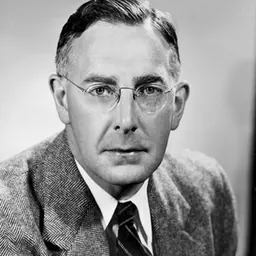
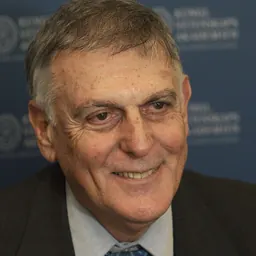



Related people
Same field, nearest in time


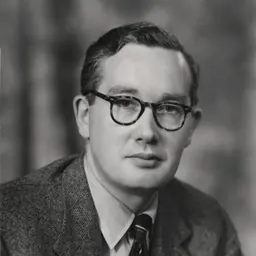


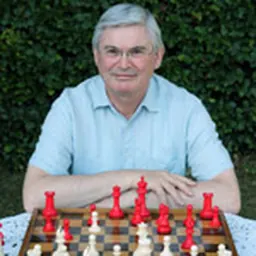
Contemporaries
People whose lives overlapped John W. Cahn's


Frequently asked questions
Who was John W. Cahn?
American materials scientist (1928–2016)
When was John W. Cahn born?
John W. Cahn was born on 9 January 1928 in Cologne.
When did John W. Cahn die?
John W. Cahn died on 14 March 2016 in Seattle.
What was John W. Cahn's occupation?
John W. Cahn was a chemist.
What was John W. Cahn known for?
John W. Cahn was known for Allen–Cahn equation.
What nationality was John W. Cahn?
John W. Cahn was American.
Sources & further reading
Cite this page
APA: Biography.guide. (2026). John W. Cahn. https://biography.guide/john-w-cahn/
MLA: "John W. Cahn." Biography.guide, https://biography.guide/john-w-cahn/.
Chicago: "John W. Cahn." Biography.guide. https://biography.guide/john-w-cahn/.
Data last updated: 2026-09-26 · Spot an error? Report a correction.
Page generated 2026-09-27 05:14 UTC