
About John Vaux
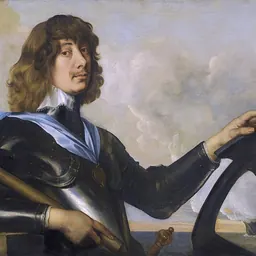
Lived 1630 – 1697 (aged 66–67). John Vaux was a politician.
John Vaux was the Deputy Governor of Bombay in 1689. In the year 1697, when Vaux, along with his wife, were enjoying a boat ride in River Tapi in Surat, the boat capsized. A landmark known as Vaux's Tomb was built at the mouth of the River Tapi. The tomb served as a guide to approaching sailors.
Early life John Vaux himself grew up in England, and later served as a book-keeper to Sir Josiah Child, the former Governor of the East India Company. The 'History of Gujarat' by M. S. Commissariat states that Vaux was on account of his good behaviour made by his master, a supercargo in charge of a ship employed to trade with China. Soon after, Vaux boarded a ship to Bombay where he was appointed a factor. Subsequently, in 1685, he was made Civil Judge in charge of prosecuting interlopers and pirates. In a letter to Sir Josiah Child, Vaux acknowledged his gratitude for the honour, power and position bestowed upon him. He wrote, "The laws of his country should be the rules he designed to walk by."
This remark however irritated the potentate at the India House, who wrote back, "He expected his orders to be his rule, not the laws of England." The then Admiralty Judge, St John, wrote to the secretary of the state complaining that Vaux, a man ignorant of law and unqualified for duties related to the bench, should not have been appointed for such an important office.
In spite of this, when Bartholomew Harris was appointed Governor of Bombay in 1690, John Vaux was promoted to Deputy Governor.
Accusation of spying In the year 1692, John Vaux was discharged from the company, for having been suspected of having traitorous communication with the French.
The tomb was razed sometime in the 1800s to build the Hazira lighthouse. Only a plaque remains signifying its former glory.
Etymology of Hazira Hazira today is one of the major ports of India and the most important part of Surat Metropolitan Region.
The village was originally known as Dhau. The name Hazira comes from Vaux's Tomb. The local Gujaratis called him 'Bakas', or 'Vakas' (બકાસ/વકાસ), and called the Tomb 'Bakasno Hajiro' (બકાસનો હજીરો), borrowed from the Persian word 'hajira' meaning tomb. The name changed and was given to the village of Dhau.
Don’t just read it —
keep it.
Full-length biographies made to live with: read them, listen on the way to work, watch them tonight.
- E-book
- Audio
- Video
Instant download · yours to keep · every purchase keeps this site free
Important facts
Related people
Same field, nearest in time

Contemporaries
People whose lives overlapped John Vaux's






Frequently asked questions
Who was John Vaux?
British politician
When was John Vaux born?
John Vaux was born in 1630 in England.
When did John Vaux die?
John Vaux died in 1697 in India, Surat, Tapti River.
What was John Vaux's occupation?
John Vaux was a politician.
Sources & further reading
Cite this page
APA: Biography.guide. (2026). John Vaux. https://biography.guide/john-vaux/
MLA: "John Vaux." Biography.guide, https://biography.guide/john-vaux/.
Chicago: "John Vaux." Biography.guide. https://biography.guide/john-vaux/.
Data last updated: 2026-09-22 · Spot an error? Report a correction.
Page generated 2026-09-27 05:28 UTC