
About John Stringfellow
Lived 1799 – 1883 (aged 83–84). John Stringfellow was a British engineer, known for Aerial Steam Carriage.
John Stringfellow (1799 – 13 December 1883) was a British early aeronautical inventor, known for his work on the aerial steam carriage with William Samuel Henson.
Life
Stringfellow was born in Attercliffe, England to Martha [née Gillan] and William Stringfellow, stone mason. Initially apprenticed to the lace making trade in Nottingham, c.1820 he relocated to Chard, Somerset to work as an engineer of bobbins and carriages for the lace industry, becoming so successful that he started his own company. On 27 February 1827 he married Hannah Keetch. They had 10 children, including a son who died in infancy and a daughter, Laura, who had epilepsy and died age 29.
Together with William Samuel Henson, he had ambitions of creating an international company, the Aerial Transit Company, with designs showing aeroplane travel to exotic locations like Egypt and China. The initial designs were flawed, with Stringfellow's ideas centred on monoplane and triplane models and Henson's ideas centred on an underpowered steam-powered vehicle, however In 1848 Stringfellow achieved the first ever powered flight using an unmanned 10 ft wingspan steam-powered monoplane, built in a disused lace factory in Chard, Somerset. Employing two contra-rotating propellers on the first attempt, made indoors, the machine flew ten feet before becoming destabilised, damaging the craft. The second attempt was more successful, the machine leaving a guide wire to fly freely, achieving some thirty yards of straight and level powered flight. A bronze model of that first primitive aircraft stands in Fore Street in Chard. The town's museum has a unique exhibition of flight before the advent of the internal combustion engine and before the manned, powered flight made famous by the Wright Brothers. Stringfellow also invented and patented compact electric batteries, which were used in early medical treatment. Stringfellow's work was featured in an exhibition in 1868 at The Crystal Palace in London.
Stringfellow was also a member of the South West Photographic Society and gave lectures about his inventions with photographs as illustration and proof of his pioneering aviation work. A keen photographer in his spare time, Stringfellow had begun learning the new art / science in the late 1850s, being among the first to produce a wet print of an image and quickly becoming proficient enough to advertise as a professional portrait photographer at his studio near the family home in Chard High Street. The studios in Chard and in Crewkerne are where some of his flying vehicle machines were photographed. The 1871 census of England and Wales lists his occupation as "Machinist & Photographer".
It is recorded that Stringfellow met Isambard Kingdom Brunel and Marconi at regular South West Engineering Institution and Royal Society events, enjoying great debates over the science and engineering principles of the day with his fellow engineers. In 1868 he was elected a member of the Royal Aeronautical Society and used his prize money to build a larger workspace for continuing his experiments. However, at nearly 70 years, his sight was beginning to fail and he was unable to make further progress.
John Stringfellow died in 1883 at the age of 84 and was buried in Chard Cemetery, Somerset, where there is a commemorative family monument.
Stringfellow's first powered flight achievement was referenced in the 1965 film The Flight of the Phoenix. The character Heinrich Dorfmann (Hardy Krüger), a German aeroplane designer, explains that it was a model aeroplane that made the first powered flight in 1851 and though his own experience with aeroplane design is with building models, the principles are the same. His design for an aeroplane to be built from the scraps of their crashed plane will fly them out of the desert to safety.
Stringfellow and Henson are honoured by the Royal Aeronautical Society with an annual lecture and dinner in Yeovil
Don’t just read it —
keep it.
Full-length biographies made to live with: read them, listen on the way to work, watch them tonight.
- E-book
- Audio
- Video
Instant download · yours to keep · every purchase keeps this site free
Important facts
People in John Stringfellow's life
Named in this biography and alive at the same time

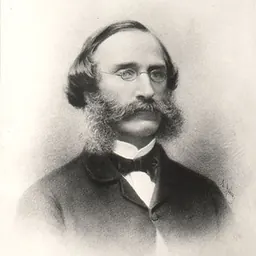
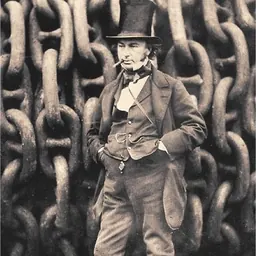
Related people
Same field, nearest in time

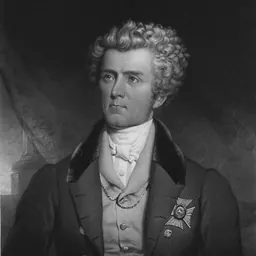
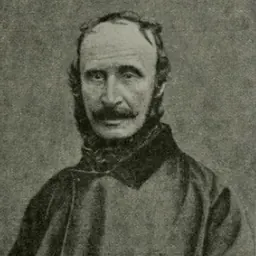

Contemporaries
People whose lives overlapped John Stringfellow's






Frequently asked questions
Who was John Stringfellow?
British aviation pioneer (1799–1883)
When was John Stringfellow born?
John Stringfellow was born in 1799 in Sheffield.
When did John Stringfellow die?
John Stringfellow died on 13 December 1883 in London.
What was John Stringfellow's occupation?
John Stringfellow was an engineer.
What was John Stringfellow known for?
John Stringfellow was known for Aerial Steam Carriage.
What nationality was John Stringfellow?
John Stringfellow was British.
Sources & further reading
· Wikipedia: John Stringfellow
Cite this page
APA: Biography.guide. (2026). John Stringfellow. https://biography.guide/john-stringfellow/
MLA: "John Stringfellow." Biography.guide, https://biography.guide/john-stringfellow/.
Chicago: "John Stringfellow." Biography.guide. https://biography.guide/john-stringfellow/.
Data last updated: 2026-09-20 · Spot an error? Report a correction.
Page generated 2026-09-27 05:33 UTC