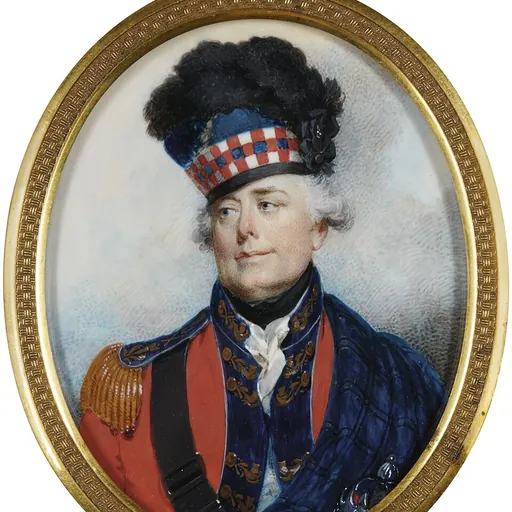
About John Small
Lived 1726 – 1796 (aged 70). John Small was a British military personnel and lieutenant Governor of Guernsey.
Major-General John Small (13 March 1726 – 17 March 1796) was a British Army officer who played a key role in raising and leading the 84th Regiment of Foot (Royal Highland Emigrants) during the American Revolutionary War. After the war, he settled with many of the men of the 84th Regiment in Douglas Township, Hants County, Nova Scotia. He later returned to Britain. He was appointed as Lieutenant Governor of Guernsey and promoted to major general, serving from 1793 until his death in 1796.
Small is featured as one of the central figures in American artist John Trumbull's notable painting, The Death of General Warren at the Battle of Bunker's Hill, June 17, 1775; versions were completed in the early 19th century. Small is shown deflecting a bayonet away from Joseph Warren, who had been a friend before the hostilities broke out.
Early life
Born at Strathardle, Atholl, Scotland, he was the son of Patrick Small of Leanoch of Glen Shee, and Magdalen Robertson, daughter of Alexander Robertson, 5th Laird of Straloch, Perthshire. His brothers were Alexander Small, who became an army surgeon, and James Small, who was a factor.
John Small was a first cousin and close friend of John Robertson Reid, who became a general in the British Army. In 1756, Small obtained a commission in the British Army, becoming a lieutenant in the Black Watch just before its departure for North America to fight in the Seven Years' War.
Postwar years
After the war, Small is thought to have advised American artist John Trumbull on his painting The Death of General Warren at the Battle of Bunker Hill. They met in London in 1786. Trumbull painted Small at the centre of the action, holding a fellow soldier's Brown Bess musket to prevent him from bayoneting his friend, American Patriot Joseph Warren. (In fact, Warren was shot through the head during the battle and instantly killed by a musket ball). Trumbull wanted to express the divisions that the conflict created between people who were friends, yet were caught on opposite sides. In describing the painting for a catalogue of his works, Trumbull explained why he chose to emphasize Major Small's role. He said that Small "was equally distinguished by acts of humanity and kindness to his enemies, as by bravery and fidelity to the cause he served."
Later years In 1793, Small was appointed as Lieutenant Governor of Guernsey and received his final promotion to major general. He died on Guernsey three years later, on 17 March 1796. He is buried within Saint Peter Port Church.
Small never married. At his death, his principal heir was his first cousin and good friend, John Robertson Reid. He left a valuable estate of four or five thousand acres in Nova Scotia to the general.
Don’t just read it —
keep it.
Full-length biographies made to live with: read them, listen on the way to work, watch them tonight.
- E-book
- Audio
- Video
Instant download · yours to keep · every purchase keeps this site free
Important facts
People in John Small's life
Named in this biography and alive at the same time

Related people
Same field, nearest in time



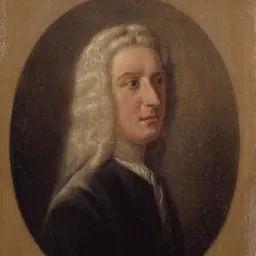

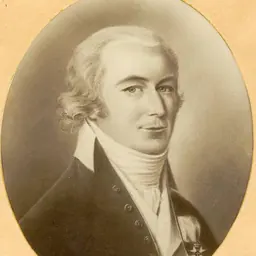
Contemporaries
People whose lives overlapped John Small's


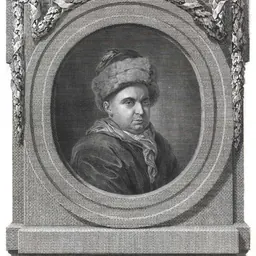


Frequently asked questions
Who was John Small?
British Army general
When was John Small born?
John Small was born on 13 March 1726 in Kirkmichael.
When did John Small die?
John Small died on 17 March 1796 in Saint Peter Port.
What was John Small's occupation?
John Small was a military personnel and lieutenant Governor of Guernsey.
What nationality was John Small?
John Small was British.
Sources & further reading
· DBpedia: John Small (British Army officer)
Cite this page
APA: Biography.guide. (2026). John Small. https://biography.guide/john-small/
MLA: "John Small." Biography.guide, https://biography.guide/john-small/.
Chicago: "John Small." Biography.guide. https://biography.guide/john-small/.
Data last updated: 2026-09-22 · Spot an error? Report a correction.
Portrait: Wikimedia Commons · author & licence
Page generated 2026-09-27 05:01 UTC