
About John Shaw
Lived 1803 – 1870 (aged 67). John Shaw was a British architect.
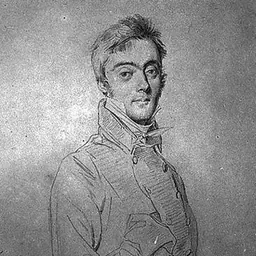
John Shaw Jr. (1803–1870) was an English architect of the 19th century who was complimented as a designer in the "Manner of Wren". He designed buildings in the classical Jacobean fashion and designed some of London's first semi-detached homes in the area close to Chalk Farm. Shaw retired in the early 1860s and moved to Kensington where he died in 1870. He is buried with the Shaw and Hardwick families at Kensal Green Cemetery.
Family John Shaw Jr. was born in Holborn, London. His father, John Shaw Sr. (1776–1832), was architect to the Port of Ramsgate and Christ's Hospital school in London. Father and son did extensive work at both places while Shaw Senior trained his son; John Shaw Junior designed the lighthouse at Ramsgate.
Shaw's sister married the architect Philip Hardwick; their son Philip Charles Hardwick was also an architect. The two families lived close together in Holborn and Westminster.
Career
Shaw was appointed architect to Eton College, Berkshire where he contributed the Tudor Gothic buildings. In the same year as working for Eton (1825) Shaw developed the Chalcots estate, Chalk Farm, building semi-detached villas.
Following his father's death in 1832, Shaw took on the surveyor role at Christ's Hospital, keeping an office there. He also took over work on the church of St Dunstan-in-the-West on Fleet Street in London. It was completed between 1833 and 1834. A building next-door to the church, at 187 Fleet Street, built for the Law Life Assurance Society in 1834 is a typical example of Shaw's Jacobean style. He was the designer of the Royal Naval School at New Cross (now part of Goldsmiths College).
In 1839 he published A Letter on Ecclesiastical Architecture, as Applicable to Modern Churches, Addressed to the Right Rev. the Bishop of London. In this he advocated the use of a Norman Revival style employing exposed brick both inside and out for the construction of churches on a limited budget. Shaw followed this practice himself at Holy Trinity Gough Square (1837-8) and Christ Church, Watney Street (1840), and, with a more Italianate influence, at St Peter-in-the-Forest, Walthamstow (also 1840).
Shaw was looked upon favorably by Prince Albert as an architect who could offer something different from the usual Victorian era Gothic Revival architecture. The Prince helped secure work for Shaw, including the Royal Naval School in London and Wellington College in Berkshire.
From 1844 to 1855 Shaw was one of the official referees of metropolitan buildings.
Don’t just read it —
keep it.
Full-length biographies made to live with: read them, listen on the way to work, watch them tonight.
- E-book
- Audio
- Video
Instant download · yours to keep · every purchase keeps this site free
Important facts
People in John Shaw's life
Named in this biography and alive at the same time


Related people
Same field, nearest in time




Contemporaries
People whose lives overlapped John Shaw's





Frequently asked questions
Who was John Shaw?
English architect, died 1870 (1803–1870)
When was John Shaw born?
John Shaw was born on 17 May 1803 in Holborn.
When did John Shaw die?
John Shaw died on 9 July 1870 in Kensington.
What was John Shaw's occupation?
John Shaw was an architect.
What nationality was John Shaw?
John Shaw was British.
Sources & further reading
Cite this page
APA: Biography.guide. (2026). John Shaw. https://biography.guide/john-shaw-architect-1803/
MLA: "John Shaw." Biography.guide, https://biography.guide/john-shaw-architect-1803/.
Chicago: "John Shaw." Biography.guide. https://biography.guide/john-shaw-architect-1803/.
Data last updated: 2026-09-20 · Spot an error? Report a correction.
Page generated 2026-09-27 05:33 UTC