
About John Segrue
Lived 1884 – 1942 (aged 58). John Segrue was a journalist.
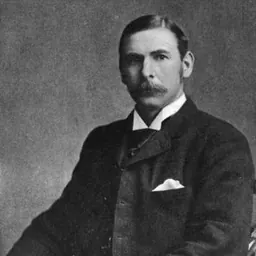
John Chrysostom Segrue (17 January 1884 - 11 September 1942), also reporting under his initials as J. C. Segrue, was an English journalist. He worked as foreign correspondent for the News Chronicle and its predecessor, The Daily News, for almost 30 years, reporting on current events throughout continental Europe. Expelled from Berlin and Vienna for his critical reporting of the Nazis and his condemnation of their persecution of the Jews, Segrue was named in the Sonderfahndungsliste G.B., commonly referred to as ‘The Black Book,’ a list of people whom the SS had marked down for immediate arrest in the event of the Germans’ successfully completing the invasion of Britain. He was captured in 1941, whilst escaping from Belgrade during the German invasion of Yugoslavia, and interned in a German prisoner-of-war camp, where he died as a result of tuberculosis in 1942. He was later honoured by the Guild of Jewish Journalists for "alerting the world, through his dispatches, to the true evil of Nazi philosophy."
Early life
Segrue was born on 17 January 1884 in Liverpool, Lancashire, to Irish parents, John Timothy Segrue and Susan Segrue (née Grannell). His father, who was born in County Kerry, was a financial publicity consultant, director of the City News Agency and former journalist who was, for many years, associated with T. P. O'Connor in his newspaper enterprises. Segrue was educated at the independent St. Edmund’s College in Ware, Hertfordshire.
Early career
After a stint as sub-editor on The Universe, - Segrue’s father had, at one point, run the Catholic Weekly, which was later incorporated into The Universe
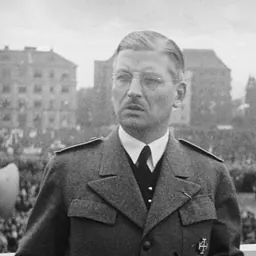
In 1910, prior to the outbreak of World War I, Segrue relocated to the Daily News, He became proficient in French and German and, later, in response to his broadening journalistic horizons, Italian and Russian. He would later use his German knowledge to provide the English translation of Kurt Schuschnigg’s book, Farewell Austria.
He represented the paper from bases in Vienna, Berlin and Paris, finding himself in Switzerland at the time of the Armistice. He also managed to secure an interview with Karl Kautsky, who had been commissioned to find documents that proved the war guilt of Imperial Germany.
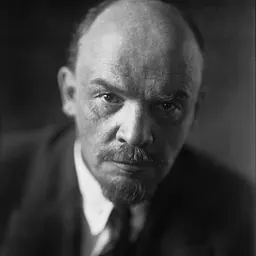
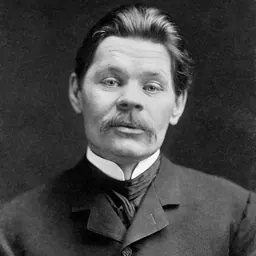
He also expanded his coverage into Russia, which was, by that time, undergoing a radical transformation into a socialist state. A 1920 request for comment from Segrue to Vladimir Lenin, on the matter of certain socialists, who had visited Soviet Russia, publishing anti-Soviet articles, elicited a prompt response from the Russian head of government himself, which, along with Segrue’s original telegraphic inquiry, was published in Pravda, the official publication of the Communist Party. Segrue, who was noted as one of the first reporters to enter Communist Russia, during which time he interviewed Russian writer and political activist Maxim Gorky. His coverage of Premier Lenin’s funeral, on 27 January 1924, was the only first-hand account to be published in London on the day following the event. Segrue returned to Berlin in the early 1930s. Segrue’s journalistic credentials allowed him to gain intimate access to the future German chancellor and he, along with fellow journalists, including Segrue’s friend Rothay Reynolds, accompanied Hitler on his 1932 electoral campaign tour. The election of 1933 confirmed Segrue’s worst fears, but he continued to report on Germany’s new leader with the honesty for which he was well known - whilst displaying consideration for diplomatic relations - hoping that Hitler’s successful acquisition of the most powerful office in the country would be short-lived. During this period, a series of anti-Jewish laws were being passed against the local Jewish population, clamping down on their civil, political and legal rights. Segrue produced several scathing reports on the treatment of Jewish people within Germany,
The new administration also placed significant pressure upon the British legation in Vienna to intervene, in an attempt to prevent Segrue from publishing more of his highly critical articles. to the train taking him out of Austria, instructing Brian to speak very loudly in English to Klein in an effort to provide him with some form of protection. According to an account provided by an Austrian journalist who witnessed the incident, Segrue had ventured into Leopoldstadt, a Jewish district of Vienna, where he came across S.S. men forcing a large group of Jewish men and women, of all ages, to wash cars. Whilst doing so, the Jews were subjected to vile taunts and acts of physical violence, to the delight of the unruly mob of spectators. An S.S. officer spotted Segrue, who had been observing the incident, and assumed that he must be a Jew, as he had not joined the crowd in celebrating the public humiliation. The officer collared Segrue, thrust a dirty rag into his hands and shouted “There, you damned Jew, get to work and help your fellow swine.” Initially, Segrue complied and helped an exhausted elderly woman to complete her task, before handing back the rag to the S.S. officer. He then presented his passport and declared: “I am not a Jew, but a subject of His Majesty, the King of England.” Turning towards the S.S. commander, he stated: “I could scarcely believe that the stories about your brutality were true. I wanted to see for myself. I have seen. Good day.” Segrue, having confirmed the veracity of rumours circulating about the Nazi regime’s barbarous treatment of the Jews in Vienna, then left the scene, leaving the crowd "awed by the temerity of the frail little Englishman who, before their eyes, had made fools of the terrible S.S." He was once again expelled by the Nazis. As a result of his open defiance and fierce criticism of the Nazis, he had been added to the Sonderfahndungsliste G.B., commonly referred to as ‘The Black Book,’ a list of people whom the SS had marked down for immediate arrest in the event of the Germans’ successfully completing the invasion of Britain. and once by the name "Chrisoton [sic], John Segrue." He was being hunted by Referat IV B4, a sub-department of the "Suppression of Opposition" office Amt IV.
In Belgrade, Segrue was informed that the final escape transport was departing the city, but he refused to leave, insisting that he finish his story first, to the disbelief of the messenger. where he developed tuberculosis. British doctors endeavoured to save him, and had him transferred to a hospital with better facilities, but his condition was fatal. His death was reported in several newspapers of the time, including The New York Times. He was buried in Rakowicki Cemetery in Kraków, Poland. The plaque would later be handed over to his son, Brian, when the paper ceased publication in 1960.
In 1981, Segrue was posthumously given an award by the Guild of Jewish Journalists. In his honour, the Guild planted fifty trees in Israel. with whom he had 2 sons, who also entered the journalistic profession. Brian's daughter, Sarah, worked for The Times''.
Don’t just read it —
keep it.
Full-length biographies made to live with: read them, listen on the way to work, watch them tonight.
- E-book
- Audio
- Video
Instant download · yours to keep · every purchase keeps this site free
Important facts
People in John Segrue's life
Named in this biography and alive at the same time


Related people
Same field, nearest in time




Contemporaries
People whose lives overlapped John Segrue's

Frequently asked questions
Who was John Segrue?
English journalist
When was John Segrue born?
John Segrue was born on 7 January 1884 in Liverpool.
When did John Segrue die?
John Segrue died on 11 September 1942 in Nazi Germany, Stalag VIII-B, Łambinowice.
What was John Segrue's occupation?
John Segrue was a journalist.
Sources & further reading
Cite this page
APA: Biography.guide. (2026). John Segrue. https://biography.guide/john-segrue/
MLA: "John Segrue." Biography.guide, https://biography.guide/john-segrue/.
Chicago: "John Segrue." Biography.guide. https://biography.guide/john-segrue/.
Data last updated: 2026-09-20 · Spot an error? Report a correction.
Page generated 2026-09-27 05:28 UTC