
About John Sebastian
Lived 1914 – 1980 (aged 66). John Sebastian was an American composer.
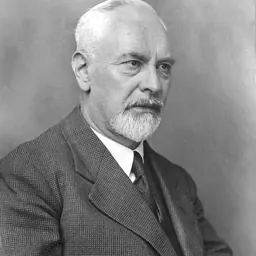
John Sebastian (born John Sebastian Pugliese; April 25, 1914 − August 18, 1980) was an American musician and composer known as a master of the classical chromatic harmonica. He was the first harmonicist to adopt an all-classical repertoire and, along with Larry Adler and Tommy Reilly, established the harmonica as a serious instrument for classical music. In addition to performing, Sebastian increased the range of classical music available for the harmonica by transcribing numerous existing classical works for the harmonica, composing works of his own, and commissioning or otherwise encouraging other composers to write for the instrument.
He is the father of singer-songwriter John B. Sebastian, a founder of the popular 1960s folk rock band The Lovin' Spoonful.
Early life Sebastian was born John Sebastian Pugliese on April 25, 1914, He is sometimes called "John Sebastian Sr." to distinguish him from his rock musician son John Benson Sebastian; however, the Sr./ Jr. designation is not strictly correct as his son has a different middle name.
As a boy, Sebastian became interested in the harmonica, which in the 1920s was being promoted to Philadelphia youth through bands and contests organized by philanthropist Albert N. Hoxie and sponsored by the Philadelphia Rotary Club and Musical League. The harmonica was seen as a cheap instrument, easy to learn and play, that could provide young people with both a social outlet and the basic musical knowledge to stimulate their interest in learning more "important" instruments such as piano and violin. In 1924, approximately 10,000 boys participated in the citywide harmonica contest, and by 1926, an estimated 70,000 Philadelphia boys were members of harmonica groups.
In 1930, at age 16, Sebastian won the citywide contest and was named Philadelphia's harmonica champion. His prize included a one-week engagement at the Mastbaum Theatre, then the largest and most lavish movie theater in Philadelphia, for which he was paid $125. Rejecting a management request that he play the popular "St. Louis Blues," he chose instead to play an adaptation of pianist Alexander Borovsky's composition "Adoration", which was well received by the audience.
Career
Performing career Sebastian began his harmonica soloist career in the late 1930s playing nightclubs and cabarets, where his repertoire initially included swing music. Because very little classical music had been written for the harmonica, Sebastian painstakingly transcribed and adapted suitable works that had been composed for other wind instruments or for violin. Between his club dates, he rehearsed for three hours a day and worked on his transcriptions. As each new adaptation was complete, he added it to his repertoire, until within a few years, his sets consisted solely of classical music. He refused to compromise by playing "swing" versions of the classics, and even turned down a Hollywood contract because he would not have control over the musical selections he would play. His choice of material enhanced his reputation as a nightclub performer, and by the early 1940s he regularly appeared at elite clubs such as Café Society and the rooms at the Pierre, Waldorf and St. Regis hotels in New York City, and the Palmer House in Chicago.
Despite Sebastian's nightclub success, he aspired to perform in a concert setting (which his contemporary Larry Adler had already accomplished), and to have the harmonica accepted as a serious instrument by classical music critics and the concert-going public. In order to achieve his goals, Sebastian had to overcome the prevalent view of a harmonica as a "lowly" instrument with little musical value. With the assistance of his manager, André Mertens of the prestigious Columbia Artists Management, in 1941 he debuted as a soloist with the Philadelphia Orchestra, conducted by Eugene Ormandy. Following this breakthrough, Sebastian transitioned from nightclubs to the concert stage. community concerts staged at local churches and high schools, and other stage productions such as a revue produced by Vincent Youmans. He also frequently appeared on radio, including performances with the NBC Symphony Orchestra
In December 1954, he gave a full-length classical music recital at The Town Hall in New York City, then considered essential for an American soloist. The program was billed as his "debut" in a positive New York Times review by critic Ross Parmenter, even though by then he had already performed as a soloist with a number of major orchestras, and in 1946 had given a previous recital at the Town Hall with Virgil Thomson and Leonard Bernstein. He toured internationally throughout the 1950s and 1960s, including appearances in Europe as well as the Far East and Africa. Luciano Chailly, Henry Cowell, Norman Dello Joio, Alan Hovhaness, George Kleinsinger, Frank Lewin, Donald Martino, Edward Robinson, Alexander Tcherepnin, and Heitor Villa-Lobos all composed works for him. Works created for Sebastian include Kleinsinger's "Street Corner Concerto" (1942), Tcherepnin's "Concerto for Harmonica and Orchestra, Op. 86" (1953), and Hovhaness' "Concerto No. 6, op. 114" (1953–1954). When Villa-Lobos composed his "Concerto for Harmonica and Orchestra" for Sebastian in 1955, Sebastian suggested changes that were approved by Villa-Lobos and incorporated into Sebastian's performance of the work. Sebastian himself also wrote several pieces for harmonica, including "Serenade for Exhale Notes", "Inca Dance", "Hornpipe Gigue", Tcherepnin and Villa-Lobos, "Stranger in Paradise" and "Autumn Leaves". Sebastian collaborated with his then-wife Jane on a children's record called The Happy Harmonica (RCA Victor, 1948), which told the story of a little boy who saves pennies to buy his own harmonica. He wrote and performed the music, while she wrote the lyrics.
Some additional unreleased Sebastian recordings also exist in library archives or as noncommercial acetates produced by Deryck Waring Records.
Other activities
Sebastian served as a consultant to the Hohner company, a major producer of harmonicas. His work was primarily directed towards improving the lower register of his harmonica of choice, the Hohner Chromonica 64. The book assumes no prior knowledge of music and teaches the notes, scales and techniques involved in playing the chromatic harmonica, using popular folk tunes as demonstration pieces.
Later career and death In 1966, following a lengthy concert tour of Africa, Sebastian suffered a heart attack in Rome and after recuperating, remained there, staying until 1976 when he moved to France. ). Despite Sebastian's setback, his occasional performances were still well-regarded; after a 1976 Kennedy Center solo performance, a Washington Star reviewer wrote, "He is THE master of the harmonica." Burl Ives, Josh White and Woody Guthrie.
He divorced his second wife, Geta Strock, in 1968. His third wife, Nadia, survived him. He had a stepdaughter by his second marriage.
Sebastian was also a strong influence on his eldest son, John B. Sebastian, who achieved fame in the 1960s as a founding member and principal songwriter for the band The Lovin' Spoonful. John B. became a respected harmonica player (in addition to playing guitar and autoharp), although he primarily plays in a Sonny Terry-influenced blues or folk style on a diatonic rather than chromatic harmonica. Contains two other pieces, "Poeme" (Griffes) and "Roumanian Rhapsody" (Enescu), in addition to Kleinsinger's "Street Corner Concerto". Children's record and storybook, with narration and music by John Sebastian, written by him in collaboration with his wife Jane, who wrote lyrics. Contains performances of three Bach sonatas originally composed for flute, or flute and piano. With Paul Ulanowsky, piano. Reissued on vinyl as Columbia Special Products P 14210 in late 1970s. Different recording than Sebastian's 1940 Schirmer release of same name. With Renato Josi, harpsichord and piano. Contains performances of three baroque works by Veracini, Telemann, and Bach; three modern works by Milhaud, Hovhaness, and Ravel; and Sebastian's own composition "Etude Ala Flamenca". With Glen Clugston, piano. Contains "Hungarian Dance No. 6" (Brahms), "Serenade" (Sebastian), "March from 'Love for Three Oranges'" (Prokofieff-Heifetz), "Prélude à l'après-midi d'un faune" (Debussy-Heifetz), "An American in Paris" (Gershwin), "Ritual Fire Dance" (de Falla), "Melodie" (Gluck), "Prelude No. 2" (Gershwin), "Rumanian Folk Dances" (Bartók), "Largo from Concerto Grosso in D Min., Op. 3, No. 11" (Vivaldi), and "The Harmonica Player" (Guion). Contains Sebastian's 1959 performances of the Villa-Lobos and Tcherepnin concertos composed for him, accompanied by the Stuttgart Radio Symphony Orchestra.
Don’t just read it —
keep it.
Full-length biographies made to live with: read them, listen on the way to work, watch them tonight.
- E-book
- Audio
- Video
Instant download · yours to keep · every purchase keeps this site free
Important facts
People in John Sebastian's life
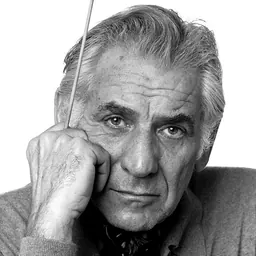
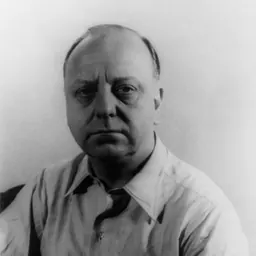
Named in this biography and alive at the same time





Related people
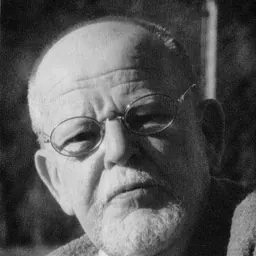
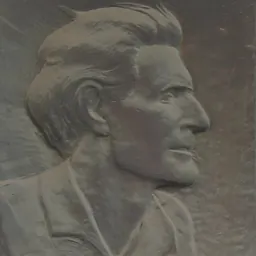
Same field, nearest in time



Contemporaries
People whose lives overlapped John Sebastian's

Frequently asked questions
Who was John Sebastian?
American musician, composer, harmonica player
When was John Sebastian born?
John Sebastian was born on 25 April 1914 in Philadelphia.
When did John Sebastian die?
John Sebastian died on 18 August 1980 in Périgord.
What was John Sebastian's occupation?
John Sebastian was a composer.
What nationality was John Sebastian?
John Sebastian was American.
Sources & further reading
· DBpedia: John Sebastian (classical harmonica player)
Cite this page
APA: Biography.guide. (2026). John Sebastian. https://biography.guide/john-sebastian-composer/
MLA: "John Sebastian." Biography.guide, https://biography.guide/john-sebastian-composer/.
Chicago: "John Sebastian." Biography.guide. https://biography.guide/john-sebastian-composer/.
Data last updated: 2026-09-20 · Spot an error? Report a correction.
Page generated 2026-09-27 05:15 UTC