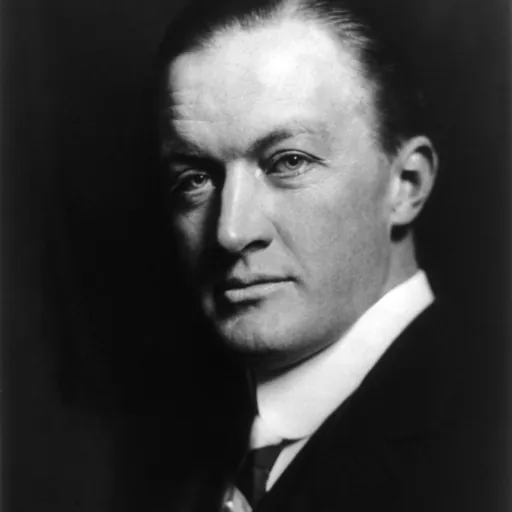
About John Russell Pope
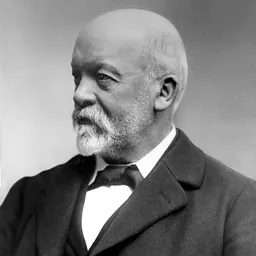
Lived 1874 – 1937 (aged 63). John Russell Pope was an American architect.
John Russell Pope (April 24, 1874 – August 27, 1937) was an American architect whose firm is widely known for designing major public buildings, including the National Archives and Records Administration building (completed in 1935), the Jefferson Memorial (completed in 1943) and the West Building of the National Gallery of Art (completed in 1941), all in Washington, D.C.
Early life and education Pope was born in New York City, on April 24, 1874, the son of a successful portrait painter and his wife. He studied architecture at Columbia University, where he graduated in 1894. He was the first recipient of the Rome Prize to attend the newly founded American Academy in Rome, a training ground for the designers of the American Renaissance. He would remain involved with the academy until his death. honing his Beaux-Arts style.
Career
In 1900, after returning to New York City, Pope worked for a few years in the office of Bruce Price before opening his own practice.
Pope designed private houses, such as The Waves, his personal residence in Newport, Rhode Island, and public buildings in addition to the Jefferson Memorial, the National Gallery of Art, the Masonic House of the Temple, all in Washington, D.C., and the triumphal arch Theodore Roosevelt Memorial (1936) at the American Museum of Natural History in New York City.
He designed the extension of the Henry Clay Frick mansion in New York City that created the Garden Court and music room, among other features, as the house was expanded to be operated as a museum.
In 1912, he submitted several proposals for the Lincoln Memorial, but lost out to Henry Bacon.
In 1919, he developed a master plan for the future growth of Yale University. Pope's plan for Yale was significantly revised by James Gamble Rogers in 1921, who had more sympathy for the requirements of the city of New Haven, Connecticut. Rogers did keep the Collegiate Gothic unifying theme offered by Pope. Pope's original plan is a prime document in the City Beautiful movement in city planning.
His firm's designs alternated between revivals of Gothic, Georgian, eighteenth-century French, and classical styles. Pope designed the Henry E. Huntington mausoleum on the grounds of The Huntington Library in southern California. He later used the design as a prototype for the Jefferson Memorial in Washington, D.C. The Jefferson Memorial and the National Gallery of Art were both neoclassical, modeled by Pope on the Roman Pantheon.
Lesser known projects by Pope's firm include Union Station, Richmond, Virginia (1917), with a central rotunda capped with a low saucer dome; it now houses the Science Museum of Virginia, the Branch House (1917–1919), a Tudor-style mansion in Richmond, now housing The Branch Museum of Architecture and Design; the Baltimore Museum of Art; and in Washington, D.C., the National City Christian Church, DAR Constitution Hall, American Pharmacists Association Building, Ward Homestead, and the National Archives Building (illustration, left).
In 1917, he designed the City Hall (Plattsburgh, New York), which was completed in 1917, and the city's Macdonough Monument, erected in 1926 to commemorate the naval victory of Commodore Macdonough in the Battle of Plattsburgh on September 11, 1814.
Pope designed additions to the Tate Gallery and British Museum in London, an unusual honor for an American architect, and the War Memorial at Montfaucon-d'Argonne, France. Pope also designed extensive alterations to Belcourt, the Newport residence of Oliver and Alva Belmont. The Georgian Revival residence he built in 1919 for Thomas H. Frothingham in Far Hills, New Jersey has been adapted as the United States Golf Association Museum.
Pope was a member of the United States Commission of Fine Arts in Washington, D.C. from 1912 to 1922, serving as vice chairman from 1921 to 1922. He also served on the Board of Architectural Consultants for the Federal Triangle complex in Washington, D.C. During the 1920s, the firm designed a number of well known country estates including Spring Hill Farms, later renamed Cobble Court.
In Milwaukee, Wisconsin, he designed a severe neo-Georgian clubhouse for the University Club (1926). In Oneonta, New York, he designed the first building for Hartwick College, Bresee Hall, which was constructed in 1928.
In 1932, he constructed the chapter house for Alpha Delta Phi at Cornell University in Ithaca, New York.
Pope won a Silver Medal in the 1932 Summer Olympics for his design of the Payne Whitney Gymnasium.
Death Pope fell ill at his Newport, Rhode Island home and was hospitalized on August 9, 1937. Pope was diagnosed with abdominal cancer. He died on the night of August 27, 1937 at Presbyterian Hospital in New York City. He was 63. His body was returned to Newport County for burial at a country church on the outskirts of Newport. Legacy A 1991 exhibition at the National Gallery of Art, John Russell Pope and the Building of the National Gallery of Art, spurred reappraisal of his work. For some time, it had been scorned and derided as overly historicist by many critics influenced by International Modernism. A Pope also served as an early mentor and employer of American modernist Lester C. Tichy.
Pope was the maternal grandfather of the actress Andra Akers.
Gallery
Selected works 1910: William B. Leeds Mausoleum, Woodlawn Cemetery, The Bronx, New York 1926: University Club, Milwaukee, Wisconsin 1927: Huntington Mausoleum, San Marino, California 1927: "The Waves" (Pope's Newport residence), 61 Ledge Road, Newport, Rhode Island 1938–1941: National Gallery of Art, Washington, D.C. 1939–1942: Jefferson Memorial, Washington, D.C.
Don’t just read it —
keep it.
Full-length biographies made to live with: read them, listen on the way to work, watch them tonight.
- E-book
- Audio
- Video
Instant download · yours to keep · every purchase keeps this site free
Important facts
People in John Russell Pope's life
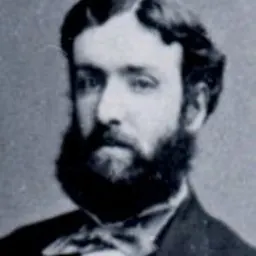
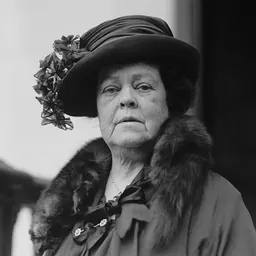
Named in this biography and alive at the same time

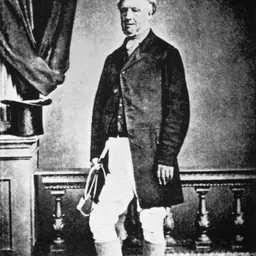
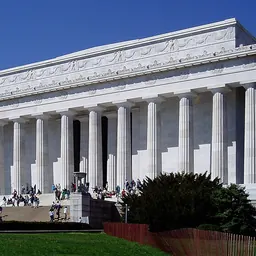
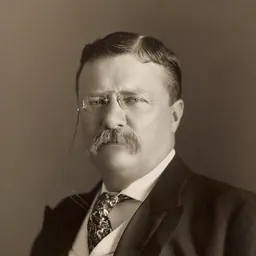

Related people
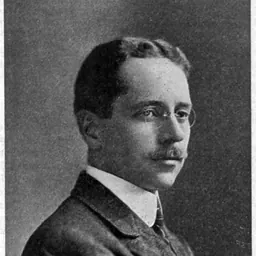
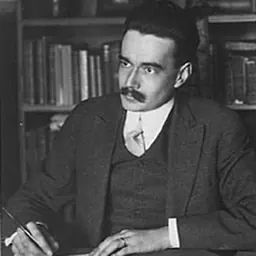
Same field, nearest in time



Contemporaries
People whose lives overlapped John Russell Pope's
Frequently asked questions
Who was John Russell Pope?
American architect (1874–1937)
When was John Russell Pope born?
John Russell Pope was born on 24 April 1874 in Manhattan.
When did John Russell Pope die?
John Russell Pope died on 27 August 1937 in Manhattan.
What was John Russell Pope's occupation?
John Russell Pope was an architect.
What nationality was John Russell Pope?
John Russell Pope was American.
Sources & further reading
· Wikipedia: John Russell Pope
Cite this page
APA: Biography.guide. (2026). John Russell Pope. https://biography.guide/john-russell-pope/
MLA: "John Russell Pope." Biography.guide, https://biography.guide/john-russell-pope/.
Chicago: "John Russell Pope." Biography.guide. https://biography.guide/john-russell-pope/.
Data last updated: 2026-09-21 · Spot an error? Report a correction.
Portrait: Wikimedia Commons · author & licence
Page generated 2026-09-27 05:01 UTC