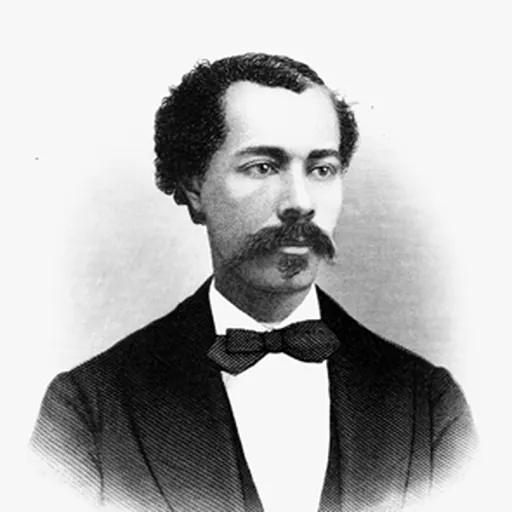
About John Roy Lynch
Lived 1847 – 1939 (aged 92). John Roy Lynch was an American politician, lawyer and photographer.
John Roy Lynch (September 10, 1847 – November 2, 1939) was an American writer, attorney, military officer, author, and Republican politician who served as Speaker of the Mississippi House of Representatives and represented Mississippi in the United States House of Representatives.
Lynch was born into slavery in Louisiana and became free in 1863 under the Emancipation Proclamation. During Reconstruction, Lynch became a prominent political leader in Mississippi. In 1873, Lynch was elected as the first African-American Speaker of the Mississippi House of Representatives; he is considered the first Black man to hold this position in any state. He was among the first generation of African Americans from the South elected to the U.S. House of Representatives and served in the 44th, 45th, and 47th Congresses. In 1884, he was elected temporary chair of the Republican National Convention and delivered the convention's keynote address.
After Democrats regained power in the Mississippi legislature, they disenfranchised much of the majority-black electorate by raising barriers to voter registration. Lynch then studied law and was admitted to the Mississippi bar in 1896. Seeing the effects of disenfranchisement, Lynch left the state and returned to Washington, D.C. to practice law. He served in the United States Army during the Spanish–American War and for a decade into the early 1900s, achieving the rank of major. After retiring, Lynch moved to Chicago, where he lived for more than two decades and was active in law and real estate.
Beginning with the end of federal Reconstruction in 1877, Lynch wrote and published four books analyzing the political situation in the South. The best known of these is The Facts of Reconstruction (1913), which argued against the prevailing view of the Dunning School, conservative white historians who downplayed African-American contributions and the achievements of the Reconstruction era.
Early life and education John R. Lynch was born into slavery in 1847 on Tacony Plantation near Vidalia, Concordia Parish, Louisiana. He was the third son of his mother Catherine White, who was enslaved. She had four boys in total. Born in Virginia, she was of mixed race, as were both of her parents, Robert and Elizabeth White. Under slavery law, the children of slave mothers were slaves, regardless of paternity. John's father Patrick Lynch was the overseer on the plantation; he had a common-law marriage with Catherine White. A young immigrant, Patrick Lynch had come to the United States with his family from Dublin, Ireland. They settled in Zanesville, Ohio.
As young men, Patrick and his older brother Edward Lynch moved South; Patrick became an overseer at the Tacony Plantation. There he fell in love with Catherine and they became a couple, living together as man and wife. (They were prohibited from marrying by state law.)
To protect his family, Patrick Lynch planned to buy Catherine and their mixed-race sons from the Tacony Plantation owner. Before the transaction was completed, a new owner bought the plantation and hired a different manager. Lynch could no longer afford to post the $1,000 bond required by the legislature for each person in his family in order to free them. (The state legislature was trying to reduce the number of free people of color, and it severely restricted the number of manumissions, ending approval altogether in 1852. ) In addition, he would have to submit a request for these manumissions to an Emancipation Court. Lynch and Wood would have a lifelong friendship, and Wood also went on to serve political office. Lynch took on increased responsibilities until he managed the entire operation and its finances. He built a successful business in Natchez. Wanting to continue his education, Lynch attended a night school taught by Northerners. (By the end of 1866, many such teachers were driven out of the state by whites' violent opposition to the education of freedmen. ) Lynch also read widely in books and newspapers during lulls in his business day. As Lynch's business was near a white school, the young man often eavesdropped on lessons through the open windows.
Career
Lynch's leadership abilities were quickly recognized in Natchez, and he gained post-war political opportunities. He became active in the Republican Party by the age of 20. Although too young to participate as a delegate, he attended the state's constitutional convention of 1867, studying its developments closely. The first proposed constitution was defeated, largely because it required the temporary disenfranchisement of former Confederates, an unpopular proposal.
In April 1869 at the age of 22, Lynch was appointed by the military governor, Adelbert Ames, as a Justice of the Peace in Natchez. Later that year Lynch was elected as a Republican to the Mississippi State House. He was re-elected, serving until 1873. In his last term, January 1872 he was elected as Speaker of the Mississippi House, the first African American to achieve that position. His bid for Speaker was contentious, and it was only after Senator James Alcorn convinced some white Republicans to support him that Lynch secured the position. Despite this, W.E.B. Du Bois records in Black Reconstruction in America that Lynch was "presented with a gold watch and chain" at the end of the session and thanked for "his dignity, impartiality, and courtesy as a presiding officer" by a prominent Democratic representative.
At the age of 26 in 1872, Lynch was elected as the youngest member of the US Congress from Mississippi's 6th congressional district, as part of the first generation of African-American Congressmen. (This district was created by the state legislature in 1870.) He was the only African American elected from Mississippi for a century.
In 1874 Lynch was the only Republican in the Mississippi House delegation to be elected in the face of a Democratic campaign against Republicans and blacks.
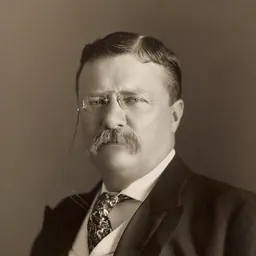
In 1884, Lynch became the first African American to chair a political party's National Convention. Future president Theodore Roosevelt made a moving speech nominating Lynch as Temporary Chairman of the 1884 Republican National Convention in Chicago, Illinois. He served as a member of the Republican National Committee for Mississippi from 1884 to 1889. Lynch returned to Washington, DC the following year to set up his law practice.
After Lynch retired from the Army in 1911, he married again and moved to Chicago in 1912. There he set up his law practice. He also became involved in real estate, as the city became a destination of tens of thousands of rural blacks in the Great Migration, including many from Mississippi. It was also attracting European immigrants and rapidly expanding based on its industrial jobs.
After his death in Chicago in 1939 at the age of 92, Lynch was buried with military honors in Arlington National Cemetery, due to his service as a Congressman and military officer.
Lynch's writings
At the turn of the 20th century, the struggle for memory and meaning of the Civil War and Reconstruction continued. Lynch wrote a book, The Facts of Reconstruction (1913), and several articles criticizing the then-dominant Dunning School of historiography. Dunning and followers, many of whom were prominent in major Southern universities, evaluated Reconstruction largely from the viewpoint of white former slave owners and ex-Confederates; they expressed the discriminatory views of their societies. They routinely downplayed any positive contributions of African Americans during Reconstruction, said they were dominated by white carpetbaggers, and could not manage political power. (This was in keeping with the disfranchisement of blacks throughout the former Confederacy from 1890 to 1910, and the imposition by state legislatures of racial segregation and Jim Crow law to restore white supremacy.)
Lynch argued that blacks had made substantial contributions during the period. He also published articles on this topic in 1917 and 1918 in the Journal of Negro History. His views were later supported by historians such as W.E.B. Du Bois in his Black Reconstruction in America (1935) and Eric Foner in Reconstruction: America's Unfinished Revolution, 1863–1877 (1988), among others. Since the late 20th century, new histories and research have changed the perception of the achievements during Reconstruction.
The Facts of Reconstruction is freely available online, courtesy of the Gutenberg Project. Since Lynch participated directly in Reconstruction-era governments, historians consider his book to be a primary source in study of the period.
Lynch's memoir, Reminiscences of an Active Life: The Autobiography of John Roy Lynch, which he worked on near the end of his life, was not published until 1970. A number of chapters dealing with Reconstruction are close to material published first in his 1913 The Facts of Reconstruction. A new edition of his memoir was issued by the University of Mississippi Press in 2008. Much is available for preview online at Google books.
Books Colored Americans: John R. Lynch's Appeal To Them. Milwaukee: Allied Printing, [1900?] The Facts of Reconstruction (New York, 1913) Some Historical Errors of James Ford Rhodes. Boston: The Cornhill Publishing Co., 1922 (reprint of articles first published in the Journal of Negro History in 1917 and 1918). Reminiscences of an Active Life: The Autobiography of John Roy Lynch (ed. John Hope Franklin) (Chicago, 1970).
Articles John R. Lynch, "Some Historical Errors of James Ford Rhodes", The Journal of Negro History, Vol. 2, No. 4, Oct., 1917 Pittsburgh Courier article, February 22, 1930.
Speeches The Late Election in Mississippi (Washington: Government Printing Office, 1877).
Don’t just read it —
keep it.
Full-length biographies made to live with: read them, listen on the way to work, watch them tonight.
- E-book
- Audio
- Video
Instant download · yours to keep · every purchase keeps this site free
Important facts
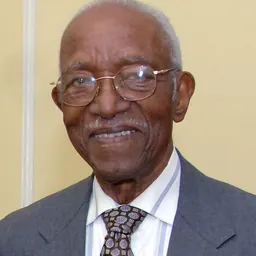
People in John Roy Lynch's life
Named in this biography and alive at the same time


Related people
Same field, nearest in time






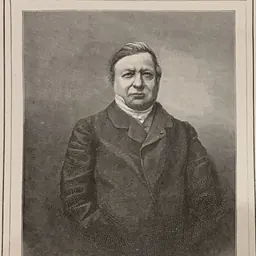
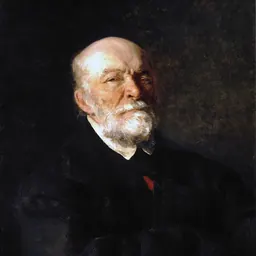
Contemporaries
People whose lives overlapped John Roy Lynch's




Frequently asked questions
Who was John Roy Lynch?
American politician from Mississippi
When was John Roy Lynch born?
John Roy Lynch was born on 10 September 1847 in Concordia Parish.
When did John Roy Lynch die?
John Roy Lynch died on 2 November 1939 in Chicago.
What was John Roy Lynch's occupation?
John Roy Lynch was a politician, lawyer and photographer.
What nationality was John Roy Lynch?
John Roy Lynch was American.
Sources & further reading
Cite this page
APA: Biography.guide. (2026). John Roy Lynch. https://biography.guide/john-roy-lynch/
MLA: "John Roy Lynch." Biography.guide, https://biography.guide/john-roy-lynch/.
Chicago: "John Roy Lynch." Biography.guide. https://biography.guide/john-roy-lynch/.
Data last updated: 2026-09-20 · Spot an error? Report a correction.
Portrait: Wikimedia Commons · author & licence
Page generated 2026-09-27 04:58 UTC