
About John Ralston
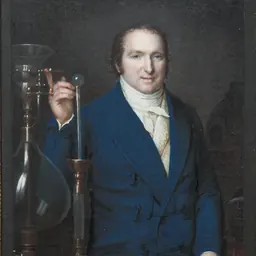
Lived 1789 – 1833 (aged 43–44). John Ralston was a British painter.
John Ralston (1789–1833) was a Scottish artist who spent most of his life and career in Manchester, England. He was primarily a marine and landscape painter, but his best-known works depict the city's medieval and early modern architecture before its demolition and replacement during the Industrial Revolution.
Though his talents were acclaimed by his contemporaries, and he was seen as an important early figure in the emergence of Manchester as a centre of the arts, it never translated into popular or financial success and he died in relative poverty and obscurity.
Early life Ralston was 44 at the time of his death in November 1833, implying that his birth year was either 1788 or 1789; sources published after his death, including those written by people who knew him, consistently prefer 1789. He was born in Scotland, though the exact date and location are unknown. The Ralston name is traditionally associated with the historical counties of Renfrewshire and Ayrshire, and he may be the "John Ralston" born in Eastwood on 6 December 1788; the other John Ralstons that appear in parish birth records for 1789 were all born in Argyll and Bute.
Artistic career
Education Manchester had been a large market town (and the centre of Lancashire's textiles industry) for several centuries, but as the 19th century dawned the city was experiencing an unprecedented population boom due to the Industrial Revolution. Large cotton mills and other factories were being constructed rapidly, as well as new slums to house the thousands of immigrants from elsewhere in the United Kingdom and overseas who came to work in "Cottonopolis". However, the city was not associated with the arts; even as late as the 1870s, the prominent Victorian art critic John Ruskin believed that Manchester could "produce no good art and no good literature" due to its intense focus on commerce and industry.
In this context, it is unsurprising that Ralston came to Manchester because his father—an engraver for calico printing—had moved the family south to Strines in Derbyshire when searching for work when Ralston was a child, rather than the city being chosen specifically as a destination for studying art. However, with his "predilection being for landscape," he was soon passed on to John Rathbone, an oils and watercolours landscape painter known in his day as "the Manchester Wilson."
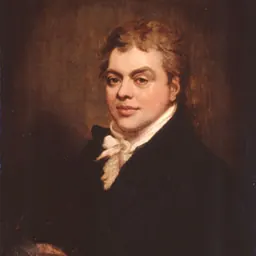
Francis Dukinfield Astley was Ralston's first patron; he "was enabled to trace, in the rude attempts of the unassuming boy, the budding power of Linnaeus which ripened to so great maturity." Astley's father, John Astley, had eked out a living as a professional painter for many years before marrying a wealthy widow and inheriting her fortune, and Francis was himself an amateur painter and patron of many local artists with a substantial collection of Old Masters—he had Ralston produce several copies as part of his training.
Sources are inconsistent as to whether Astley first spotted Ralston's talent and arranged for his training by Parry and Rathbone, or whether he was connected with Astley by his teachers.
Art Ralston lived at 26 Brazennose Street from the time he settled in Manchester until shortly before his death. However, he was most well-regarded as a marine painter, which he was said to have "thoroughly mastered."
The early 1820s saw a boom in the publication of topographical engravings across England, out of a widespread concern that views of "traditional" buildings and streets needed to be preserved before they were lost forever. The same year the Act passed, Ralston was commissioned by local publisher D. & P. Jackson to document Market Street before its transformation. In comparison to other depictions of Manchester's buildings at the time—and especially H. G. James' Views in Lithography of Old Halls, Etc., in Manchester and the Vicinity (1821-1825), the other substantial print series commissioned in response to the Manchester Streets Improvement Act—Ralston's drawings are considered to be the highest-quality attempt at visually recording pre-modern Manchester's architectural heritage still available. The prints are also seen as relatively faithful representations of the city's street life, and have been reproduced in a number of history books, magazines, newspapers, and academic texts.
Influence and position within Manchester art world
The landscape painter George Wilfred Anthony—who also penned art criticism in The Manchester Guardian as "Gabriel Tinto"—studied under Ralston in the 1820s.
In 1823, a group of local leaders voted to establish the "Manchester Institution for the Promotion of Literature, Science and the Arts" at a meeting to address the widely held perception of Manchester as a cultural backwater (and especially relative to the city's greatest rival, Liverpool). The Royal Manchester Institution (as it would shortly become known) purchased a plot of land on Mosley Street for the construction of a large headquarters and exhibition space, designed by the architect Charles Barry, in 1825.
However, the building (now Manchester Art Gallery) would not be finished until 1835; in the meantime, the Institution held the very first painting exhibition in Manchester, in 1827, at 83 Market Street. Ralston was one of 18 local artists selected for inclusion. Until 1830—when enough of the Mosley Street building had been completed for a partial opening—the Institution would hold a series of further exhibitions at 83 Market Street, featuring both nationally and internationally renowned works alongside those of artists working locally. In each of these exhibitions there was a core group of Manchester-based artists—Ralston, brothers Charles and Michael Pease Calvert, Henry Liverseege, Arthur Perigal, Thomas Henry Illidge, and James Parry (son of Joseph)—whose works were always included.
However, despite this critical success Ralston consistently struggled to actually sell his works. For example, The Manchester Courier's report on a September 1830 exhibition at the Royal Institution noted that Ralston's Storm is " most splendid and spirited production; the execution is vigorous, and the colouring deep and effective, though tender ... and [we] very much doubt if there be half a dozen men in the kingdom who could surpass it," but then added that it was "(unsold!)"—almost in disbelief.
The historian Janet Wolff has pointed out that Ralston was not unusual at this time, noting that the stereotype of the "starving artist" was very much grounded in fact in 19th century Manchester. Of the first generation of Manchester-based artists who were either involved in the foundation of the Royal Manchester Institution, or exhibited there in its first decade, all of Ralston, Liverseege, William Bradley, brothers David Henry Parry and James Parry (both sons of Old Parry), James Gregory Pollitt, and Henry James Holding died from either poverty or illness; there were also a number of high-profile painters who came to the city to explore its emerging art market—such as Mather Brown—who quickly left after failing to find a foothold.
Despite the best attempts of the city's elites to encourage a homegrown art scene, the general public was less enthusiastic—in a report on an exhibition at the Royal Institution in 1832, The Manchester Courier bemoaned "a lamentable falling off in the number of productions by our resident artists," with the blame laid squarely at the feet of "our fellow townsmen" for not "encouraging resident talent." The writer notes that Illidge, Perigal, Bradley, and Benjamin Rawlinson Faulkner had all left the city to make more money elsewhere, leaving behind a "general desertion and sterility"; two of Ralston's works, Sea Calm and A View of the Friends' Meeting House, were cited as rare examples among what was left to exhibit "which really deserve the attention of the lover of excellence in art."
Death and legacy By the early 1830s Ralston's career and health were both faltering. He died on 1 November 1833, aged 44, after being bedridden for several days, and reportedly while living in a workhouse after having fallen into severe poverty. He was survived by his widow and one son.
Many in Manchester's artistic and cultural community hailed Ralston's "unappreciated" talent upon his death.
Ralston's most extensive (and effusive) obituary was published in the March 1834 edition of Arnold's Magazine of the Fine Arts. The author reported that Ralston's cause of death was "ossification of the heart," which they believed to be a literalised manifestation of his heartbreak at never achieving popular recognition:...e drew and painted from nature with unabated enthusiasm until within a few days of his decease; indeed, when entirely confined to his bed, "the ruling passion, strong even in death," still swayed him, and it gave him pleasure to converse on subjects of Art with those of his professional brethren who hastened to cheer in his sickness one whom they admired for his genius, and loved for the plain, manly, simplicity of his character. A more grateful man perhaps never existed; he never forgot a favor; and often have we heard him, with his peculiar strength and feeling, express his sense of obligation for those little kindnesses and attentions which are usually suffered to pass without observation, as the every day offices of "gentle humanity." ...
The merely pretty and ornamental he despised, he looked for mind, and grappled with a giant's strength with the real difficulties of Art―he dived deep, and not merely skimmed the surface; hence, to superficial observers, his works seemed rude and tasteless. Those, however, who really understood and valued excellence in Art, at once acknowledged the hand of a master, and the powerful impress of truth. Perhaps the strongest proof of this may be found in the high estimation always evinced by his brother artists, those best calculated by previous study to appreciate his abilities and the extent of his acquirements. ...
If it be asked, why Mr. Ralston with all his talent and industry failed to become popular? Our answer is (in conjunction with the causes before glanced at) that he was a shy, sensitive, retiring man; he obtruded not his claims on public attention, he suffered in quiet, and at last sunk under the benumbing influence of continued neglect—he is, however, gone to his rest, and it would be useless to enlarge on the causes which embittered his declining days. Truth and justice, however, demand it should be told, that his end was accelerated by public neglect.The author ends by suggesting that the tomb of this "gifted and honorable man ... might with propriety be inscribed" with a quote from Plautus: "UT SÆPE SUMMA INGENIA IN OCCULTO LATENT." ("How often the greatest talents are shrouded in obscurity.") Frederick Tavaré's son, F. L. Tavaré, also became an artist and cited Ralston as a key influence on his own paintings of Manchester landmarks. It was included in the collected volume of Views of the Ancient Buildings in Manchester which was published after his death.
While he never achieved widespread popularity, Ralston's reputation within the Manchester art world persisted for some time. In 1857, a new wing was opened at the Salford Free Museum & Library (now the Salford Museum & Art Gallery) in Peel Park, and an exhibition featuring more than 650 works produced by local artists was planned to mark the occasion. The Peel Park Local Art Exhibition opened on 22 April 1857, only weeks before the opening of the Art Treasures of Great Britain Exhibition less than a mile away—the largest art exhibition ever held in the UK, with more than 16,000 works by internationally renowned masters, both old and new. However, James Astbury Hammersley, head of the Manchester School of Art and one of the organisers, insisted in his speech to mark the opening that he welcomed visitors making comparisons between the works in both exhibitions, confident that the city's artists could hold their own against the world's best. Several of Ralston's paintings and drawings were selected, including several original plates from Views of the Ancient Buildings in Manchester, and the exhibition's catalogue highlighted that "the archaeologist is indebted to him for many valuable records of defunct localities of Manchester." The success of the exhibition inspired a group of local artists, led by Robert Crozier, to found the Manchester Academy of Fine Arts in 1859. However, while several museums still hold works by Ralston in their collections—including Manchester Art Gallery, the Salford Museum & Art Gallery, The Whitworth, and Tate Britain—few are now on permanent display.
Ralston was buried on 5 November 1833 at St. Stephen's Church in Salford. The exact location of his grave was lost when St. Stephen's was demolished in 1956; the burial ground is now a public park.
Don’t just read it —
keep it.
Full-length biographies made to live with: read them, listen on the way to work, watch them tonight.
- E-book
- Audio
- Video
Instant download · yours to keep · every purchase keeps this site free
Important facts
People in John Ralston's life
Named in this biography and alive at the same time




Related people
Same field, nearest in time

Contemporaries
People whose lives overlapped John Ralston's


Frequently asked questions
Who was John Ralston?
British painter (1789-1833)
When was John Ralston born?
John Ralston was born in 1789.
When did John Ralston die?
John Ralston died in 1833.
What was John Ralston's occupation?
John Ralston was a painter.
What nationality was John Ralston?
John Ralston was British.
Sources & further reading
· DBpedia: John Ralston (artist)
Cite this page
APA: Biography.guide. (2026). John Ralston. https://biography.guide/john-ralston-painter/
MLA: "John Ralston." Biography.guide, https://biography.guide/john-ralston-painter/.
Chicago: "John Ralston." Biography.guide. https://biography.guide/john-ralston-painter/.
Data last updated: 2026-09-20 · Spot an error? Report a correction.
Page generated 2026-09-27 05:20 UTC