
About John R. Good
Lived 1815 – 1880 (aged 64–65). John R. Good was an American politician.
John R. Good (1815 – April 1878) was an American freedman and politician in North Carolina who became an advocate for the rights of African-Americans and freed slaves. Born enslaved in 1815, he was emancipated by legislative act in 1855 and ran a successful barbering business in New Bern, North Carolina before the outbreak of the American Civil War. Good emerged as a leading figure in New Bern's black community during the war and assisted with refugee relief efforts. In April 1864, he was part of a delegation of six black eastern North Carolina civic leaders which met with U.S. President Abraham Lincoln at the White House to advocate for the political rights of freedmen. In September 1865 he was heavily involved in a statewide convention of freedmen which met in Raleigh and elected him vice president of the North Carolina Equal Rights League. He attended a subsequent convention the following year. A member of the Republican Party, he was elected to New Bern's board of alderman in 1869 and 1870 and served in the North Carolina House of Representatives from 1874 to 1875. He died in 1878.
Early life and emancipation John R. Good was born enslaved in 1815. Described as mulatto, he was owned by carpenter Benjamin C. Good of New Bern, North Carolina. Benjamin Good wrote in his will in 1827, "I give my Mulatto boy Jack his freedom when he arrives to the Age of Twenty-five and in case my Heirs do not give said boy his time, they shall forfeit their Heirship to any of my estate."
Good married a woman, Anna, who died in 1856. The 1860 United States census recorded Good as a free mulatto working in New Bern as a barber. In December 1863, he was interviewed by Robert Hamilton, publisher of the New York-based Anglo-African, who was touring Union-held areas in the South.
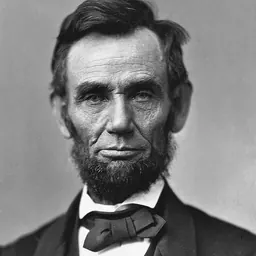
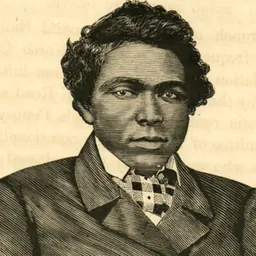
On April 29, 1864, Good was part of a delegation of six black leaders—the others being Edward H. Hill, Clinton D. Pierson, Abraham Galloway, and Isaac K. Felton of New Bern and Jarvis M. Williams of Washington, North Carolina—who met with U.S. President Abraham Lincoln at the White House in Washington, D.C.. According to historian David Cecelski, while Lincoln had met with black leaders from the North earlier in the war, "This seems to have been his first meeting with African American leaders from the South." The delegation entered the White House through the front door—a courtesy the men were unfamiliar with—and had a polite and frank discussion with the president about the political future of black freedmen. Good spoke little at the meeting. They then presented a petition on behalf of black North Carolinians, asking that blacks be guaranteed full political equality at the conclusion of the war. Afterwards, the men walked to the U.S. Capitol and distributed copies of their petition to U.S. Congressmen.
Following the visit to Washington, Good, Galloway, Pierson, and Hill went on a tour of Northern states to promote support for black suffrage. On May 4, they addressed the congregation of Zion Church in New York City. Good spoke only briefly and with difficulty. Hamilton of The Anglo-African wrote, "We were remarkably struck with this gentleman's manner. He had dwelt amid the horrors for too long, and seen so much of it he seemed too full for utterance. Tears and action would have better suited him than words." Galloway and the other delegates to Washington returned to New Bern in early June and held a meeting at Andrew Chapel to report on their meeting with the president. Good gave the attendees a full recounting of the meeting, saying that Lincoln spoke "freely and kindly" with them but that the president preferred to leave the future political rights of blacks up to the determination of individual states after the war.
Freedmen organizing and Equal Rights League Meanwhile, preparations were made in Syracuse, New York to host a "National Convention of Colored Men" in October. Mass meetings were held in New Bern's black community to assemble a delegation. Good, Pierson, and John Randolph Jr. were chosen to represent the city, though the mass meetings exposed a rift between local black leaders and James Walker Hood, an AME Zion missionary who had been dispatched from the North to aid the city. Over the course of the summer the city was battered by a regional yellow fever epidemic and heavy federal conscription of black labor caused unrest and community divisions. Feeling it prudent to provide the black community with a sense of reconciliation, Good, Pierson, and Randolph resigned their mandate and joined with others in a mass meeting in electing Galloway to serve as the city's delegate.
On January 1, 1865, Good cofounded and became foreman of Harland Fire Company No. 1, one of two new "colored" firefighting companies in New Bern. The companies disbanded within three years.
On August 22, 1865, a New Bern assembly issued a public call for the holding of a statewide freedmen's convention in Raleigh. Presiding over the meeting, Good said that such a convention was "to take such measures as will advance the welfare of the colored people of this state...The white people...are about to hold conventions for the purpose of reconstruction, and it is necessary that the colored people should take such steps as may influence these conventions and promote our good." Good, Galloway, Randolph, and AME missionary George A. Rue were later selected by an assembly of local Equal Rights Leagues to be New Bern's delegates. The freedmen's convention convened at Loyal African Methodist Episcopal Church in Raleigh on September 29, three days before the start of the state's official constitutional convention. Galloway called the delegates to order and named Good as the body's temporary president. Hood was elected permanent president.
Among various resolutions adopted by the body was one to establish a committee led by James Harris and on which Good served to draft a letter to the state constitutional convention representing the freedmen's views on equality. The letter assumed a conservative and deferential tone and focused on appeals for economic relief, making only a vague appeal for the undoing of discriminatory legislation and omitting mentions of suffrage or full legal equality. The convention designated Harris, Good, and Galloway as messengers to deliver the letter to the constitutional convention and invite Governor William Woods Holden to speak before them. Holden declined the invitation. The delegates' final act was to declare themselves a new North Carolina Equal Rights League headquartered in Raleigh, supplanting the original one created a year prior in New Bern. They elected Good vice president of the new league. At Harris' insistence, a second freedmen's convention was held in the same place in Raleigh in October 1866. Good attended as a delegate and welcomed Governor Jonathan Worth when he addressed the assembly on invitation, describing the governor as a friend and reporting that Worth had voted in favor of his manumission as a state legislator.
Republican politics Good attended the North Carolina Republican Party's founding state convention in Raleigh in 1867 and served as one of the convention's vice presidents. In May 1869, he was elected as a member of the Republican Party to represent a ward on New Bern's board of aldermen. He was reelected in January 1870. That year, he cofounded a burial society, the Mechanics' and Laborers' Mutual Aid Society of North Carolina, and two years later cofounded the Newbern Educational Association. He also served on the board of trustees for the New Bern Academy. Good was elected to represent Craven County in the North Carolina House of Representatives in 1874. Sworn-in with the rest of the House on November 16, 1874, he served until 1875. He was appointed a vice member of the Board of Directors for the State Insane Asylum after the close of the 1875 legislative session by Governor Curtis Hooks Brogden and reappointed to that role by Governor Zebulon Vance on March 5, 1877.
Later life Good suffered an attack of "apoplexy" while walking in New Bern on April 24, 1878 and died at his home a few days later.
Don’t just read it —
keep it.
Full-length biographies made to live with: read them, listen on the way to work, watch them tonight.
- E-book
- Audio
- Video
Instant download · yours to keep · every purchase keeps this site free
Important facts
People in John R. Good's life
Named in this biography and alive at the same time



Related people
Same field, nearest in time




Contemporaries
People whose lives overlapped John R. Good's





Frequently asked questions
Who was John R. Good?
American politician
When was John R. Good born?
John R. Good was born in 1815.
When did John R. Good die?
John R. Good died in 1880.
What was John R. Good's occupation?
John R. Good was a politician.
What nationality was John R. Good?
John R. Good was American.
Sources & further reading
Cite this page
APA: Biography.guide. (2026). John R. Good. https://biography.guide/john-r-good/
MLA: "John R. Good." Biography.guide, https://biography.guide/john-r-good/.
Chicago: "John R. Good." Biography.guide. https://biography.guide/john-r-good/.
Data last updated: 2026-09-20 · Spot an error? Report a correction.
Page generated 2026-09-27 05:29 UTC