
About William Woods Holden
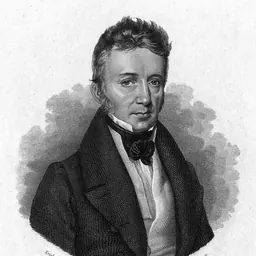
Lived 1818 – 1892 (aged 73). William Woods Holden was an American politician, lawyer, peace activist, governor and jurist.
William Woods Holden (November 24, 1818 – March 1, 1892) was an American politician who served as the 38th and 40th governor of North Carolina. He was appointed by President Andrew Johnson in 1865 for a brief term and then elected in 1868. He served until 1871 and was the leader of the state's Republican Party during the Reconstruction Era.
Holden was the second governor in American history to be impeached, and the first to be removed from office through that process. His impeachment was politically motivated due to his suppression of the Ku Klux Klan. After Republicans lost the 1870 election, Democrats impeached Holden on eight charges relating to the Kirk–Holden war. In 1846, Holden was elected to represent Wake County in the North Carolina House of Commons and chose to only serve one term. That year, he unsuccessfully attempted to gain the Democratic gubernatorial nomination, but was defeated by John W. Ellis, and then his party passed him over for a Senate seat. Holden and Graham served as the party's leading figures. Under this new emerging political system, the faction of the Democratic Party associated with the incumbent administration and occupied by the more ardent secessionists became known as the "Confederate Party". During Reconstruction he served a major role in North Carolina and placed the Standard newspaper in the hands of his son, Joseph W. Holden. However, he was defeated by Jonathan Worth in a special election for governor in 1865. When he was elected governor, Holden gave up editorship and ownership of the Standard,
After the Democratic Party regained majorities in both houses of the state legislature in 1870, Governor Holden was impeached by the North Carolina House of Representatives on December 14, 1870. The other two charges received majority votes, but not the required two-thirds majorities.
Holden was the first governor in American history to be impeached, convicted, and removed from office. Governor Charles L. Robinson of Kansas was the first American governor to be impeached, however, without conviction and removal.
Later life
Following his impeachment and removal from office he moved to Washington, D.C., where he resumed working on the Daily Chronicle. In 1873, President Ulysses Grant appointed him as postmaster for Raleigh and he served until 1881. President James A. Garfield was later asked by Raleigh Republicans to not re-appoint him and Holden left the Republican party after losing his position. and serve largely as a defense of his career.
Holden died on March 1, 1892, and was buried at Historic Oakwood Cemetery in Raleigh. He was recognized as "one of the foremost men in intellectual power and daring that were ever born here" by North Carolinian Walter Hines Page. In 2011, a posthumous pardon of Holden was approved by the North Carolina Senate by a 48–0 vote, however, the measure died as the North Carolina House of Representatives did not take it up during the session.
Legacy Throughout and after his public career, Holden was received as a deeply controversial figure. Editor Josephus Daniels opined in 1883 that the former governor "made stronger friends and bitterer enemies than any other man in our history, and he is hated today with such a hatred as none but a strong man ever inspired." Initial assessments of Holden by historians were also broadly negative with the exception of a paper authored by William K. Boyd. J. G. de Roulhac Hamilton, in his 1914 work Reconstruction in North Carolina, characterized Holden as motivated by personal ambition, surrounded by sycophants and swindlers, and had enacted a "reign of terror" in prosecuting the Kirk-Holden war. Hamilton's view was influential on succeeding generations of historians. Early studies also placed emphasis on Holden's actions leading to and his subsequent impeachment rather than his involvement in journalism and other initial pursuits. Scholarly appraisal of Holden began to change with the completion of Horace W. Raper's doctoral dissertation about him in 1951. Revisionist historical developments in the 1960s and 1970s advanced by Otto H. Olsen and Allen W. Trelease offered the view that Holden was targeted by the Ku Klux Klan and Conservatives who sought top undermine Reconstruction's biracial democracy. The newer scholarship argued that Holden genuinely sought to improve the wellbeing of common people but failed owing to his overambitious nature and flaws stemming from his humble origins. Raper published a largely sympathetic biography of Holden in 1985. William C. Harris published a biography in 1987 which argued that Holden was sincere and deeply politically influential throughout the state and the country during his career but downplayed his relevance to the affairs of common people, writing that he was "a product of the diverse interplay of political rivalries and events" and the "common political culture of all classes" in North Carolina. Despite the positive shift in scholarship, popular perception of Holden often remained negative.
Don’t just read it —
keep it.
Full-length biographies made to live with: read them, listen on the way to work, watch them tonight.
- E-book
- Audio
- Video
Instant download · yours to keep · every purchase keeps this site free
Important facts
People in William Woods Holden's life
Named in this biography and alive at the same time

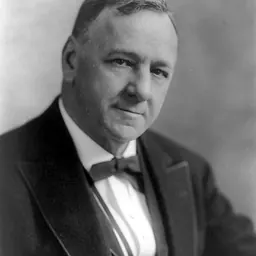
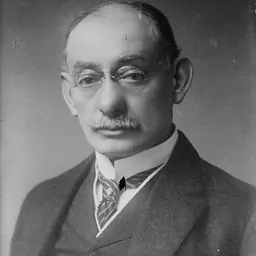



Related people
Same field, nearest in time


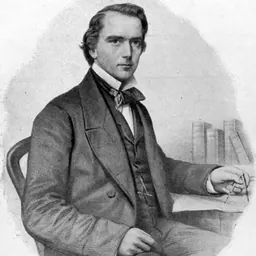

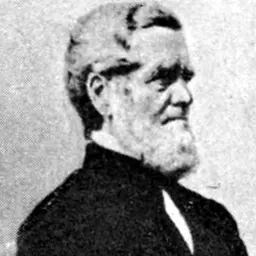
Contemporaries
People whose lives overlapped William Woods Holden's



Frequently asked questions
Who was William Woods Holden?
North Carolina politician (1818-1892)
When was William Woods Holden born?
William Woods Holden was born on 24 November 1818 in Durham County.
When did William Woods Holden die?
William Woods Holden died on 1 March 1892 in Raleigh.
What was William Woods Holden's occupation?
William Woods Holden was a politician, lawyer, peace activist, governor and jurist.
What nationality was William Woods Holden?
William Woods Holden was American.
Sources & further reading
· Wikipedia: William Woods Holden
· DBpedia: William Woods Holden
Cite this page
APA: Biography.guide. (2026). William Woods Holden. https://biography.guide/william-woods-holden/
MLA: "William Woods Holden." Biography.guide, https://biography.guide/william-woods-holden/.
Chicago: "William Woods Holden." Biography.guide. https://biography.guide/william-woods-holden/.
Data last updated: 2026-09-20 · Spot an error? Report a correction.
Page generated 2026-09-27 05:22 UTC