
About John Pitt Kennedy
Lived 1796 – 1879 (aged 82–83). John Pitt Kennedy was an engineer.
Lieutenant-Colonel John Pitt Kennedy (8 May 1796 – 28 June 1879) was a British military engineer, agricultural reformer and civil servant.
Biography
Kennedy was born at Carndonagh, a town in the north of Inishowen, a peninsula on the north coast of County Donegal in Ulster, the northern province in Ireland; he was educated at Foyle College, Derry, and the Royal Military Academy, Woolwich, becoming a lieutenant in the Royal Engineers in 1815. Four years afterwards, he was sent to Malta, and thence to Corfu. He superintended the construction of a canal at Lefkada (1820), served next under Sir Charles Napier at Cephalonia (building lighthouses, roads, and quays) and was sub-inspector of militia in the Ionian Islands (1828–31).
During a spell in India he met Sir Charles Napier and when he returned to Ireland he set up agricultural schools designed to improve the economy of the country. One was at Cloghan near Ballybofey, and another at Eglinton near Derry. He became a farm manager and married Anna, daughter of Sir Charles Styles, who owned large estates around Ballybofey, in 1838. In 1837, Kennedy established the Loughash Institute and hired James Moore as director (see Digest of Evidence Taken Before Her Majesty's Commissioners of Inquiry) pp. 43–44. Kennedy's methods of improving the condition of the agricultural classes are indicated by the title of his work, Instruct; Employ; Don't Hang Them: or Ireland Tranquilized without Soldiers and Enriched without English Capital (1835). He wrote several others of similar nature, and as inspector general for Irish education (1837), as secretary to the Devon Commission (1843), and to the Famine Relief Committee (1845), his labours were unceasing in behalf of his native land.
He returned to the army in 1849 as military secretary to Sir Charles Napier and accompanied him to India, where he built the military road named after him and extending from Kalka via Simla to Kunawur and Tibet. He published British Home and Colonial Empire (1865–69), as well as a number of technical works relating to his Indian career.
He was District Grandmaster of Bengal. His son, George Kennedy, was a first-class cricketer.
He died in June 1879 and was buried on the eastern side of Highgate Cemetery.
Don’t just read it —
keep it.
Full-length biographies made to live with: read them, listen on the way to work, watch them tonight.
- E-book
- Audio
- Video
Instant download · yours to keep · every purchase keeps this site free
Important facts
People in John Pitt Kennedy's life
Named in this biography and alive at the same time
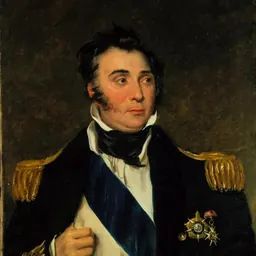


Related people
Same field, nearest in time

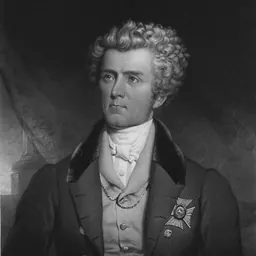
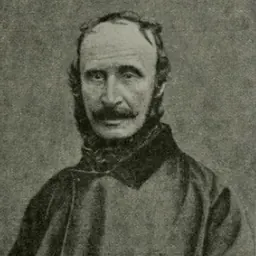
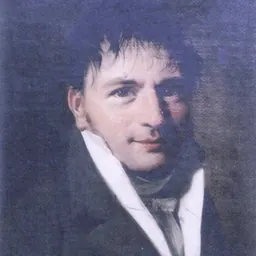
Contemporaries
People whose lives overlapped John Pitt Kennedy's






Frequently asked questions
Who was John Pitt Kennedy?
British army officer
When was John Pitt Kennedy born?
John Pitt Kennedy was born in 1796.
When did John Pitt Kennedy die?
John Pitt Kennedy died in 1879.
What was John Pitt Kennedy's occupation?
John Pitt Kennedy was an engineer.
Sources & further reading
· Wikipedia: John Pitt Kennedy
Cite this page
APA: Biography.guide. (2026). John Pitt Kennedy. https://biography.guide/john-pitt-kennedy/
MLA: "John Pitt Kennedy." Biography.guide, https://biography.guide/john-pitt-kennedy/.
Chicago: "John Pitt Kennedy." Biography.guide. https://biography.guide/john-pitt-kennedy/.
Data last updated: 2026-09-20 · Spot an error? Report a correction.
Page generated 2026-09-27 05:23 UTC