
About John Pinch the elder
Lived 1769 – 1827 (aged 57–58). John Pinch the elder was a British architect.
John Pinch (1769–1827) was an architect working mainly in the city of Bath, England. He was surveyor to the Pulteney and Darlington estate and responsible for many of the later Georgian buildings in Bath, especially in Bathwick.
Biography John Pinch was born at Callington, Cornwall, where he was christened on 4 January 1769. He started as an architect and builder in the 1790s. He was assistant to Thomas Baldwin as surveyor to the Pulteney estate and succeeded him as surveyor after Baldwin's bankruptcy in 1793; when the estate passed into the ownership of the Earl of Darlington he retained his position. Pinch married Martha Cleave (1772–1830) on Christmas Eve, 1792, at St Mellion, Cornwall. He died on 11 March 1827 in Bath and is buried at St Mary's Churchyard, Bathwick.
His son, John Pinch the Younger, was also an architect and surveyor to the Pulteney and Darlington Estate. His daughter, Celia Pinch, married the silversmith William Holme Twentyman on Mauritius.
Works Pinch's earliest identified work is Babington House in Babington, Somerset, which was built in 1790. A few years later he completed Northampton Street in Bath which had been started by Thomas Baldwin, and was completed by George Phillips Manners.
New commissions included Rockfield House in Nunney (1805) and various properties in Bath, including New Sydney Place (1807); and in Bathwick, Daniel Street (1810) and Raby Place (1825).
Norfolk Crescent in Bath was started around 1793 by John Palmer and continued about 1820 by Pinch. A similar completion of Palmer's designs was Nelson Place.
Pinch also has his own projects in Bath including, between 1808 and 1815, Cavendish Place, Cavendish Crescent (1817–1830), Sion Hill Place (1817–1820), Cleveland Pools (c.1814), St Mary's Church, Bathwick (1817–1820), Spa Villa, Bathwick Hill (1820), Prior Park Buildings, a terrace of 19 houses off Prior Park Road, built from 1820, St. Michael's Church, Twerton (1824) and the Royal United Hospital (now Gainsborough Hotel) in Beau Street, Bath (1824–1826).
Outside Bath he worked in Wiltshire on St Lawrence's Church in Hungerford (1814–1816), Corsley House, Corsley (1814), Bishopstrow House (1817–1821) and the mausoleum for Richard Colt Hoare at St Peter's Church in Stourton (1819). He is also tentatively credited with extensions and alterations to Babington House near Frome in around 1790.
Don’t just read it —
keep it.
Full-length biographies made to live with: read them, listen on the way to work, watch them tonight.
- E-book
- Audio
- Video
Instant download · yours to keep · every purchase keeps this site free
Important facts
People in John Pinch the elder's life
Named in this biography and alive at the same time

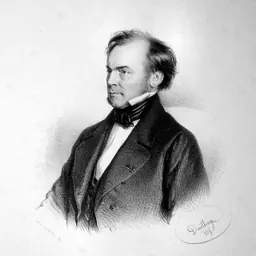



Related people
Same field, nearest in time


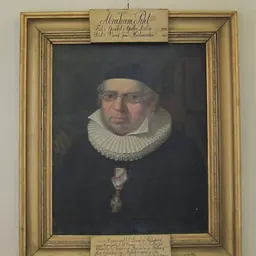
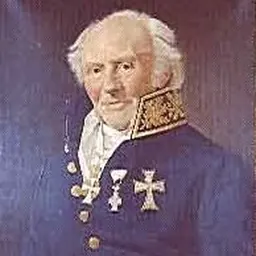
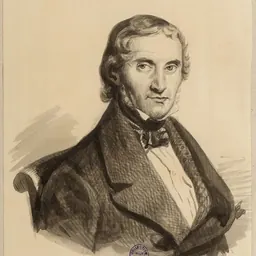

Contemporaries
People whose lives overlapped John Pinch the elder's




Frequently asked questions
Who was John Pinch the elder?
English architect (1769-1827)
When was John Pinch the elder born?
John Pinch the elder was born in 1769 in Callington.
When did John Pinch the elder die?
John Pinch the elder died in 1827 in Bath.
What was John Pinch the elder's occupation?
John Pinch the elder was an architect.
What nationality was John Pinch the elder?
John Pinch the elder was British.
Sources & further reading
· Wikipedia: John Pinch the elder
· DBpedia: John Pinch the Elder
Cite this page
APA: Biography.guide. (2026). John Pinch the elder. https://biography.guide/john-pinch-the-elder/
MLA: "John Pinch the elder." Biography.guide, https://biography.guide/john-pinch-the-elder/.
Chicago: "John Pinch the elder." Biography.guide. https://biography.guide/john-pinch-the-elder/.
Data last updated: 2026-09-20 · Spot an error? Report a correction.
Page generated 2026-09-27 05:20 UTC