
About John Philip Kemble
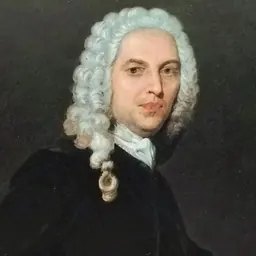
Lived 1757 – 1823 (aged 66). John Philip Kemble was a British impresario, stage actor, theatre manager, actor, director and actor-manager.
Drury Lane John Philip Kemble and Sarah Siddons, in "Macbeth", painted by Thomas Beach in 1786, now housed at the Garrick Club in London.
Gradually he won for himself a high reputation as a careful and finished actor, and this, combined with the greater fame of his sister, Sarah Siddons, led to an engagement at the Theatre Royal, Drury Lane, where he made his first appearance on 30 September 1783 as Hamlet. In this role he awakened interest and discussion among the critics such as Harriet Evans Martin rather than the enthusiastic approval of the public. As Macbeth on 31 March 1785 he shared in the enthusiasm aroused by Sarah Siddons, and established a reputation among living actors second only to hers. Brother and sister had first appeared together at Drury Lane on 22 November 1783, as Beverley and Mrs Beverley in Edward Moore's The Gamester, and as King John and Constance in Shakespeare's tragedy.
In the following year they played Montgomerie and Matilda in Richard Cumberland's The Carmelite, and in 1785 Adorni and Camiola in Kemble's adaptation of Philip Massinger's A Maid of Honor, and Othello and Desdemona. Between 1785 and 1787 Kemble appeared in a variety of roles, his Mentevole in Robert Jephson's Julia producing an overwhelming impression.
In December 1787 he married Priscilla Hopkins Brereton, the widow of an actor and herself an actress. Kemble's appointment as manager of the Drury Lane theatre in 1788 gave him full opportunity to dress the characters less according to tradition than in harmony with his own conception of what was suitable. He was also able to experiment with whatever parts might strike his fancy, and of this privilege he took advantage with greater courage than discretion.
He played a huge number of parts, including a large number of Shakespearean characters and also a great many in plays now forgotten. In his own version of Coriolanus, which was revived during his first season, the character of the "noble Roman" was so exactly suited to his powers that he not only played it with a perfection that has never been approached, but, it is said, unconsciously allowed its influence to colour his private manner and modes of speech. His tall and imposing person, noble countenance, and solemn and grave demeanour were uniquely adapted for the Roman characters in Shakespeare's plays; and, when in addition had to depict the gradual growth and development of one absorbing passion, his representation gathered a momentum and majestic force that were irresistible.
In 1785 the well-known actor, John Henderson, asked his friend, the critic Richard "Conversation" Sharp, to go and see the newcomer, Kemble, and to report back to him. Sharp later wrote to Henderson with the following insightful description of what he had found:
In 1795, Kemble was engaged to perform in the stage play Vortigern and Rowena, said to have been a newly discovered work of William Shakespeare, but which turned out to be a forgery by a teenager named William Henry Ireland, who had enlisted Richard Brinsley Sheridan to produce it. Kemble later claimed that upon reading it, he really doubted the play was genuine, arguing for it to premiere on April Fool's Day, but Ireland's father Samuel was opposed to this, so the performance was scheduled for the day after. There were even debates in the media of the time about this play being authentic. In its performance on 2 April, the first three acts went without incident, the spectators paying heed. Late in the play, Kemble used an opportunity to offer his own appraisal when he repeated Vortigern's saying "and when this solemn mockery is o'er.", causing some in the audience to react with catcalls.
His defect was in flexibility, variety, rapidity; the characteristic of his style was method, regularity, precision, elaboration even of the minutest details, founded on a thorough psychological study of the special personality he had to represent. His elocutionary art, his fine sense of rhythm and emphasis, enabled him to excel in declamation, but physically he was incapable of giving expression to impetuous vehemence and searching pathos. In Coriolanus and Cato he was beyond praise, and possibly he may have been superior to both Garrick and Kean in Macbeth, although in it part of his inspiration must have been caught from Sarah Siddons.
In all the other great Shakespearean characters he was, according to the best critics, inferior to them, least so in Lear (though he never played Shakespeare's tragic Lear, preferring the happy ending History of King Lear as adapted by Nahum Tate ), Hamlet and Wolsey, and most so in Shylock and Richard III. His production of Cymbeline was staged regularly from 1801 on. On account of the eccentricities of Sheridan, the proprietor of Drury Lane, Kemble withdrew from the management, and, although he resumed his duties at the beginning of the season 1800–1801, he at the close of 1802 finally resigned connection with it.
Covent Garden Cartoon of the riots by Isaac Robert Cruikshank, entitled Killing No Murder as Performing at the Grand National Theatre.
In 1803 he became manager of the Theatre Royal, Covent Garden, in which he had acquired a sixth share for £23,000. The theatre was burned down on 20 September 1808, and the raising of the prices after the opening of the new theatre, in 1809, led to the Old Price Riots, which practically suspended the performances for three months. England's former heavyweight champion Daniel Mendoza and some associates were hired by the Kemble in an attempt to suppress the Riots; the resulting poor publicity probably cost Mendoza much of his popular support, as he was seen to be fighting on the side of the privileged. Kemble had been nearly ruined by the fire, and was only saved by a generous loan, afterwards converted into a gift, of £10,000 from the Duke of Northumberland. Kemble took his final leave of the stage in the part of Coriolanus on 23 June 1817.
Death and legacy His retirement was probably hastened by the rising popularity of Edmund Kean. The remaining years of his life were spent chiefly abroad, and he died at Lausanne on 26 February 1823.
Although Kemble was interred at Lausanne, a life-size marble statue of him stands in the chapel of St Andrew in Westminster Abbey, close to that of his sister, Sarah Siddons. The latter is often attributed to John Flaxman but was executed after Flaxman's death by his assistant Thomas Denman.
He is also commemorated in the name of a street in his place of birth, Prescot.
Tributes A bust of Kemble dated 1814 by John Gibson is held in the National Portrait Gallery, London.
A bust of Kemble by Charles Molloy Westmacott was exhibited at the Royal Academy, London in 1822.
Letitia Elizabeth Landon published a poetical tribute to Kemble in Fisher's Drawing Room Scrap Book, 1834, based on a portrait in costume by Thomas Lawrence.
Don’t just read it —
keep it.
Full-length biographies made to live with: read them, listen on the way to work, watch them tonight.
- E-book
- Audio
- Video
Instant download · yours to keep · every purchase keeps this site free
Important facts
Family & relationships
People in John Philip Kemble's life
Named in this biography and alive at the same time


Related people
Same field, nearest in time



Contemporaries
People whose lives overlapped John Philip Kemble's




Frequently asked questions
Who was John Philip Kemble?
British actor and manager (1757-1823)
When was John Philip Kemble born?
John Philip Kemble was born on 1 February 1757 in Prescot.
When did John Philip Kemble die?
John Philip Kemble died on 23 February 1823 in Lausanne.
What was John Philip Kemble's occupation?
John Philip Kemble was an impresario, stage actor, theatre manager, actor, director and actor-manager.
What nationality was John Philip Kemble?
John Philip Kemble was British.
Sources & further reading
· Wikipedia: John Philip Kemble
Cite this page
APA: Biography.guide. (2026). John Philip Kemble. https://biography.guide/john-philip-kemble/
MLA: "John Philip Kemble." Biography.guide, https://biography.guide/john-philip-kemble/.
Chicago: "John Philip Kemble." Biography.guide. https://biography.guide/john-philip-kemble/.
Data last updated: 2026-09-20 · Spot an error? Report a correction.
Page generated 2026-09-27 05:27 UTC