
About John P. Healey
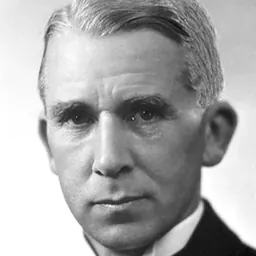
Lived 1922 – 2019 (aged 97). John P. Healey was an American businessperson and aerospace manufacturer.
John P. Healey (March 7, 1922 – March 15, 2019) was an American aerospace executive manager. He was best known for his role in the redesign and manufacture of the command modules for the Apollo program after the catastrophic launch pad fire that took the lives of Command Pilot Virgil I. "Gus" Grissom, Senior Pilot Ed White and Pilot Roger B. Chaffee on January 27, 1967 (Apollo 1). He died in March 2019 at the age of 97.
Early life and education Healey grew up on Normal Avenue in Baltimore, Maryland, the son of Irish immigrants. He attended Baltimore City College and played soccer in the state tournament against Annapolis.
The lifting power and reliability of Titan missiles led to its selection and use in the NASA Gemini program of crewed space capsules in the mid-1960s. Twelve Titan IIs were used to launch two U.S. uncrewed Gemini test launches and ten two-seat crewed capsules. All of the launches were successes.
Apollo program Apollo 7 launch After the catastrophic launch pad fire that took the lives of Command Pilot Virgil I. "Gus" Grissom, Senior Pilot Ed White and Pilot Roger B. Chaffee in January 1967, Healey was recruited by Bill Bergen, President of North American Aviation Space Division, as the spacecraft manager for the redesign of the Apollo Command Module (November 1967). Healey was expected to set precedents in guiding a nearly perfect spacecraft through the factory. By the end of the program, Healey was Rockwell's VP for Apollo and Stage II of the Saturn V rocket.
Lancer to system development After Apollo, Healey was assigned to the Rockwell B-1 Lancer program; a supersonic strategic bomber designed to replace the aging B-52.
During this period Healey was responsible for upgrading Rockwell's civilian aircraft, the Commander 112/114, and bringing them to an efficient production level. Engines were replaced with more powerful versions, the wing was redesigned internally to increase fuel capacity, and a turbo-charged model was introduced. As the market potential for this class of civilian aircraft later declined, Rockwell sold this line to Gulfstream American who discontinued production.
Healey left Rockwell to manage a military aircraft program taking the Fairchild-Republic A-10 Thunderbolt II, a close air support (CAS) aircraft, from prototype to production. Selected by the Air Force over its rival from Northrop, the YA-9, in January 1973, the first production A-10 flew in October 1975 and deliveries to operational units commenced within 6 months.
Healey then joined System Development Corporation (SDC) as an executive manager for ongoing government contracts with the Department of Defense (DoD), National Aeronautics and Space Administration (NASA), Department of Energy (DoE), and other government agencies. In 1980, SDC was acquired by the Burroughs Corporation and later merged with the Sperry Corporation to form Unisys. Healey promoted the development of program control systems and the automation of project management throughout his career and was retired from Unisys.
Constellation program
Healey, coming out of retirement, joined the Lockheed Martin Orion team in 2008. The Orion spacecraft designs are based substantially on the Apollo command and service module (Apollo CSM) flown between 1967 and 1975, but include advances derived from other technology programs, including; control systems from the Boeing 787, "autodock" features from Russian/European spacecraft, waste-management systems based on Skylab, the Space Shuttle, and the International Space Station, and the most advanced computers ever put into a spacecraft. "Going with known technology and known solutions lowers the risk," according to Neil Woodward, director of the integration office in the Exploration Systems Mission Directorate.
The goals of Orion include:
quote|... to bring to bear the nation's premier human space flight and exploration expertise in the development of NASA's next generation crew transportation system
... to span five decades in large-scale systems integration, planetary exploration, human space flight systems and operations, launch vehicles, military aircraft, and autonomous flight systems
... to provide a critical foundation for NASA's vision for space exploration to design, develop and successfully return the only deep space capsule missions since the Apollo era
In popular culture In the 1998 HBO miniseries From the Earth to the Moon, episode entitled "We Have Cleared the Tower", the role of John Healey was played by Brandon Smith.
Don’t just read it —
keep it.
Full-length biographies made to live with: read them, listen on the way to work, watch them tonight.
- E-book
- Audio
- Video
Instant download · yours to keep · every purchase keeps this site free
Important facts
People in John P. Healey's life
Named in this biography and alive at the same time




Related people
Same field, nearest in time


Contemporaries
People whose lives overlapped John P. Healey's


Frequently asked questions
Who was John P. Healey?
American businessman
When was John P. Healey born?
John P. Healey was born on 7 March 1922 in Baltimore.
When did John P. Healey die?
John P. Healey died on 15 March 2019 in Colorado, Littleton, Colorado.
What was John P. Healey's occupation?
John P. Healey was a businessperson and aerospace manufacturer.
What nationality was John P. Healey?
John P. Healey was American.
Sources & further reading
Cite this page
APA: Biography.guide. (2026). John P. Healey. https://biography.guide/john-p-healey/
MLA: "John P. Healey." Biography.guide, https://biography.guide/john-p-healey/.
Chicago: "John P. Healey." Biography.guide. https://biography.guide/john-p-healey/.
Data last updated: 2026-09-22 · Spot an error? Report a correction.
Page generated 2026-09-27 05:25 UTC