
About John Oliver Andrews
Lived 1896 – 1989 (aged 92). John Oliver Andrews was a British military personnel.
Air Vice Marshal John Oliver Andrews, (20 July 1896 – 29 May 1989) was an English flying ace of the First World War and later a senior officer in the Royal Air Force. He was credited with twelve aerial victories. His most significant victory was over German ace Stefan Kirmaier, although he also enjoyed some success against Max Immelmann and Manfred von Richthofen. He continued his military career through the Second World War, rising into increasingly responsible staff positions during the interwar years, then successively commanding two fighter groups during the war. His career was capped by his admission into the Order of the Bath.
Early life and service John Oliver Andrews was a Manchester brewer's son. He attended Dame Alice Owen's School from 1908 to 1911, followed by attendance at Manchester High School from 1911 to 1912. He joined The Royal Scots (Lothian Regiment), being commissioned a second lieutenant on 9 October 1914.
Aerial service in the First World War 1914–1915 After service in the infantry, Andrews transferred to the Royal Flying Corps. His first aerial service was as an observer/gunner; originally, he was seconded to No. 1 Squadron RFC at Netheravon on 4 November 1914. He was then reassigned to observe on the Avro 504 in No. 5 Squadron RFC in June 1915. He qualified as a pilot on 15 October 1915, earning Royal Aero Club certificate number 1924 at Le Crotoy, France; on the 21st, he was officially appointed a flying officer (Observer). He was then assigned to the newly formed No. 24 Squadron RFC as an Airco DH.2 pilot. On 16 December 1915, he was appointed a Flying Officer.
1916
On 27 April 1916, during one of his early flights in a DH.2, he drove off German ace Max Immelmann, holing his Fokker Eindecker in the process. A week later, Andrews was appointed a Flight Commander with a concomitant promotion to temporary captain.
1917
Andrews would not score again until after his transfer to No. 66 Squadron RFC flying Sopwith Pups. He brought down his eighth victim, an Albatros two-seater, on 30 April 1917. By 11 July he had run his total to twelve. By now, he had destroyed eight enemy airplanes (including one shared with Lieutenant Robert Saundby), driven down three others out of control, as well as killed Kirmaier and captured his Albatros D.II.
On 1 July he had been promoted to lieutenant. In the following month he was rested from combat and transferred to No. No. 11 Training Squadron RFC at Scampton aerodrome as an instructor. On 1 August 1919 he was granted a permanent commission as a flight lieutenant in the Royal Air Force. After a further spell of foreign service in India he returned to Britain to begin attendance at Cambridge University on 1 September 1920.
Bar to Military Cross, gazetted 11 December 1916
"2nd Lt. (Temp Capt.) John Oliver Andrews, M.C., R. Scots and R.F.C. For conspicuous gallantry in action. He showed great courage and determination in leading successful patrols and attacks on hostile aircraft, and has now accounted for his ninth machine. On one occasion he followed a machine down to 800 feet, on another he went down to 500 feet."
Companion of the Distinguished Service Order, gazetted 26 July 1917 "2nd Lt. (temp. Capt.) John Oliver Andrews, M.C., R. Scots. & R.F.C. For conspicuous gallantry and devotion to duty in leading offensive patrols with great dash and success on over thirty occasions, and taking part in over twenty-two combats. His skill and courage in attacking and destroying hostile aircraft have at all times been magnificent."
RUSI Essay Gold Medalist for 1932.
Companion of The Most Honourable Order of the Bath, appointed 11 June 1942.
Don’t just read it —
keep it.
Full-length biographies made to live with: read them, listen on the way to work, watch them tonight.
- E-book
- Audio
- Video
Instant download · yours to keep · every purchase keeps this site free
Important facts
People in John Oliver Andrews's life
Named in this biography and alive at the same time



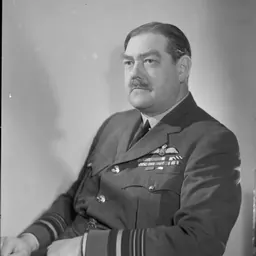

Related people
Same field, nearest in time



Contemporaries
People whose lives overlapped John Oliver Andrews's


Frequently asked questions
Who was John Oliver Andrews?
Royal Air Force air marshal
When was John Oliver Andrews born?
John Oliver Andrews was born on 20 July 1896 in Waterloo.
When did John Oliver Andrews die?
John Oliver Andrews died on 29 May 1989.
What was John Oliver Andrews's occupation?
John Oliver Andrews was a military personnel.
What nationality was John Oliver Andrews?
John Oliver Andrews was British.
Sources & further reading
· Wikipedia: John Oliver Andrews
· DBpedia: John Oliver Andrews
Cite this page
APA: Biography.guide. (2026). John Oliver Andrews. https://biography.guide/john-oliver-andrews/
MLA: "John Oliver Andrews." Biography.guide, https://biography.guide/john-oliver-andrews/.
Chicago: "John Oliver Andrews." Biography.guide. https://biography.guide/john-oliver-andrews/.
Data last updated: 2026-09-20 · Spot an error? Report a correction.
Page generated 2026-09-27 05:09 UTC