
About John Oldham
Lived 1779 – 1840 (aged 60–61). John Oldham was an engineer.
John Oldham (1779–1840) was an Irish engineer, now best known for the Oldham coupler.
Life Born in Dublin, Oldham was apprenticed to an engraver there, but then became a miniature-painter. He invented a numbering machine, which in 1809 he unsuccessfully offered to the bank of Newry for numbering their banknotes. In 1812 the machine was adopted by the Bank of Ireland, and he received the appointment of engineer and chief engraver.
In 1837 Oldham entered the service of the Bank of England, where he introduced improvements in the machinery for printing and numbering banknotes. This machinery continued in use until 1852–3, when the system of surface-printing was adopted. He died at his house in Montagu Street, Russell Square, London, on 14 February 1840.
Engineer Oldham also paid attention to marine propulsion, and in 1817 he obtained a patent (No. 4169) for propelling ships by means of paddles worked by a steam-engine, an attempt to imitate the motion of a paddle when used by a human. In 1820 he patented a further improvement (No. 4249), the paddles being placed on a shaft across the ship, and caused to revolve, being feathered by an adaptation of the gearing used in the former patent. It was used in the Aaron Manby, the first seagoing iron ship. A further development of the idea resulted in the construction of a feathering paddle-wheel, which was patented in 1827 (No. 5455).
Oldham's system of warming buildings, introduced into the Bank of Ireland, and subsequently into the Bank of England, was described in the Civil Engineer and Architect's Journal, 1839, p. 96.
Family Oldham left a family of 17 children. His eldest son, Thomas Oldham (1801–1851), succeeded to his father's place at the bank. He was elected an associate of the Institution of Civil Engineers on 2 March 1841, and in 1842 he read a paper "On the Introduction of Letterpress Printing for numbering and dating the Notes of the Bank of England" (Proceedings, 1842, p. 166), and in the following year he contributed "A Description of the Automatic Balance at the Bank of England invented by W. Cotton" (Proceedings, 1843, p. 121). For the latter he received a Telford medal. He died at Brussels on 7 November 1851.
Don’t just read it —
keep it.
Full-length biographies made to live with: read them, listen on the way to work, watch them tonight.
- E-book
- Audio
- Video
Instant download · yours to keep · every purchase keeps this site free
Important facts
People in John Oldham's life
Named in this biography and alive at the same time


Related people
Same field, nearest in time


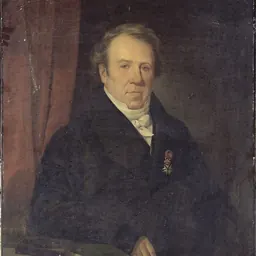
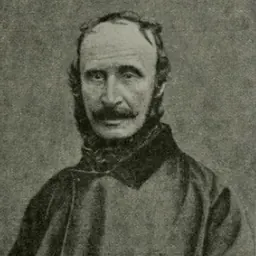
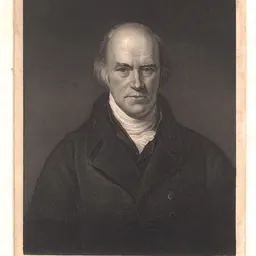
Contemporaries
People whose lives overlapped John Oldham's


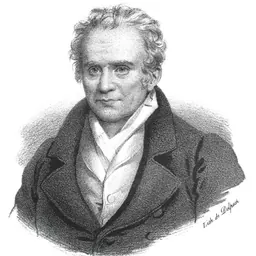
Frequently asked questions
Who was John Oldham?
Irish engineer
When was John Oldham born?
John Oldham was born in 1779 in Dublin, Ireland.
When did John Oldham die?
John Oldham died in 1840.
What was John Oldham's occupation?
John Oldham was an engineer.
What nationality was John Oldham?
John Oldham's recorded nationality: Irish people.
Sources & further reading
· DBpedia: John Oldham (engineer)
Cite this page
APA: Biography.guide. (2026). John Oldham. https://biography.guide/john-oldham-engineer/
MLA: "John Oldham." Biography.guide, https://biography.guide/john-oldham-engineer/.
Chicago: "John Oldham." Biography.guide. https://biography.guide/john-oldham-engineer/.
Data last updated: 2026-09-20 · Spot an error? Report a correction.
Page generated 2026-09-27 05:15 UTC