
About John Nichols
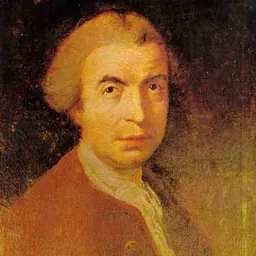
Lived 1745 – 1826 (aged 81). John Nichols was a British printer, publisher, writer, antiquarian and printer (publisher).
John Nichols (2 February 1745 – 26 November 1826) was an English printer, author and antiquary. He is remembered as an influential editor of the Gentleman's Magazine for nearly 40 years; author of a monumental county history of Leicestershire; author of two compendia of biographical material relating to his literary contemporaries; and as one of the agents behind the first complete publication of Domesday Book in 1783.
Early life and apprenticeship He was born in Islington, London, to Edward Nichols and Anne Wilmot. On 22 June 1766 he married Anne, daughter of William Cradock. Anne bore him three children: Anne (1767), Sarah (1769), and William Bowyer (born 1775 and died a year later). His wife Anne also died in 1776. Nichols was married a second time in 1778, to Martha Green, who bore him eight children. Nichols was taken for training by "the learned printer", William Bowyer the Younger in early 1757. Nichols was formally apprenticed in February 1759 by Bowyer, whom he eventually succeeded. It was followed by the Illustrations of the Literary History of the Eighteenth Century, consisting of Authentic Memoirs and Original Letters of Eminent Persons, which was begun in 1817 and completed by his son John Bowyer Nichols (1779–1863) in 1858. The Anecdotes and the Illustrations are mines of valuable information on the authors, printers and booksellers of the time.
Nichols and the printing of Domesday Book (1767–83) Nichols co-operated with Abraham Farley in the production of the 1783 edition of Domesday Book, which he called in his Literary Anecdotes "the most invaluable as well as most antient Record in this or any other kingdom". Between Farley's appointment as co-editor of the project in 1770 and the final publication of Domesday Book in two volumes in 1783, Nichols assisted Farley in printing and proof-reading the text, and also designed the special "record type" typeface that was to be used. This was a source of lasting pride to him; he would later say "on the correctness and the beauty of this important Work I am content to stake my typographical credit".
The types created by Nichols for the Domesday project were destroyed, alongside much else of value, in a fire at his office in February 1808.
Other works History and Antiquities of the County of Leicester, I.i (City of Leicester, start), I.ii (City of Leicester, and Indices); II.i (Framland Hundred), II.ii (Gartre Hundred); III.i (East Goscote Hundred), III.ii (West Goscote Hundred); IV.i (Guthlaxton Hundred), IV.ii (Sparkenhoe Hundred). (University of Leicester, Special Collections) The Literary Anecdotes of the Eighteenth Century, 9 volumes (Second edition, 1812–1816): All Volumes at HathiTrust, open. Illustrations of the Literary History of the Eighteenth Century, 8 volumes (1817–1858), 7 & 8 by J. Bowyer Nichols (1848, 1858): Volumes 1 to 6, and Volume 8 (New York Public Library/HathiTrust, open). Volume 7 (Internet Archive). A Collection of Royal and Noble Wills (1780), Internet Archive A Select Collection of Poems (1780–82), with subsequent additions, in which he was helped by Joseph Warton and by Bishops Percy and Lowth History and Antiquities of the Town of Hinckley, in the County of Leicester (1782) at Google, and Internet Archive. Bibliotheca Topographica Britannica (1780–90), Volumes 1 to 6, and Volume 8 (University of California/HathiTrust, open). Volume 7 at Google. The Progresses and Public Processions of Queen Elizabeth (1788), with Richard Gough
Nichols was a fellow of the Society of Antiquaries, a trustee of many City of London institutions, and in 1804 he was master of the Stationers' Company.
Heirs and successors John Bowyer Nichols continued his father's various undertakings, and wrote, with other works, A Brief Account of the Guildhall of the City of London (1819).
John Gough Nichols (1806–73), John Bowyer Nichols's eldest son, was also a printer and a distinguished antiquary. He edited the Gentleman's Magazine from 1851 to 1856 and The Herald and Genealogist from 1863 to 1874, and was one of the founders of the Camden Society.
It is understood that William Nichols Higton was given his middle name by his father, the artist John Higton, in honour of their friendship, and that Nichols was his godfather.
Don’t just read it —
keep it.
Full-length biographies made to live with: read them, listen on the way to work, watch them tonight.
- E-book
- Audio
- Video
Instant download · yours to keep · every purchase keeps this site free
Important facts
People in John Nichols's life
Named in this biography and alive at the same time




Related people
Same field, nearest in time

Contemporaries
People whose lives overlapped John Nichols's



Frequently asked questions
Who was John Nichols?
1745-1826 English printer, author and antiquarian
When was John Nichols born?
John Nichols was born on 2 February 1745 in Islington.
When did John Nichols die?
John Nichols died on 26 November 1826 in Islington.
What was John Nichols's occupation?
John Nichols was a printer, publisher, writer, antiquarian and printer (publisher).
What nationality was John Nichols?
John Nichols was British.
Sources & further reading
· DBpedia: John Nichols (printer)
Cite this page
APA: Biography.guide. (2026). John Nichols. https://biography.guide/john-nichols/
MLA: "John Nichols." Biography.guide, https://biography.guide/john-nichols/.
Chicago: "John Nichols." Biography.guide. https://biography.guide/john-nichols/.
Data last updated: 2026-09-20 · Spot an error? Report a correction.
Page generated 2026-09-27 05:29 UTC