
About John Mudge
Lived 1721 – 1793 (aged 71). John Mudge was an English physician and scientist, known for Reflecting telescope.
John Mudge (1721 – 26 March 1793) was a British physician and amateur creator of telescope mirrors. He won the Copley Medal in 1777 for a paper on reflecting telescopes.
Life He was the fourth and youngest son of the Rev. Zachariah Mudge, by his first wife, Mary Fox, and was born at Bideford, Devon. He was educated at Bideford and Plympton grammar schools, and studied medicine at Plymouth Hospital.
Several invitations were made to Mudge to try his fortunes in London. But he preferred to remain at Plymouth, where he practised for the remainder of his life, first as surgeon, and, after 1784, when he received the degree of M.D. from King's College, Aberdeen, as a physician.
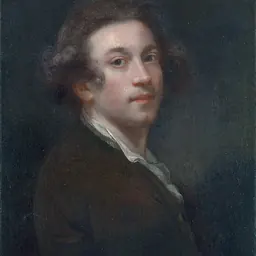
Mudge inherited a friendship with the family of Sir Joshua Reynolds, and when in 1762 Samuel Johnson accompanied Reynolds on his visit to Plymouth, Johnson became a friend and consulted Mudge as a physician. Another intimate friend was John Smeaton. Other allies and guests of Mudge were James Ferguson, the astronomer, and James Northcote, originally a chemist's assistant, who owed him his position in Reynolds's studio.
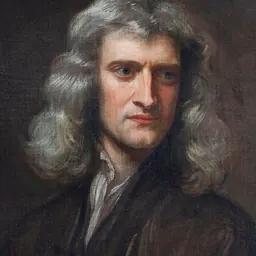
Telescopes On 29 May 1777 Mudge was elected a Fellow of the Royal Society, and in the same year was awarded the Copley medal for his 'Directions for making the best Composition for the Metals for reflecting Telescopes; together with a Description of the Process for Grinding, Polishing, and giving the great Speculum the true Parabolic Curve,’ which were communicated by the author to the society, and printed in the Philosophical Transactions (1777, lxvii. 296). The 'Directions' were also issued separately by Bowyer (London, 1778). Sir John Pringle, the president, in making the presentation, remarked that Isaac Newton had predicted the role of mechanical devices in making parabolic mirrors.
The manufacture of telescopes continued to occupy much of his spare time. He made two large ones with a magnifying power of two hundred times; one of these he gave to Hans Moritz von Brühl, and it passed to the Gotha Observatory, the other descended to his son William Mudge.
Medical works
In 1777 he published a work on smallpox representing an advance on the previous treatises by Richard Mead and others.
In 1778 he published 'A Radical and Expeditious Cure for recent Catarrhous Cough,’ with a drawing of a remedial inhaler, which obtained wide acceptance. He wrote some further small medical treatises.
Family Mudge was married three times, and had ten children. By Mary Bulteel, his first wife, he had eight children. His second wife, Jane, was buried on 3 February 1766 in St. Andrew's. He married thirdly, 29 May 1767, Elizabeth Garrett, who survived him, dying in 1808, aged 72. His sons included William Mudge and Zachary Mudge, by his second and third wives respectively.
Don’t just read it —
keep it.
Full-length biographies made to live with: read them, listen on the way to work, watch them tonight.
- E-book
- Audio
- Video
Instant download · yours to keep · every purchase keeps this site free
Important facts
People in John Mudge's life
Named in this biography and alive at the same time



Related people
Same field, nearest in time



Contemporaries
People whose lives overlapped John Mudge's



Frequently asked questions
Who was John Mudge?
British doctor
When was John Mudge born?
John Mudge was born on 6 October 1721 in Bideford.
When did John Mudge die?
John Mudge died on 26 March 1793.
What was John Mudge's occupation?
John Mudge was a physician and scientist.
What was John Mudge known for?
John Mudge was known for Reflecting telescope.
What nationality was John Mudge?
John Mudge was English.
Sources & further reading
Cite this page
APA: Biography.guide. (2026). John Mudge. https://biography.guide/john-mudge/
MLA: "John Mudge." Biography.guide, https://biography.guide/john-mudge/.
Chicago: "John Mudge." Biography.guide. https://biography.guide/john-mudge/.
Data last updated: 2026-09-20 · Spot an error? Report a correction.
Page generated 2026-09-27 05:24 UTC