
About John Monjo
Born 1931. John Monjo is a diplomat.
Early life and career John Monjo served in the United States Navy from 1953 to 1956. organizing the exile of Marcos and his family in Honolulu after the People Power Revolution, and aiding the subsequent accounting of Marcos's embezzlement.
Monjo's portfolio at the East Asian Bureau also involved negotiating stronger copyright laws to protect American works in Singapore.
Ambassador to Malaysia Monjo arbitrated a dispute between the Malaysian government, union leader V. David, and the AFL-CIO, the latter two having called for tariff reductions under the Generalized System of Preferences to be stripped from Malaysia over workers' rights. The Malaysian government lifted its 15-year ban on unions in the electronics industry, only to reimpose it one month later. Nonetheless, the Bush administration rejected the AFL-CIO's petition and maintained Malaysia's GSP status.
Ambassador to Indonesia Monjo's visit on January 17, 1990 to Dili prompted Timorese independence activist (and future Ambassador to the United States) Constâncio Pinto to organize a student demonstration. While Monjo insisted that authorities refrain from reprisals, the protestors were severely beaten by Indonesian soldiers when he departed. For the rest of the Indonesian occupation of East Timor, violent retaliation was used to deter demonstrations during diplomatic visits.
On September 9, 1990, Monjo became the first official American representative to meet with Cambodian Prime Minister Hun Sen, catalyzing the normalization of relations and adoption of the United Nations plan for new elections in Cambodia.
Following international condemnation of the Santa Cruz massacre, Monjo met with Widjojo Nitisastro, advisor to Indonesian President Suharto, on December 24, 1991, clarifying that the United States government intended to maintain military aid to Indonesia, in contrast with many other countries. However, the United States Congress cut IMET funding to Indonesia in 1992.
Ambassador to Pakistan Monjo's tenure coincided with a rift in Pakistan-US relations, as the Pressler Amendment withheld economic and military assistance over Pakistan's development of nuclear weapons. Nonetheless, Monjo found several areas of security cooperation with Chief of the Army Staff Abdul Waheed Kakar, namely when Pakistan managed the transition of UN peacekeeping operations in Somalia, enabling US withdrawal after the Battle of Mogadishu.
Seeking to limit Iranian influence over Afghanistan, Monjo and his Pakistani counterpart met with Taliban leaders at their headquarters in Kandahar in October 1994, eschewing permission from Afghan President Burhanuddin Rabbani.
In response to the March 8, 1995 killing of two consulate employees in Karachi - CIA officer Jacqueline Van Landingham and Gary Durrell - Monjo asserted the United States' prerogative to extradite the perpetrators for trial, prompting outrage from elements of the Pakistani press. When six western tourists, including two Americans, were kidnapped by Kashmiri separatists in July 1995, Monjo pressed for their release in talks with Pakistani National Assembly member Fazal-ur-Rehman, whom the militants asked to negotiate for the freedom of their imprisoned comrades. One of the American hostages later escaped, while one body was found and the rest are presumed dead.
Later work Monjo created controversy during the 2004 Indonesian presidential election. When an observation team from the Carter Center suggested documenting military intimidation in West Papua, Monjo implied that this was unnecessary because Papuans simply weren't inclined to vote, exclaiming "For god's sake, they're naked!"
Monjo was listed as a senior advisor to Bluemont International, a global business consultancy firm founded in Washington, D.C. in 2004.
Personal life Monjo's grandfather, Ferdinand N. Monjo Sr., was a wealthy New York City-based fur trader and shipowner as heir to the Monjo Company. Monjo's brother, Ferdinand N. Monjo III (1924-1978), was an author of historical fiction for children, who also worked as the editor-in-chief for Little Golden Books as well as children's literature divisions at American Heritage Press, Harper and Row, and Coward, McCann and Geoghegan. Through Ferdinand III, Monjo is the uncle of screenwriter, television producer and actor Justin Monjo.
Don’t just read it —
keep it.
Full-length biographies made to live with: read them, listen on the way to work, watch them tonight.
- E-book
- Audio
- Video
Instant download · yours to keep · every purchase keeps this site free
Important facts
People in John Monjo's life
Named in this biography and alive at the same time


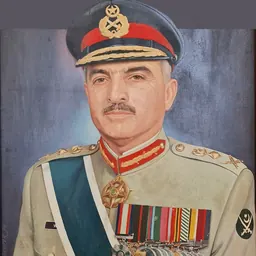


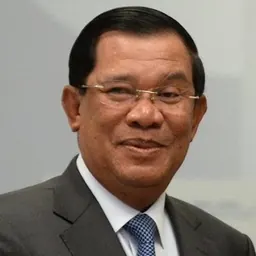


Related people
Same field, nearest in time

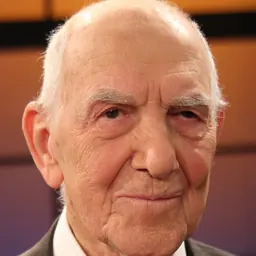
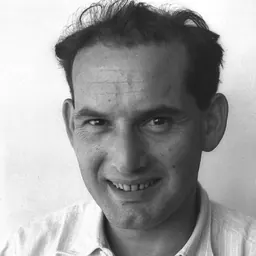
Contemporaries
People whose lives overlapped John Monjo's
Frequently asked questions
Who is John Monjo?
American diplomat
When was John Monjo born?
John Monjo was born on 17 July 1931 in Stamford.
What is John Monjo's occupation?
John Monjo is a diplomat.
Sources & further reading
Cite this page
APA: Biography.guide. (2026). John Monjo. https://biography.guide/john-monjo/
MLA: "John Monjo." Biography.guide, https://biography.guide/john-monjo/.
Chicago: "John Monjo." Biography.guide. https://biography.guide/john-monjo/.
Data last updated: 2026-09-20 · Spot an error? Report a correction.
Page generated 2026-09-27 05:01 UTC